
Introduction
College Jewelry creates a powerful emotional link between a student and their institution. Millions of students in India graduate every year, but most individuals never wear a single piece to remember that significant moment. In the United States, conversely, this practice has remained a beloved tradition for nearly two centuries. Students there wear rings, pins, and pendants specifically to celebrate their hard work and school memories. So, what exactly is College Jewelry, and why does India not have this tradition yet? This guide breaks down the concept in simple, plain language. You should also read our guide on gemstone buying mistakes to understand how quality standards apply to any jewelry purchase you make.
Defining the Scope of College Jewelry
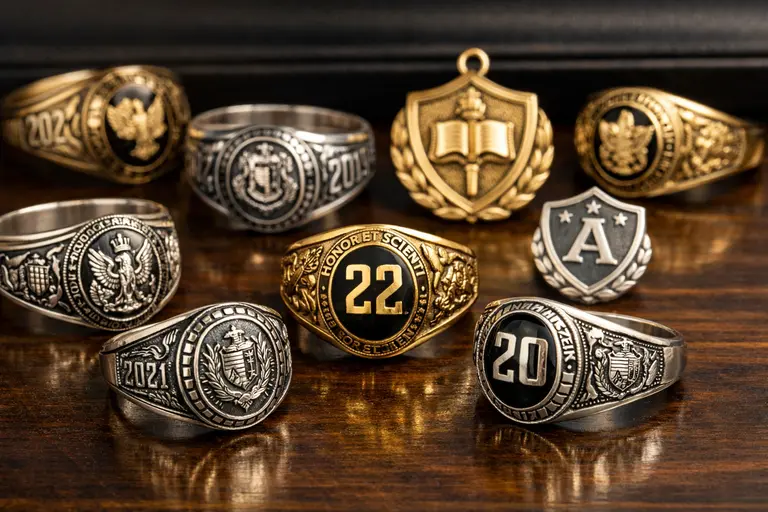
College Jewelry includes wearable items like class rings, pendants, pins, and charms. Each piece usually carries a school’s logo, mascot, or graduation year. Students and alumni wear these items to celebrate big milestones and remember their campus days. Furthermore, these pieces do not always use expensive gold or silver. Modern makers also use enamel, brass, and resin to keep prices low for the student market. In the United States, companies such as Jostens allow students to order custom designs online with ease. In short, this tradition turns school pride into a tangible asset you can wear every day.
Common Materials and Designs
Specifically, manufacturers often use “base metals” to ensure affordability. While some students opt for 10k gold, many choose “lustrium” or sterling silver. Design-wise, these rings often feature a large central stone surrounded by the school’s name. In addition, the sides of the ring might depict the student’s major, such as engineering or medicine. This level of customization makes every piece unique to the individual’s journey.
The Historical Roots of College Jewelry
The tradition of College Jewelry began at West Point, the U.S. Military Academy, in 1835. Graduates there started wearing rings to honor the shared struggles of their military training. Before that, some European schools used similar tokens, but Americans made the tradition official. It was not until the 1870s that the trend spread beyond military schools. At that point, Ivy League universities like Harvard also adopted class rings.
Students engraved these early pieces with their graduation year and various school symbols. Additionally, historians note that the Civil War era helped push awareness of academy rings across the country. Consequently, soldiers carried them as personal keepsakes, which eventually spread the habit to a wider audience. You can explore more of this history through the West Point official archives.
How the American Industry Built the Habit
Tradition played a massive role in the popularity of College Jewelry. Schools encouraged rings to build unity among students. Moreover, fraternities and sororities added pins, which created even more buzz on campuses. Then, commercial jewelers stepped in to scale the market. For instance, the jeweler Balfour, founded in 1913, began by making fraternity jewelry before expanding into rings.
Similarly, the company Jostens added class rings to its product line as early as 1906. As a result, these items became affordable and widely available to everyday students—not just the elite. Furthermore, pop culture pushed the trend forward as athletes and movie characters wore class rings on screen. Today, the industry remains a multi-million-dollar sector, supported by data from the National Association of College Stores.
Analyzing Why India Lacks a College Jewelry Tradition
India skips College Jewelry for several clear reasons. First, most families view gold as savings, not symbols. They buy heavy gold chains for weddings and festivals. Therefore, a custom school ring often feels like a poor use of financial resources. Cultural habits also play a significant role. Indian jewelry connects deeply to religion and marriage. Families pass these pieces down because they hold both financial and spiritual value.
On top of that, Indian universities do not push school pride through merchandise. Most campuses lack branded stores or ring ceremonies. Consequently, the idea of buying a specialized piece to mark a school milestone feels unfamiliar to most Indian families. Moreover, students focus primarily on career and family after graduation, rather than on accessories. For more local context on this topic, visit jewelry trends analysis.
Cultivating the College Jewelry Market in Modern India
Change in this market must start with price. Makers need to move away from traditional gold and use sterling silver, brass, or resin instead. Pricing pieces under ₹500 makes them accessible to the average student. Next, universities must lead the movement. Schools can launch “college pride” campaigns and partner with local vendors to offer licensed charms.
After that, social media must carry the message. Instagram Reels and YouTube Shorts reach young people fast. As a result, influencers from Kerala and metropolitan colleges can build early hype. Modern designs—minimalist logos with cultural twists—will connect more naturally with Indian youth. Finally, schools can build a community around the product. A ring ceremony at convocation, for instance, creates a shared memory. Affordable makers like AuGrav already show that custom jewelry works in India. With the right marketing, this trend could grow significantly within two to three years.
FAQ: Common Questions on College Jewelry
What counts as College Jewelry?
Class rings, pendants, pins, and charms that carry a school’s logo or graduation year all count as College Jewelry.
Which school started the tradition?
The West Point Military Academy in the United States started the tradition in 1835.
Why do Indians prefer gold over school jewelry?
Most Indian families treat jewelry as a financial investment or a religious asset rather than a symbolic school token.
Can this jewelry work at an affordable price in India?
Yes. Using silver, brass, or fashion materials keeps costs under ₹500, which makes it accessible for most students.
How can universities promote this trend?
Schools can sell officially licensed merchandise, host pride events, and hold specialized ring ceremonies at graduation.
Disclaimer
This article shares general observations based on cultural trends and market insights as of April 2026. Jewelry preferences vary widely across regions and communities. Always consult local experts before making any purchase decisions. This content does not constitute financial advice. Gold remains a strong investment in India.