Introduction to Bolivia’s Ametrine
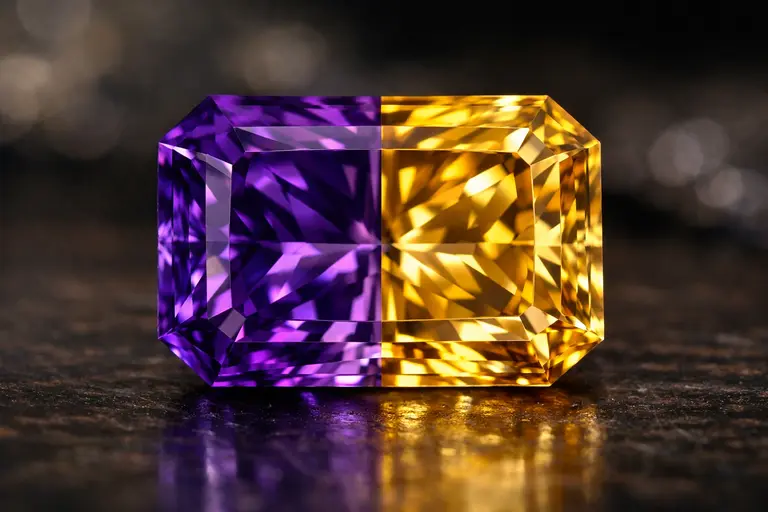
Nature rarely creates a perfect 50/50 split of two distinct colors within a single crystal. However, Bolivia’s Ametrine does exactly that, combining the royal purple of amethyst with the golden yellow of citrine. This striking bicolor quartz has fascinated collectors for decades. Currently, almost the entire global supply comes from a single, remote location in the heart of South America. If you plan to purchase this gem, you must understand its unique origin, identification markers, and care requirements. Consequently, this guide breaks down the essential facts so you can shop with confidence. You should also read our guide on gemstone buying mistakes to strengthen your overall knowledge before making a high-value purchase.
The Source of Bolivia’s Ametrine: The Anahí Mine
The Anahí mine sits deep in the Pantanal wetlands of eastern Bolivia, near the Brazilian border. It remains the only significant commercial source of natural ametrine on the planet today. Because the location is so remote, the mining operation relies on complex logistics. Specifically, personnel and light supplies arrive via a private grass landing strip, while heavy equipment must travel by boat.
A Bolivian company called Minerales y Metales del Oriente S.R.L. (M&M) owns and operates the mine. The founder, Ramiro Rivero, has successfully built a fully integrated supply chain. This means the company manages everything from underground extraction to the final retail sales. Consequently, buyers can often trace their specific stones back to this unique geological site. While locals call the stone “Bolivianita” with pride, the commercial trade officially legalized and expanded the mining industry here in 1989. For a deeper look at global mining localities, you can explore data at mindat.
The Natural Formation of Bolivia’s Ametrine
Ametrine is a variety of quartz that forms under very specific geological conditions. During the crystal’s growth, iron atoms experience different oxidation states due to temperature gradients in the surrounding rock. These varying temperatures create one zone of amethyst and another of citrine within a single crystal lattice. Furthermore, this process is entirely natural and requires no human intervention to achieve its bicolor look.
Oxidation States in Bolivia’s Ametrine
In simple terms, higher temperatures usually produce the yellow citrine, while slightly cooler conditions maintain the purple amethyst. This delicate balance is why genuine ametrine is so rare. The exact conditions needed to produce a clean, vivid color split do not occur in other quartz deposits around the world. Therefore, the Anahí mine sits in a unique “geological sweet spot” that allows Bolivia’s Ametrine to flourish. To understand the chemical properties of quartz varieties, refer to the Gemological Institute of America.
Identifying Genuine Bolivia’s Ametrine
Spotting natural ametrine becomes much easier once you understand the basic identification markers. First, you should examine the color boundary. Authentic stones from the Anahí mine show a sharp, distinct line where the purple meets the yellow. In contrast, many treated or synthetic stones display a blurry or gradual transition.
Internal Inclusions in Bolivia’s Ametrine
Second, you should inspect the stone for internal characteristics. Real quartz often contains fine, threadlike inclusions or tiny mineral crystals. If you see perfectly round bubbles, you are likely looking at glass. Moreover, remember that ametrine registers a 7 on the Mohs hardness scale. This means a steel knife cannot scratch it. If the surface scratches easily, the material is likely a soft simulant. You may also want to check our article on Understanding BIS Hallmark to see how quality standards apply across different luxury sectors.
Imitations and Lab-Grown Alternatives
The market currently carries several look-alikes that can deceive an untrained eye. The most common imitation is heat-treated amethyst. In this process, sellers partially heat a purple amethyst to turn specific sections yellow. While this creates a bicolor effect, it is not natural ametrine. Furthermore, lab-grown synthetic ametrine also exists. Manufacturers use a hydrothermal process to grow these crystals. While they look nearly identical to natural stones, they often appear “too perfect.” Natural stones rarely show the absolute, flawless uniformity found in a lab. Therefore, you should always ask the seller for a certificate of origin.
Care and Design of Bolivia’s Ametrine Jewelry
Jewelry designers prefer Bolivia’s Ametrine because it frequently grows in large, eye-clean crystals. This allows lapidaries to create bold, impressive cuts. Specifically, emerald and radiant cuts work best because their broad facets highlight the color split. Additionally, fantasy cuts and freeform carvings have become very popular in modern independent jewelry.
However, you must handle your ametrine with care. Prolonged exposure to direct, intense sunlight can gradually fade the purple amethyst sections over time. Consequently, you should store your jewelry in a dark box when you are not wearing it. Additionally, avoid harsh chemicals or ultrasonic cleaners, which could damage the stone’s surface or any delicate settings.
Shopping Tips for Buying Bolivia’s Ametrine
To ensure a successful purchase, you should follow a few straightforward habits. Always request written confirmation that the stone is natural and untreated. For significant investments, insist on a laboratory report from a trusted organization such as the GIA. This report provides definitive proof of the stone’s origin and rules out common treatments. Finally, judge the quality based on color saturation and distribution. Stones with an even 50/50 split and intense hues command the highest prices in the global market.
FAQ: Bolivia’s Ametrine
Is ametrine found in Brazil?
Brazil produces very little natural ametrine. Most bicolor stones labeled as “Brazilian ametrine” are actually heat-treated amethysts. True, natural ametrine comes almost exclusively from Bolivia.
How can I tell if my stone is synthetic?
Hydrothermal synthetics often have an unnaturally high clarity and a very repetitive color pattern. A professional gemological lab is the only way to confirm a synthetic origin with absolute certainty.
Why is it called Bolivianita?
Bolivianita is the local name used within Bolivia to celebrate the gem as a national treasure. In the international market, the name “Ametrine” remains the standard term.
Does heat treatment lower the value?
Yes. Natural, untreated Bolivia’s Ametrine is much rarer and more valuable than heat-treated amethyst imitations. Always ask for full disclosure regarding treatments before you pay.
Can I wear ametrine every day?
Yes, because quartz is relatively durable (Mohs 7). However, you should still protect it from hard impacts and store it away from direct sunlight to prevent the colors from fading.
Disclaimer
This article is intended for general educational and informational purposes only. It does not constitute professional gemological, legal, or financial advice. Gemstone markets and product availability change over time. Always consult a qualified gemologist or reputable laboratory before making significant purchases. The author and publisher accept no responsibility for decisions made based on the information provided here.