Author’s Note
This guide to authentic Chettinad Jewelry draws on documented community history and traditional craft literature. While every effort has been made to ensure accuracy, some details—particularly price figures—will vary by market conditions. Readers are encouraged to verify current information directly with artisans before making any purchase decisions.
Introduction
Chettinad Jewelry stands as one of India’s most extraordinary goldsmithing traditions. The Nattukottai Chettiar community of Tamil Nadu created these magnificent pieces over centuries. Historically, they drew inspiration from Chola-era temples and long-distance trade routes across Southeast Asia. Today, collectors and brides alike seek these heavy, matte-finished ornaments for their sacred symbolism and exceptional craftsmanship.
In this guide, I will walk you through everything you need to know about Chettinad Jewelry—from identifying authentic pieces to commissioning your own directly from traditional artisans. As a Gemologist who admires heavy gold work, I see this not just as adornment, but as a wearable bank account. Whether you are a jewelry enthusiast or a bride planning her trousseau, understanding this craft highlights the golden soul of South India.
The Origins of Chettinad Jewelry
To begin with, we must look at the creators. The Nattukottai Chettiars built their wealth as merchant bankers who traveled extensively across Burma (Myanmar), Sri Lanka, and Vietnam during the 18th and 19th centuries. Along these trade routes, they sourced precious gemstones—including Rubies and Emeralds. Consequently, artisans then set these stones into heavy 22-karat gold ornaments inspired by Hindu temple architecture.
These gemstones entered India through established regional trade networks, and the Chettiars incorporated them into their jewelry as markers of prosperity and devotion. As a result, every piece carries a devotional character. They were designed not merely for fashion, but as an offering to the divine and a declaration of status. You can compare this trade history to the networks I discussed in Tanzania’s Cloves and Tanzanite.
How to Identify Authentic Chettinad Jewelry
Authentic Chettinad Jewelry prioritizes substance over sparkle. Knowing how to distinguish genuine pieces from imitations can save you significant money.
The Physical Checks
- First, pay attention to weight. A genuine necklace typically weighs over 100 grams, and the gold is solid rather than hollow.
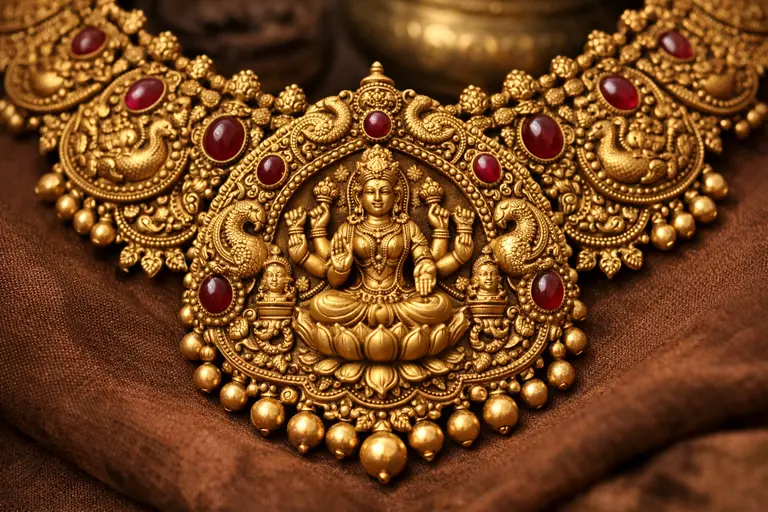
- Next, examine the finish. Authentic pieces carry an unpolished, ancient-looking Matte Surface—never a high-gloss, machine-made shine.
- Furthermore, look closely at the motifs. Artisans use traditional hand tools to carve deities (like Gajalakshmi), peacocks, and Gopurams (temple towers) entirely by hand. The slight imperfections confirm genuine handwork.
The Stone Setting
Stone settings also reveal authenticity. Natural Rubies (often called Kempu Ruby) or Emeralds sit in gold claw settings called Kanakam and are never fixed with glue. Finally, turn the piece over. A genuine item always has a smooth, clean reverse side, while imitations often show rough edges.
On the other hand, be cautious of pieces that feel lightweight for their size or carry a mirror-like shine. Before purchasing, always insist on the BIS Standard Hallmark (916 for 22-karat gold) along with the 6-digit HUID number.
The Sacred Ritualistic Pieces of Chettinad
Two pieces stand above all others in Chettinad bridal tradition.
The Kazhutheeru (The Wedding Necklace)
The Kazhutheeru, meaning “bead for the neck,” is the most sacred ornament a Chettiar bride wears. Artisans assemble it from multiple individually handcrafted gold components. This includes the central Thali engraved with Shiva-Parvati or Goddess Lakshmi, and two flanking Ethanams bearing yantra-like symbols. Historically, these necklaces were exceptionally heavy, with some accounts describing ceremonial pieces weighing over a kilogram! Importantly, making a Kazhutheeru is considered a sacred duty. Families traditionally invite artisans to their home on an auspicious day to begin the work.
The Gowrishankara Pendant
The Gowrishankara represents the eternal union of Lord Shiva and Goddess Parvati. Unlike most bridal pieces, men traditionally wear it—particularly those who have received spiritual initiation (Upadesham). Older versions of this pendant were also functional; families used them to store Vibhuti (sacred ash). You can read about other male jewelry traditions in my Men of Platinum Jewelry guide.
Price Ranges: Modern vs. Antique Sets
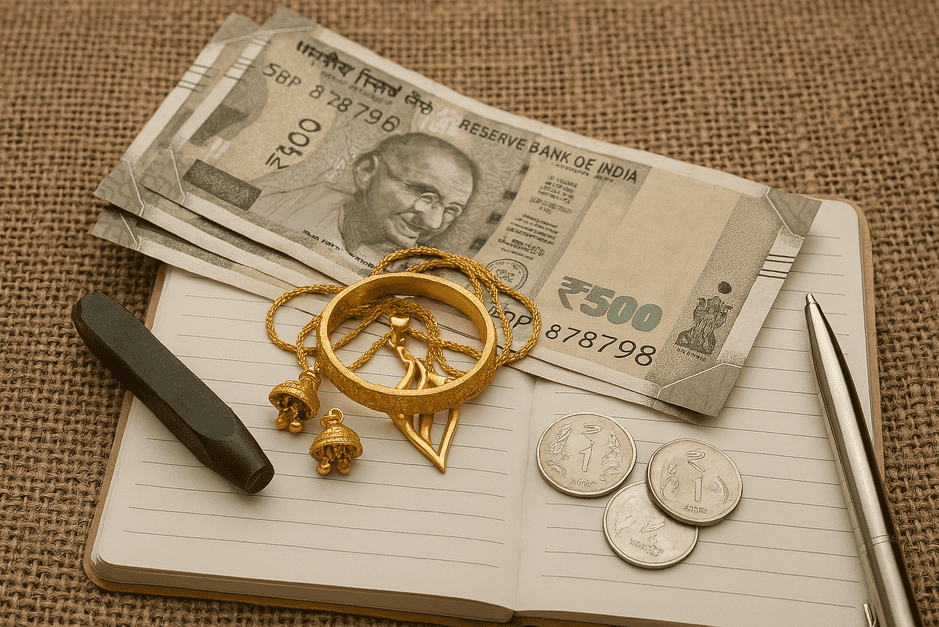
Prices vary widely depending on age, weight, and craftsmanship, and they fluctuate daily with gold market rates.
- Imitation/Gold-Plated: These sets typically range from ₹2,000 to ₹15,000. While they may look similar at a glance, they carry none of the investment value of genuine gold.
- Modern Handcrafted (22K Gold): Made using traditional techniques on newly manufactured pieces, these generally fall between ₹5,00,000 and ₹18,00,000, depending on weight. Well-known retailers such as Tanishq offer temple necklace sets in this range.
- Antique Pieces (100+ Years Old): At the premium end, true antiques routinely command ₹20,00,000 and above. Antique pieces command a substantial premium due to historical craftsmanship and rarity.
For more on calculating gold value, check my Jewelry Sales Secrets guide.
Where to Commission Authentic Chettinad Jewelry
The heart of Chettinad goldsmithing lies in Karaikudi, Tamil Nadu. The most established workshops operate along Amman Sannathi Street and Sekkalai Road.
Among the most trusted names:
- Palaniappa Jewellers: Established in 1942, widely regarded for its heavy-weight, matte-finish gold pieces.
- S. M. Rajarathnam & Sons: A heritage workshop that continues to preserve original tools and techniques.
- ATA Natarajan Chetty & Co.: Located in Kallukatti, Karaikudi (+91 4565 238 482), they offer bespoke jewelry manufacturing.
A word of practical advice: Authentic Chettinad Jewelry is rarely available in large mall chains. A reputable seller will always name the specific artisan or workshop behind each piece.
Conclusion: The Weight of Heritage
In summary, Chettinad Jewelry is an architectural marvel in miniature. It represents a time when gold was not just an accessory, but a physical manifestation of a family’s power, devotion, and mercantile success. Ultimately, by wearing a piece of Chettinad gold, you are carrying the legacy of South India’s greatest merchants.
FAQ: Chettinad Jewelry
What makes Chettinad Jewelry different from other temple jewelry?
Its exceptional weight, sacred ritualistic function, matte 22-karat gold finish, and hand-carved motifs using traditional tools distinguish it sharply from machine-made temple jewelry produced elsewhere.
Can I buy authentic Chettinad Jewelry online?
Exercise caution with generic online marketplaces. Authentic pieces are almost always made-to-order rather than mass-produced for stock. For the most reliable results, contact workshops in Karaikudi directly.
How do I care for these pieces?
Wipe gently with a dry cotton cloth after each use. Avoid chemical cleaners and ultrasonic machines entirely, as both damage the traditional matte finish that defines the aesthetic of these ornaments.
Do antique Chettinad pieces appreciate in value?
They often do. Antique temple jewelry frequently functions as a family legacy asset, and collectors may pay a significant premium above standard gold weight value.
How do I verify that a piece is genuine 22-karat gold?
Always insist on the BIS Hallmark (916) and the 6-digit HUID number. You can verify both instantly and for free using the BIS Care App on your phone.
Disclaimer
The price ranges, contact details, and jeweller information cited in this article are provided for general guidance only and were accurate at the time of writing. Gold prices fluctuate daily, and jeweller availability, contact numbers, and business status may change without notice. The author and publisher accept no responsibility for any financial decisions made based on the figures presented here. Always conduct independent verification before commissioning or purchasing any jewelry.