Introduction
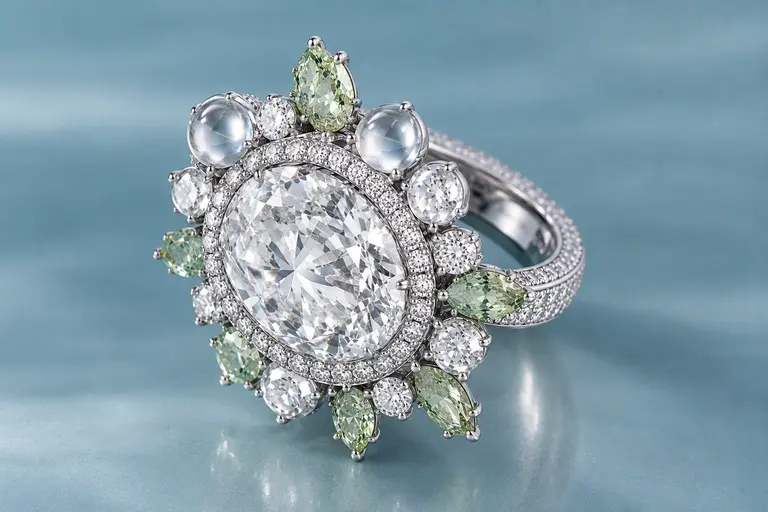
De Beers London has added cabochon-cut diamonds to its High Jewellery collection for the first time. The company unveiled these stones within the Undulation suite, part of a larger collection called Vibrations, which celebrates the movement of inland water. Specifically, the designers drew their inspiration from Botswana’s Okavango Delta. Unlike standard faceted diamonds, these stones carry smooth, rounded surfaces. Consequently, they cast a softer, deeper glow rather than the sharp flashes people usually associate with brilliant-cut diamonds. For everyday readers, this launch offers a valuable lesson in how diamond design creates appeal that goes beyond conventional sparkle. If you want to explore how different shapes and imperfections affect a stone’s look, check out the Guide to diamond cuts and clarity.
What Is a Cabochon-Cut Diamond?
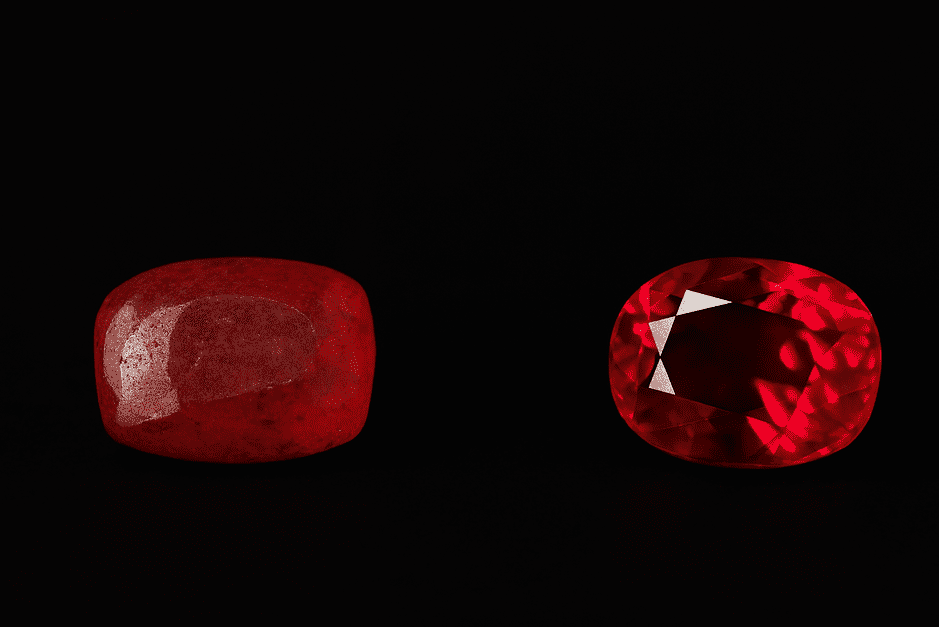
A cabochon cut gives a gemstone a smooth, domed surface instead of many small facets. As a result, the stone reflects light in a completely different way than a brilliant-cut diamond does. Jewellers have long used cabochon cutting on coloured gemstones. However, applying this technique to a diamond creates a serious challenge, since diamond ranks as the hardest natural material on earth. Therefore, De Beers London spent five years developing a specialised cutting method. To achieve this, the team combined precision technology with traditional lapidary skill. Furthermore, because the finished stone has no facets to hide flaws, its internal quality matters even more. Indeed, De Beers reports that fewer than 0.5% of diamonds meet the necessary colour and clarity standards. Even fewer meet the additional requirements around crystal structure and symmetry.
Why De Beers Chose the Water Theme
The rounded cabochon shape suits the Undulation designs naturally. Its smooth curve echoes a water droplet resting on a leaf, while its gentle glow reinforces the collection’s watery mood. More broadly, the Vibrations collection explores inland water across several landscapes tied to De Beers’ diamond-sourcing regions. For example, the suites draw on South Africa’s Tugela Falls, Canada’s Arctic terrain, and Namibia’s Fish River Canyon. In this way, each piece tells a story about where its diamonds originate and how designers reshape them.
How Cabochon Diamonds Differ From Faceted Diamonds
The core difference stays fairly simple. In short, faceted diamonds use precisely angled surfaces to bounce light back toward the eye, thereby producing brilliance, fire, and sparkle. Cabochon diamonds, on the other hand, take a gentler path. Rather than maximising flashes of light, their smooth surfaces create a calmer, more subdued look. Because of this, factors like shape, polish, and transparency become far more important than faceting ever was. Neither style beats the other outright. Instead, each one offers a different visual experience. Similarly, someone who loves bold sparkle will likely prefer a traditional cut, while someone drawn to sculptural jewellery may favour the cabochon’s quieter beauty.
Why Cabochon Diamonds Are So Hard to Make
Cutters normally shape rough diamonds using facets, which lets them control both appearance and yield. A cabochon, however, demands a perfectly smooth, even dome, so cutters must follow an entirely different process. According to De Beers London, its diamond cutters rely on precision technology to grind and polish each stone into a smooth, domed form while preserving its individual character. Additionally, this method calls for careful, gradual material removal, along with a rough diamond of unusually strong internal quality. Because there are no facets to redirect light around flaws, only the best rough stones qualify for the process.
What Everyday Diamond Buyers Can Learn
This launch offers several practical lessons for ordinary buyers. First, sparkle alone does not determine a diamond’s value. Cut, colour, clarity, and carat still matter greatly, yet design, craftsmanship, and provenance also shape how a finished piece feels and appears. Second, unusual does not automatically mean superior. A bold new cutting style may suit one buyer perfectly while leaving another cold, and that is perfectly fine. Third, buyers should always ask clear questions before purchasing an unusual diamond. Specifically, confirm whether the stone is natural or lab-grown, review its documentation, and compare its price against similar alternatives. Finally, buyers should separate technological achievement from investment potential. De Beers’ cabochon technique represents a genuine milestone in diamond cutting, yet its long-term market value remains clear only over time.
Frequently Asked Questions
Are De Beers cabochon-cut diamonds real diamonds?
Yes. De Beers London shapes them using its specialised cabochon technique, so only the cutting style changes, not the stone’s basic identity.
Are cabochon diamonds worth more than faceted diamonds?
Not automatically. Rarity, craftsmanship, and brand positioning influence price, yet no fixed rule makes a cabochon diamond more valuable than a comparable faceted one.
Why do cabochon diamonds look different?
Because their smooth, domed surfaces create a softer glow, rather than the sharp brilliance typical of faceted stones.
How rare are these diamonds?
Extremely rare. Specifically, De Beers notes that fewer than 0.5% of diamonds meet the required colour and clarity standards, and even fewer meet the additional structural criteria.
Should buyers treat cabochon diamonds as an investment?
Not necessarily. Since future resale value remains uncertain, buyers should value these stones mainly for their design and craftsmanship.
Where can people see these cabochon diamonds?
De Beers London features them in the Undulation suite of its Vibrations collection, inspired by Botswana’s Okavango Delta.
Disclaimer
This article serves general educational purposes only and does not offer jewellery valuation, investment advice, or a recommendation to buy or sell diamonds. All information about De Beers London’s cabochon-cut diamonds comes from the company’s September 2026 announcement and recent industry reporting. Prices, rarity, and future resale value can vary widely depending on the individual stone, its design, documentation, and prevailing market conditions. The author has no financial affiliation with the brands or organizations mentioned.