Introduction
In today’s jewelry world, modern “Brilliant Cut” diamonds often blend into a sea of sameness. Specifically, they are cut by lasers to mathematical perfection. However, Antique Diamonds stand out with their one-of-a-kind personality. These timeless stones, sourced from estate jewelry collections or repurposed heirlooms, capture history in every facet.
Once confined to niche collectors, they have exploded into mainstream appeal in 2026. But why now? Why are modern brides rejecting “Perfect” factory stones for “Imperfect” hand-cut gems? As a Gemologist, I believe it is a revolt against the “Copy-Paste” culture. In this article, we will explore the technical differences between old and new cuts, the sustainability angle, and why Antique Diamonds are the ultimate statement of individuality.
The Niche Roots of Antique Diamonds
To begin with, Antique and Estate jewelry has long been a specialized market. Historically, it appealed to those who already owned modern pieces but craved something with depth. Often, these buyers sought pieces that told stories—perhaps a Victorian-era ring passed through generations.
Twenty years ago, terms like “Old Mine Cut” or “Rose Cut” required lengthy explanations. Old Mine Cuts, with their soft, rounded shapes and high crowns, differed sharply from today’s flat, wide modern cuts. Similarly, Rose Cuts featured a flat bottom and a domed top, evoking the romantic era of candlelight. However, smaller independent designers changed the game. They began blending these Antique Diamonds into fresh, modern settings. As a result, the market broadened beyond elites. Today, platforms like 1stDibs showcase this shift, proving antique pieces now rival new designs in popularity.
Breaking the Stigma of Antique Diamonds
A key turning point was shedding the “Old/Used” stigma. Previously, many dismissed antiques as outdated or “second-hand.” But nostalgia and a desire for individuality flipped the script. Therefore, what was once niche has become a vital category in the global market.
For example, elongated Cushion Old-Mine Cuts now dominate the bridal sector. Generally, they offer subtle warm hues (J/K/L color) and geometric elegance absent in sterile modern stones (D/E/F color). According to the GIA (Gemological Institute of America), antique cuts prioritize “Fire” (colored flashes) over “Brilliance” (white flashes). Consequently, they sparkle differently. They glow warmly rather than dazzlingly. This connects to the “Asset Value” I discussed in Natural Diamonds Over Lab-Grown.
Technical Guide: Identifying Antique Diamonds
As an expert, I want to help you spot them. Here are the three main types of Antique Diamonds:
1. The Old Mine Cut (OMC)
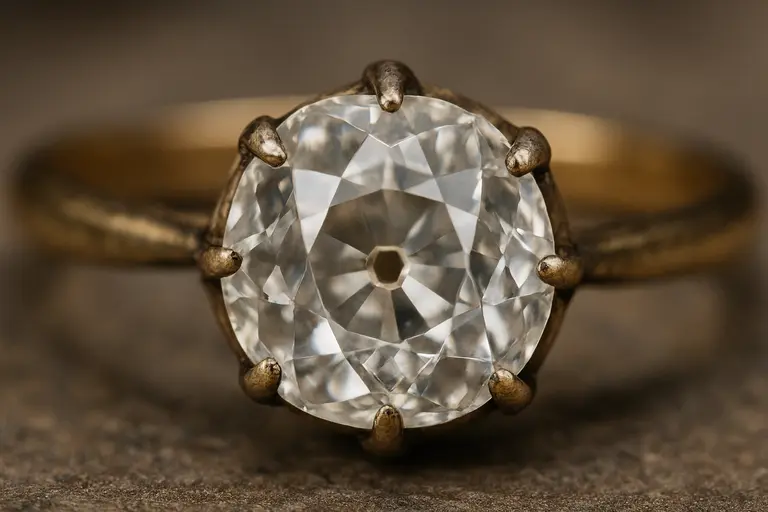
Technically, this is the ancestor of the modern Cushion Cut.
- Shape: Squarish with rounded corners.
- Profile: Very high crown (top) and very deep pavilion (bottom).
- The Tell: A large, visible Open Culet (it looks like a hole in the bottom of the stone).
2. The Old European Cut (OEC)
This is the grandfather of the modern Round Brilliant.
- Shape: Round.
- Facets: Chunky, blocky facets that reflect light in broad flashes.
- The Vibe: It looks like a kaleidoscope.
3. The Rose Cut
Crucially, this cut has no bottom (pavilion). It is flat on the back with a faceted dome on top. In India, we know this intimately. It is the basis of Polki and Jadau jewelry. Thus, the Western trend for Rose Cuts is actually an adoption of Indian aesthetics. Read more about this in my North vs South Indian Jewelry guide.
The 2026 Boom in Antique Diamonds
At the trend’s core lies a demand for distinction. Antique Diamonds thrive not on price or marketing hype, but on pure individuality. Because they were cut by hand (not machine), no two stones are identical. Instead of “Choose Option A or B,” buyers get a bespoke creation.
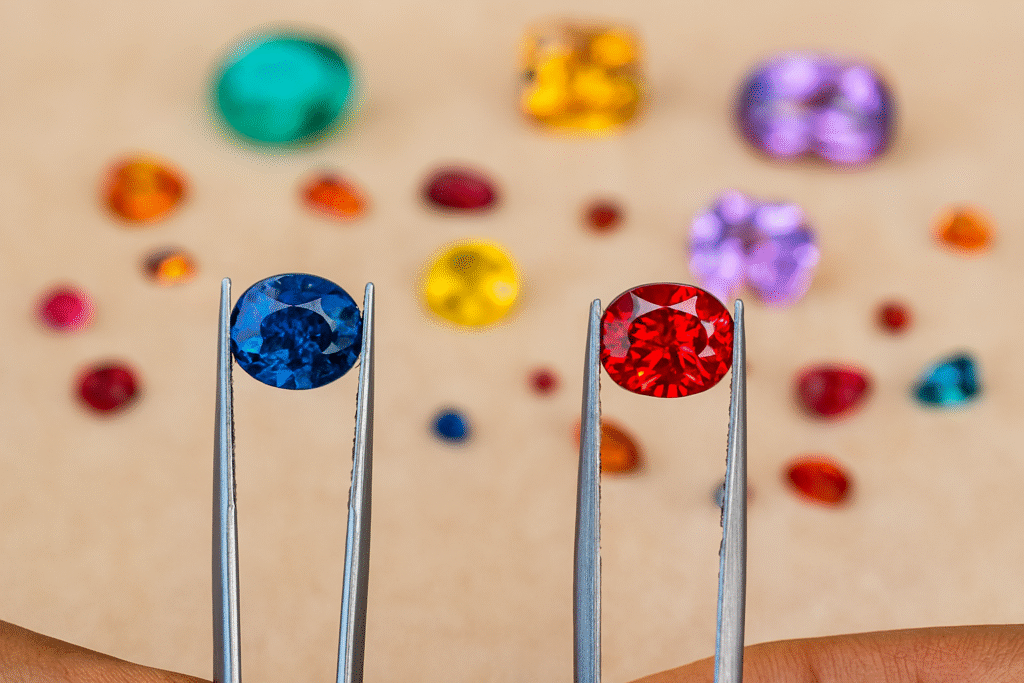
For instance, a faintly tinted “Cape” (yellowish) Old Mine diamond in a modern yellow gold bezel setting blends eras seamlessly. Additionally, Rose cuts pair beautifully with colorful fine gemstones like Kempu Ruby or Cobalt Blue Spinel, echoing Kerala’s traditional jewelry heritage. In 2026, expect this to intensify. Custom pieces will feature antique centers with contemporary bands.
Sustainability of Antique Diamonds
Moreover, there is a powerful ethical argument. Antique Diamonds are the ultimate recycled product. By choosing an antique stone, you are not requiring any new mining. No earth is moved. No fuel is burned. Therefore, for the eco-conscious Gen Z buyer, this is often preferable even to Lab-Grown diamonds (which consume electricity). It is “Guilt-Free” luxury. This aligns with the “No Waste” philosophy I mentioned in Pearl Meat regarding sustainable luxury.
Investment Value: Finite Supply
Finally, let’s talk money. Are Antique Diamonds a good investment? Yes. Unlike modern diamonds, which are being mined (or grown) every day, the supply of Antique Diamonds is fixed. They aren’t making any more 19th-century stones. Consequently, as demand rises and supply shrinks, prices for high-quality Old Mine Cuts and Old European Cuts have skyrocketed. Thus, they offer better value retention than mass-produced modern cuts.
Conclusion on Antique Diamonds
In summary, Antique Diamonds prove that true obsession stems from rarity and soul. They remind us of a time when artisans worked by candlelight to reveal the beauty of a stone. Ultimately, owning one is not just owning a gem; it is owning a piece of history that feels personal.
FAQ: Antique Diamonds Explained
What is an Old Mine Cut diamond?
An Old Mine Cut (OMC) features a squarish shape with rounded corners, a high crown, and a large open culet. It was the standard cut during the 18th and 19th centuries, designed to sparkle in candlelight.
How do Antique Diamonds differ from modern ones?
Modern diamonds prioritize Brilliance (light return) and symmetry. Antique Diamonds prioritize Fire (color dispersion) and maximizing the weight of the rough crystal. They have “chunky” facets compared to the “splintery” facets of modern cuts.
Are Antique Diamonds a good investment?
Yes. Their uniqueness and finite supply drive demand. A high-quality Old European Cut can often command a premium over a modern round brilliant of the same specs.
Where can I buy authentic Antique Diamonds?
Explore estate auctions, specialized vintage dealers, or reputable sites. Always verify with a gemologist or GIA report to ensure it is a genuine antique cut and not a modern reproduction.
Will the antique trend fade?
Unlikely. As consumers move away from mass production towards “Slow Luxury” and sustainability, the demand for unique, recycled heritage pieces will only grow.
Author Bio
P.J. Joseph, also known as Saju Elizamma, Gemstone & Gold Consultant serving Kerala, Tamil Nadu, and Karnataka.