Introduction to the ALROSA Diamond Business
The ALROSA Diamond Business represents the largest diamond mining operation in the world by volume. Because the Russian government and regional authorities hold a controlling stake, the company serves both commercial interests and national public goals. In recent years, global trade shifts have pushed the company to innovate, find new markets, and even expand into gold production. Consequently, the company now runs a massive operation that spans from deep-earth extraction in the Arctic to selling finished luxury jewelry to consumers. Understanding this model is vital for anyone tracking the global gemstone trade. You should also read our guide on gemstone buying mistakes to understand how to evaluate quality regardless of a stone’s geographic origin.
Vertical Integration within the ALROSA Diamond Business
Most mining companies simply sell raw materials and allow external partners to handle the rest. The ALROSA Diamond Business, however, takes a much more comprehensive approach. The company controls nearly every step of the diamond value chain, from initial exploration to the final retail sale.
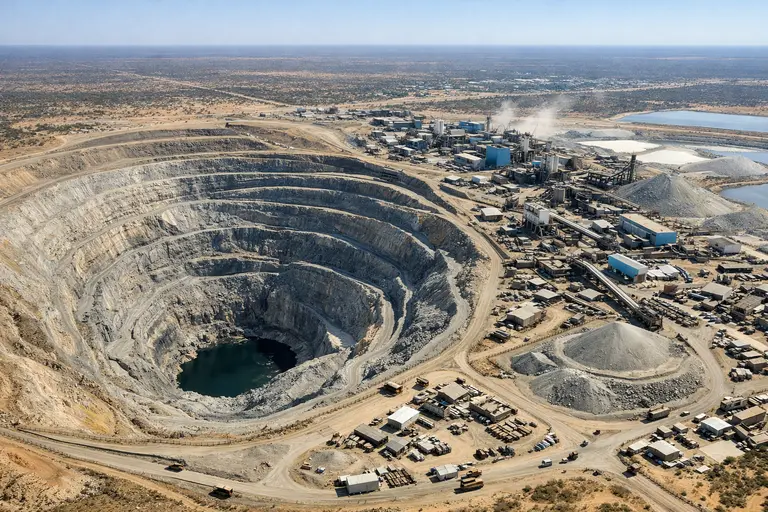
Specifically, geologists search for new deposits in the harsh Yakutia region and the Arkhangelsk area. Once they confirm a deposit, the company builds and operates its own mines. After extraction, ALROSA sorts and grades the stones in its specialized centers. Selected diamonds then move to the company’s cutting and polishing facilities, which rank among the largest in Europe. Finally, the company sells these polished stones through its own jewelry brands and digital platforms. Because the company manages this full chain, it captures profits at every stage. Furthermore, this setup allows for total traceability, ensuring that buyers know the exact history of their stone. To learn more about global diamond standards, visit the Gemological Institute of America.
Sales Channels of the ALROSA Diamond Business
ALROSA uses four primary channels to sell its diamonds, and each serves a strategic purpose. First, long-term contracts provide the backbone of their revenue. Established customers receive steady monthly supplies under multi-year agreements. Second, the company hosts auctions and electronic tenders to sell larger or rarer stones at the highest fair market price.
In addition, spot sales allow the ALROSA Diamond Business to handle short-term market demand or move specific sizes quickly. Finally, direct retail through its own boutiques lets the company reach private buyers without relying on wholesale middlemen. Together, these channels provide the company with financial flexibility and a steady income stream throughout the fiscal year. This diversified sales strategy helps the company weather fluctuations in the global luxury market.
Global Market Shifts for the ALROSA Diamond Business
Trade restrictions introduced in recent years have significantly changed where ALROSA sends its output. Previously, a large share of diamonds moved through Western trading centers. However, since those routes are now limited, the company has shifted its focus to Asian markets.
Processing ALROSA Diamond Business Stones in India
India plays a decisive role in this new geography because it remains the world’s primary hub for diamond cutting. Thousands of skilled artisans in Surat process stones from the ALROSA Diamond Business before they enter the global market. Furthermore, traders use financial hubs like the UAE and Hong Kong to manage logistics and payments. As a result, Asia now accounts for the majority of the company’s sales geography. This shift has forced the company to build new relationships and adapt its logistics to meet the needs of Eastern buyers. For more information on Indian trade hubs, check the GJEPC India official site.
Technological Innovation in the ALROSA Diamond Business
The company actively uses artificial intelligence to find new deposits and run its operations more efficiently. Specifically, geologists feed decades of data into AI systems that identify promising targets in the frozen terrain of Siberia. This approach helps the team discover opportunities that traditional human analysis might miss.
Furthermore, the company applies “computer vision” inside its processing plants. Smart cameras monitor conveyor belts in real-time, catching technical problems early and reducing downtime. Technology, therefore, helps ALROSA stay competitive even when access to certain types of foreign equipment is limited. By investing in internal tech development, the company ensures that its mining operations remain among the most advanced in the world.
Gold Mining Expansion for the ALROSA Diamond Business
The company is also building a second major revenue stream through gold mining. In 2024, it acquired the Degdekan gold deposit in the Magadan region. The company plans to commission a massive gold extraction plant at the site by 2029.
However, the target of 3.3 tons of gold per year applies to full production capacity, which the company expects by 2030. In addition, ALROSA is exploring the wider Kolyma region for further gold opportunities. Consequently, gold will help protect the overall business from swings in diamond prices. This diversification makes the company more financially stable over the long term. To understand the value of gold as a hedge, you can refer to reports from the World Gold Council.
FAQ: Understanding the ALROSA Diamond Business
Is ALROSA a government-owned company?
The Russian federal government and regional authorities hold a controlling stake. However, the company is also listed on the Moscow Exchange and has private shareholders.
Where does the ALROSA Diamond Business find its diamonds?
Most mining occurs in the Yakutia region (Siberia) and the Arkhangelsk region of Russia. These areas hold some of the world’s largest kimberlite pipes.
Is ALROSA moving into other minerals?
Yes. The company has officially expanded into gold mining, with a major production facility scheduled to reach full capacity by 2030.
How does AI help the diamond business?
AI identifies new mining targets by analyzing vast geological datasets and uses computer vision to monitor processing plants for mechanical issues.
What is the “negative carbon footprint” claim?
In 2025, independent checks suggested that kimberlite rock absorbs CO₂, potentially offsetting the emissions from the mining process. However, scientists continue to study this phenomenon to meet global standards.
Disclaimer
This article is for general informational purposes only and does not constitute investment, legal, or financial advice. Always consult official company filings and qualified professionals before making any business or investment decisions related to ALROSA or any other company.