Summary
Kerala’s culinary culture blends coastal freshness, spice, and heritage. From Malabar’s biryanis to Kochi’s street food, every dish tells a story of trade and tradition. Explore how this South Indian state became one of India’s most flavorful travel destinations — where coconut meets spice, and food connects people across time and tide.
Introduction
Kerala is often called God’s Own Country for its backwaters and palms. But ask any traveler what they remember most — it’s the food.
Over my years exploring India, I’ve learned that Kerala’s meals are as rich in history as any gemstone. Each flavor reveals trade routes, faith, and family traditions passed down for centuries.
Indeed, food here is more than taste — it’s identity.
Originally highlighted by Lonely Planet as one of the world’s top travel experiences for 2026, Kerala’s cuisine continues to inspire food travelers worldwide.
Coconut, Spice, and Patience
Coconut shapes most Kerala recipes.
It appears in curries, chutneys, desserts, and even in the oil used for frying.
- The masala dosa, thin and crisp, pairs with coconut chutney and filter coffee.
- Fish pollichathu, wrapped in banana leaves, locks in flavor as it steams.
- Locals say, “The slower it cooks, the deeper the flavor.”
Kerala’s fertile coast supplies coconuts, while the high ranges produce pepper, cardamom, and turmeric. Therefore, the state became a global trading hub centuries ago. As a result, every meal captures both land and sea in a single bite.
“The key is balance — between spice and sweetness, sea and soil,” says Chef Antony from Alappuzha.
Regional Tastes Across Kerala
Every region cooks differently. That’s why Kerala food never feels repetitive.
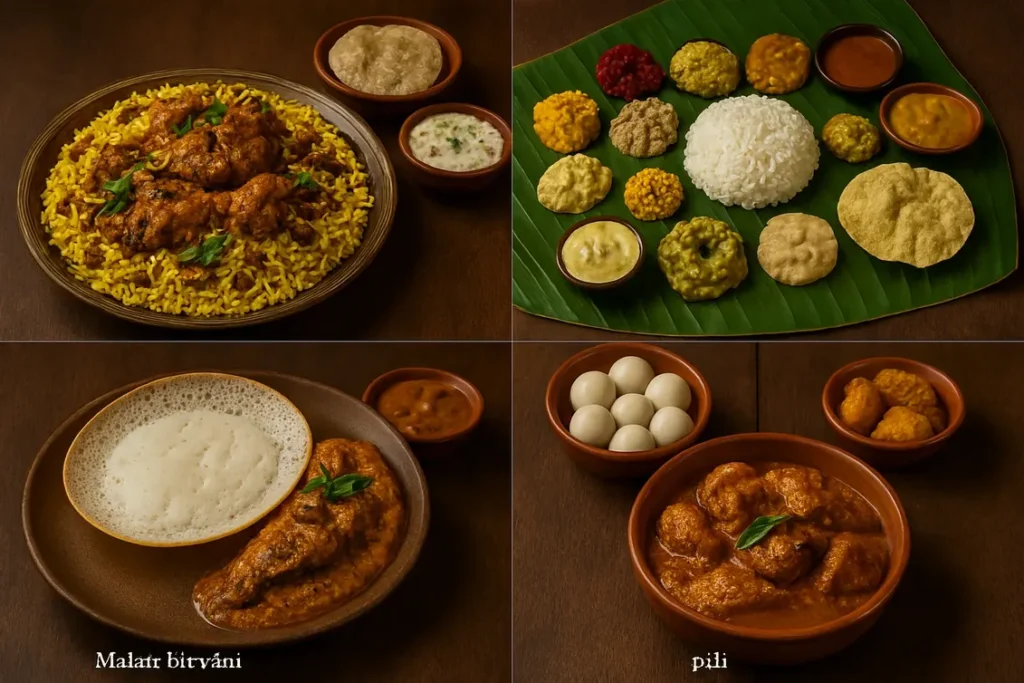
- Malabar (North Kerala): Rich Mappila Muslim dishes such as biryani and pathiri.
- Central Kerala: Syrian Christian stews served with soft appam.
- Southern Kerala: Coconut milk curries, vegetarian meals, and festival sadyas.
- In addition, each community adapts recipes to local produce and climate.
Visit the Indian Spices Board to learn how these ingredients shaped trade and culture.
Read our story on Pettagam: Chettinad Jewellery Museum to explore another piece of South Indian heritage.
Kochi’s Street Food and Spice Stories
Kochi is Kerala’s culinary crossroad. Here, 30 communities brought flavors from across India and beyond.
If you join a Mattancherry food walk, you can taste:
- Fried mussels and banana fritters
- Syrian beef cutlets
- Filter coffee brewed over charcoal
- Furthermore, every bite tells a migration story — of Arabs, Jews, Portuguese, and British settlers who added their touch to local food.
See Kerala Tourism’s Kochi guide for walking tours and heritage trails.
Spices That Changed the World
Kerala’s spice trade built empires. By the 15th century, three out of four ships leaving India carried spices from its coast.
Today, Kerala still produces:
- 95% of India’s black pepper
- 70% of India’s cardamom
“Research shows Kerala’s pepper exports rose 18% in 2024,” notes the Spices Board of India.
Consequently, these numbers prove what locals already know — spice is Kerala’s heartbeat.
Modern Revival and Culinary Innovation
New chefs are honoring old recipes. Meanwhile, in Kochi, home cooks and cafés experiment with global ideas. Even so, what stays constant is respect for heritage. Coconut tacos, banana-leaf pizzas, and toddy-based marinades now appear on modern menus.
Recipes still begin with a grandmother’s touch — and a handful of curry leaves.
Read Understanding BIS Hallmark: What It Means for Your Jewellery to see how tradition and trust define quality — in both gold and cuisine.
Q&A: Common Questions About Kerala Cuisine
Q: What makes Kerala cuisine special?
A: Its geography and history. The coast provides seafood and coconut, while the hills bring spices that shaped global trade.
Q: Is Kerala food too spicy?
A: Not necessarily. In fact, many dishes use coconut milk to soften the heat.
Q: What should I try first?
A: Karimeen pollichathu — pearl spot fish grilled in banana leaves.
Q: Are there vegetarian dishes?
A: Yes. About 40% of locals eat vegetarian meals during religious festivals. Moreover, dishes like avial and thoran are favorites.
Expert Insight
After 40 years of studying culture and trade, I’ve learned that authenticity builds value — in gemstones or in food.
Kerala’s cuisine reflects the same truth: it grows richer with roots.
“Ultimately, every meal in Kerala tells a story of patience, heritage, and care. The flavor stays long after you leave.”
Source Acknowledgment
This article draws inspiration and factual references from Lonely Planet’s feature:
The 25 Best Experiences in 2026 – Dig Into Kerala’s Culinary Culture.
Adapted and expanded for Saju Elizamma by P.J. Joseph to provide an SEO-optimized and reader-friendly exploration of Kerala’s culinary heritage.