Summary
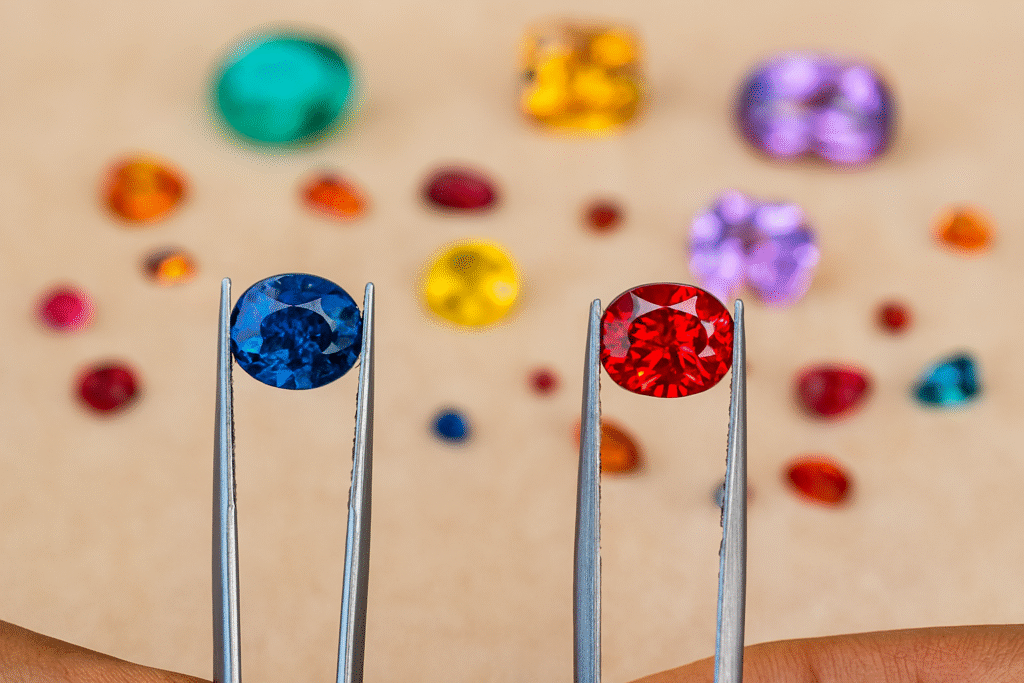
Many emeralds and rubies on the market are fracture-filled with glass or resin to improve their clarity. You can identify these treated gems by spotting the flash effect—bright color flashes seen through a loupe. This guide explains how fracture-filling works, how to detect it, and why it matters for gem buyers and collectors.
Introduction
A fracture-filled emerald ruby may appear flawless at first glance, but that beauty can be deceptive.
Fracture-filling is one of the most common treatments used on gemstones—especially emeralds and rubies—to make them look cleaner and more transparent. Dealers inject glass, resin, or oil into surface-reaching cracks to hide imperfections and improve clarity.
While the process enhances appearance, it also affects the gem’s value and durability.
If you want to make smart buying choices, you must learn how to identify a fracture-filled emerald or ruby and recognize the telltale flash effect.
What Is Fracture-Filling?
Fracture-filling hides visible cracks inside a gemstone.
Dealers inject filler materials like glass, polymer, or oil into the fractures under heat and pressure.
Emeralds are almost always treated this way because of their natural inclusions.
Rubies, particularly commercial-grade ones, are also commonly fracture-filled.
The filler smooths the internal breaks and allows light to pass more evenly.
However, these substances are not permanent. Exposure to heat, ultrasonic cleaning, or chemicals can cause the filler to leak or discolor.
That’s why a fracture-filled emerald or ruby needs special care and honest disclosure at the time of sale.
For more on how gem treatments alter structure and appearance, read: Understanding Gem Treatments
How to Spot the Flash Effect
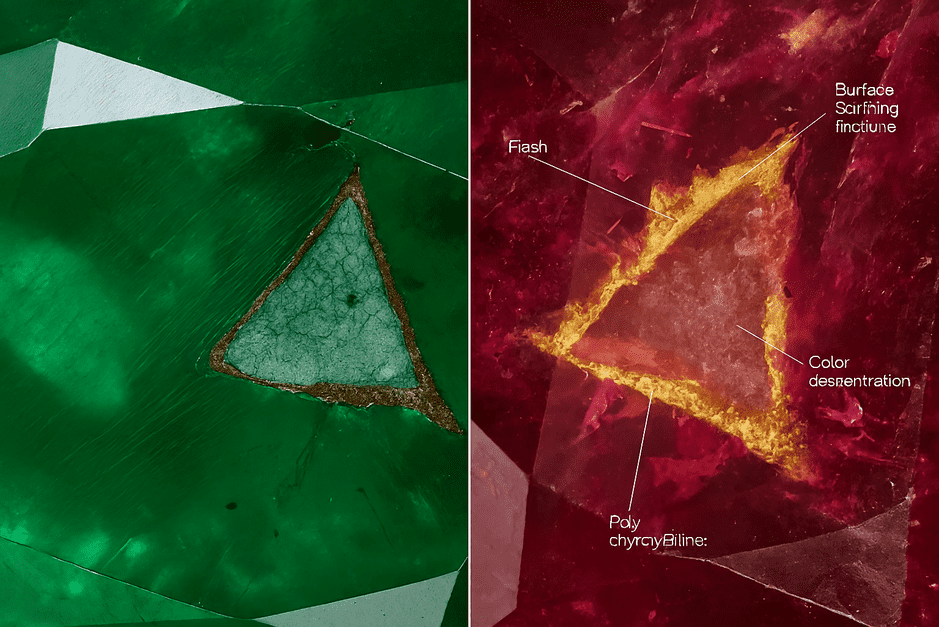
The flash effect is the easiest and most reliable way to identify a fracture-filled gem.
To see it:
- Use a 10x loupe or microscope.
- Shine a white light on the stone.
- Slowly tilt it and look into the fractures.
If you notice flashes of blue, orange, or purple light that appear and disappear as the stone moves, you’re likely seeing the flash effect.
These flashes happen because the filler reflects light differently than the host crystal.
Interestingly, untreated emeralds and rubies will never show this kind of optical behavior.
Their internal features may scatter light, but not in distinct flashes of rainbow color.
To compare, see Why Your Heated Sapphire Isn’t Fake
That article explains another common treatment where heat, not filler, improves color and clarity.
Visual Signs Under Magnification
Under magnification, fracture-filled stones show more than just the flash effect.
Look for:
- Gas bubbles trapped within fractures.
- Uneven surface texture where filler meets the gem.
- Colorless streaks or flow patterns from the filler’s movement.
Moreover, a professional gemologist can use darkfield illumination or immersion to confirm filling.
If you’re buying high-value gems, always ask for a gemological report from GIA, IGI, or GRS confirming treatment status.
For a trusted industry reference, see GIA: Gem Treatments and Enhancements.
Why It Matters for Buyers
Fracture-filling affects more than beauty—it impacts price and longevity.
- Lower Value: A filled stone may sell for a fraction of the price of an untreated gem.
- Reduced Durability: Filler materials are softer than natural crystals and can wear out or crack.
- High Maintenance: Heat, ultrasonic cleaning, and even sunlight can cause filler breakdown.
Therefore, always ask sellers to disclose treatments.
If you buy an emerald or ruby as an investment, untreated stones will always retain stronger long-term value.
For more buying insight, explore Natural vs. Cultured Pearls: Don’t Make This Common Mistake
It explains how misidentifying gem types can lead to costly mistakes.
How Dealers Should Disclose Fracture-Filling
Ethical dealers should mention treatments both verbally and in writing.
On invoices, look for terms such as:
- “Fracture-filled”
- “Clarity enhanced”
- “Glass-filled”
If the document only says “emerald” or “ruby” without qualification, ask directly.
Responsible sellers never hide treatments—they use them to justify fair pricing.
How to Protect Your Investment
When purchasing or storing fracture-filled gems:
- Avoid steam or ultrasonic cleaners.
- Never reheat stones for jewelry resizing.
- Clean gently using mild soap and warm water.
- Store separately to prevent scratches or filler loss.
Ultimately, a filled gem can still look beautiful if you know its limitations.
Clarity enhancement improves appearance but not rarity or stability.
Quick Takeaway
Always inspect emeralds and rubies carefully.
If you see bright color flashes inside cracks, you’re likely viewing a fracture-filled emerald or ruby.
Knowing this simple test can save you from paying natural-gem prices for a treated one.
FAQ
Q1: Is fracture-filling permanent?
No. Most fillers can degrade or discolor over time, especially with heat or chemicals.
Q2: Can a jeweler detect fracture-filling easily?
Yes. Using a 10x loupe or microscope, the flash effect and gas bubbles are clear indicators.
Q3: Do labs like GIA mention fracture-filling?
Absolutely. Certified reports from GIA, IGI, or GRS clearly state, “clarity enhancement” or “filling.”
Q4: Are all emeralds fracture-filled?
Most are. Natural emeralds have many inclusions, so oil or resin filling is routine. The key is honest disclosure.
Q5: Should I avoid buying fracture-filled stones?
Not necessarily. They can be affordable options if you understand their care needs and lower resale value.