Summary
Many buyers confuse dyed pearls with natural-color pearls. This guide shows how to identify dyed pearls by examining color near drill holes, overtones, and blemishes — plus when to ask for a certified lab report to protect your investment.
Why Natural vs Dyed Pearl Color Matters
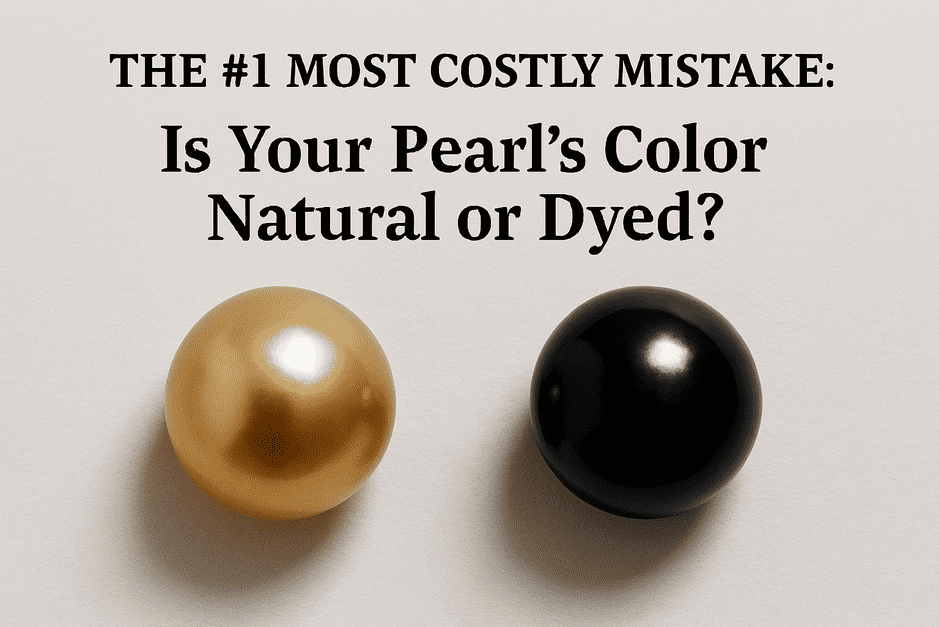
When buying pearls, your first question should be: Is the pearl’s color natural or dyed?
That single detail decides value, authenticity, and long-term trust.
Natural-color pearls are rare and command higher prices. Dyed pearls may look impressive, but their market value and durability are lower.
The Gemological Institute of America (GIA) explains that color is one of the most important quality factors in pearl grading. You can also visit GIA’s Pearl Color Grading Guide for more insights.
For a deeper look at authentic pearl features, see our internal guide on Identifying Real Tahitian Pearls.
How to Identify Dyed Pearl Color
Spotting a dyed pearl isn’t difficult if you know where to look. Follow these steps for accurate natural vs dyed pearl color identification:
- Drill holes: Check for darker color concentration or rings.
- Surface blemishes: Cracks or pits may hold uneven dye.
- Overtones: Natural pearls display soft, multi-layered tones; dyed pearls often look flat.
For visual examples, compare with GIA’s Natural vs Treated Pearl Images.
When to Request a Pearl Lab Report
Ask for a lab certificate when:
- Buying a single expensive pearl or a full strand
- The seller claims “rare natural color”
- The price seems unusually high
Only a certified gem lab report verifies natural color. Reliable labs include GIA, IGI, and SSEF. Before investing, you can read Pearl Deal Red Flags to avoid costly mistakes.
Real Example from My Gem Lab
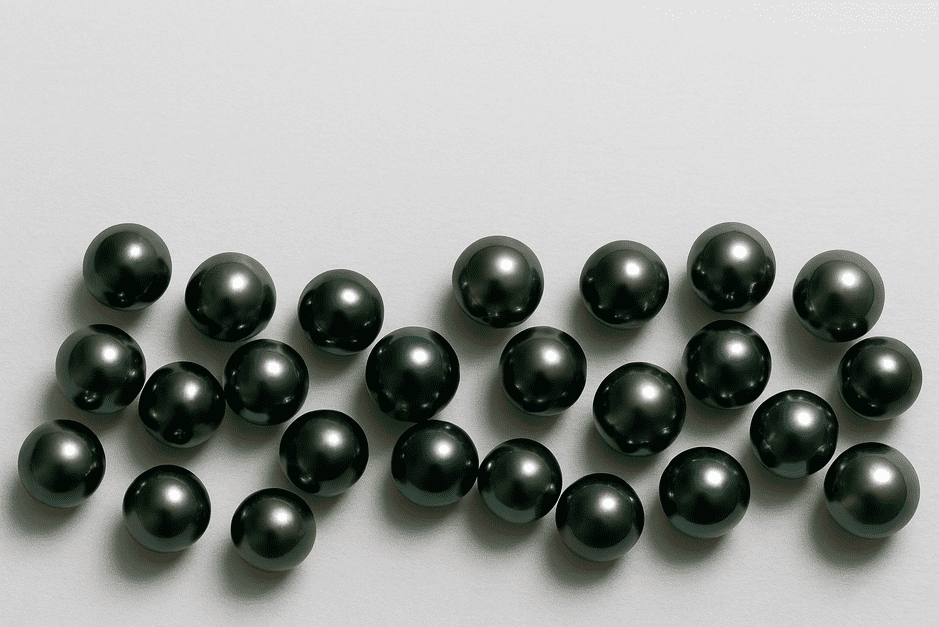
A client once brought me “Tahitian pearls” she found at a discount. Under magnification, heavy dye bleeding was visible around the drill holes.
They turned out to be dyed freshwater pearls, not Tahitian. She paid ten times their actual value — a harsh reminder of why natural vs dyed pearl color identification matters before buying.
Checklist Before You Buy
- Is the color too uniform to be natural?
- Do you see dye near drill holes or blemishes?
- Did the seller provide a lab report or certificate?
If you answer “no” to any of these, stop and verify. Informed buyers protect both their jewelry and their wallet.
FAQ
1. Can dyed pearls fade or change color?
Yes. Exposure to perfume, sunlight, or moisture can fade the color of dyed pearls.
2. Are dyed pearls considered fake?
Not fake, but treated. Their value and lifespan differ from natural-color pearls.
3. How do I care for natural-color pearls?
Keep them away from chemicals and store them separately in a soft pouch.