Introduction
Yayoi Kusama turned the humble polka dot into a global artistic language. She built this legacy through meticulous repetition, bold colour, and the philosophical idea of infinity. Her famous Infinity Mirror Rooms, pumpkin sculptures, and dotted canvases earned her worldwide fame before she passed away on 14 August 2026, at the age of 97. Today, the Yayoi Kusama Museum in Tokyo carries her artistic vision forward. However, her brilliant ideas need not stay inside galleries or museums. What if Indian jewellers, weavers, and phone-case makers borrowed these core principles? This article explores that exciting possibility for everyday buyers, not just wealthy luxury collectors. Moreover, it respects the deep craft traditions that already shape Indian design. Therefore, the following ideas focus on affordable materials, local artisans, and everyday functionality. If you enjoy contemporary aesthetics, explore our guide to contemporary jewellery trends.
From Gallery Walls to Everyday Yayoi Kusama Products
Kusama’s art has already reached ordinary objects through global collaborations. In 2009, KDDI released mobile-phone art editions featuring her designs, including the Hand Bag for Space Travel. Likewise, Louis Vuitton launched high-profile collaborations with her in 2012 and 2023, covering handbags, clothing, accessories, and fine jewellery. Meanwhile, Kusama and Issey Miyake presented A-POC and Dots Obsession at the Fondation Cartier in Paris in 2000. Together, these projects show that contemporary art becomes much more engaging when people wear and carry it. Readers can explore the Yayoi Kusama official website for more historical context.
Gemstones and Jewellery Inspired by Yayoi Kusama
Colourful Dots in Yayoi Kusama Style Jewellery
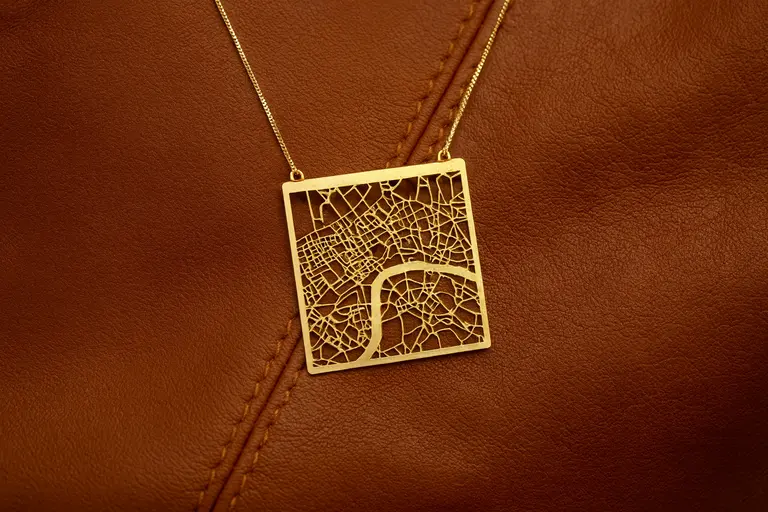
Picture a necklace where small diamonds cluster irregularly and grow denser toward one end; consequently, it looks like a spreading field of light. Coloured stones add even more options, because jewellers can set yellow sapphires, red garnets, green tourmalines, and black spinels side by side. In addition, small cabochons can form raised, tactile dots on rings and pendants. Importantly, this idea does not require costly, rare stones. Glass cabochons, synthetic gemstones, and carefully chosen natural stones deliver a similar look at lower prices. Therefore, Indian jewellers can offer lightweight, modern pieces that still honour traditional craftsmanship. For example, a student could wear a simple pendant with coloured glass dots instead of an expensive diamond piece. Learn more in our gemstone buying guide.
Watches Inspired by Yayoi Kusama
A watch inspired by Kusama can replace plain dial patterns with colourful enamel dots. For example, a stainless-steel watch could pair a black dial with scattered yellow dots. Likewise, inexpensive quartz watches can use printed dials and bright, contrasting straps. However, designers must keep hour markers clear and the colour contrast strong. As a result, the watch stays readable and suits daily use perfectly. Explore more in our affordable watches guide.
Yayoi Kusama Patterns on Phones and Laptops
Millions of Indians treat their digital devices as personal accessories. Therefore, manufacturers can experiment with dotted phone cases, textured ceramic backs, and laptop skins. For instance, a teenager could swap a plain phone case for a dotted one every season. Furthermore, designers can create wallpapers and desktop themes built from repeating circles. Digital displays can even animate the dots in response to touch or light. Best of all, these products need no expensive materials to look fantastic. Consequently, students and young professionals can enjoy contemporary art without visiting an international exhibition.
Sarees and Textiles Inspired by Yayoi Kusama
Bandhani Textiles and the Yayoi Kusama Language
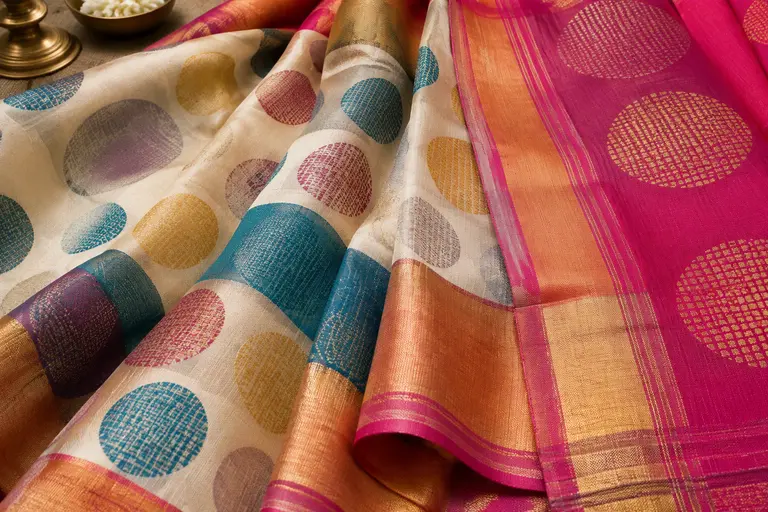
India already celebrates circular patterns. Artisans in Gujarat and Rajasthan create Bandhani by tying and dyeing fabric into intricate dots. Designers could invite these artisans to try irregular clusters and flowing, infinite compositions. Above all, designers should respect Bandhani knowledge and never treat the craft as a mere blank canvas.
Jamdani, Ikat, and Kanjeevaram
Indian designers already blend diverse textile traditions. For instance, Studio Medium created JamBan, which joins Jamdani weaving with Bandhani resist-dyeing. Similarly, Jamdani weavers could float woven circles across light fabrics, while Pochampally Ikat artisans could blur circular motifs through resist-dyeing. In Kanjeevaram silk, zari could form tiny metallic circles that grow into clusters toward the pallu. Nevertheless, designers must collaborate with master weavers and credit each regional tradition accurately.
The Keralam Kasavu Possibility for Yayoi Kusama Fans
Keralam Kasavu offers a striking canvas. Imagine a white cotton saree with a restrained gold border and scattered black, red, or golden dots. Alternatively, a dotted cotton mundu or kurta could bring the idea into daily clothing. Furthermore, Keralam’s handloom cooperatives could use affordable cotton instead of expensive silk. Thus, people who love traditional clothing could also enjoy a contemporary artistic touch. Read more about Keralam handloom heritage.
Yayoi Kusama Design Opportunities for India
Affordability, practicality, and cultural relevance will decide whether Indian buyers embrace this idea. A collector may buy an elaborate gemstone piece, but a student may prefer a dotted phone cover. Likewise, a family may love a colourful saree without necessarily knowing the artist behind it. That is why accessible products matter more than another exclusive luxury line. As a result, art leaves the gallery and joins daily life. Manufacturers can offer many price levels, from printed textiles to handcrafted jewellery. In turn, small workshops, weavers, and printers can earn fresh income. However, designers must separate inspiration from unauthorized reproduction. Products that use Kusama’s name or protected artwork need explicit permission, while independent designers can explore general geometric ideas without claiming an official collaboration.
Frequently Asked Questions
Has Yayoi Kusama collaborated with technology companies?
Yes. In 2009, she worked with KDDI on iida mobile-phone art editions, including the Hand Bag for Space Travel.
Have Kusama’s designs entered international fashion?
Yes. Louis Vuitton famously launched collaborations with her in 2012 and 2023.
Has anyone applied her approach to Indian sarees?
Her visual language suits Indian textile techniques well. However, current sources do not confirm an authorised collaboration involving Bandhani or Jamdani.
Can ordinary consumers afford Kusama-inspired products?
Yes. Printed cotton, affordable watches, phone accessories, and imitation jewellery can bring similar aesthetic ideas to many price points.
Does every polka dot make a product Kusama-inspired?
No. Polka dots existed long before Kusama. Her specific contribution lies in repetition, accumulation, scale, bold colour, and the concept of infinity.
Disclaimer
This article is an independent design exploration inspired by Yayoi Kusama’s legacy. It does not represent an official collaboration or licensing arrangement. The author has no financial affiliation with the brands or organizations mentioned.