Introduction
A handmade raffia bag looks simple, yet it hides remarkable skill that rivals the complexity of fine jewellery. Through centuries of tradition, artisans turn palm leaves into elegant accessories using precise raffia craftsmanship, and shoppers around the world now admire the result. Raffia once belonged mainly to beach holidays, but today it appears in luxury collections and everyday shops alike. Meanwhile, Madagascar sits at the centre of this trade. According to Made For A Woman, about 80% of the world’s raffia comes from the island. Gemstone lovers can learn a great deal from these creators. Because raffia craftsmanship and award-winning gem design follow the same core principles, both demand deep knowledge, immense patience, and precise execution. Therefore, this article explores what these two crafts share and what everyday buyers can learn from them. Before reading on, explore our gemstones and jewellery guide to understand the basics of design.
Madagascar and Raffia Craftsmanship Heritage
Raffia Craftsmanship as More Than a Fashion Material
Raffia comes from palms in the genus Raphia. The Plant Resources of Tropical Africa database lists about 20 species, most of which are native to Africa. However, most commercial raffia fibre comes from Madagascar, where workers extract it from one specific species, Raphia farinifera. According to The Lampoon, workers cut young leaves by hand and leave the main palm standing. Afterwards, they dry the leaves in the sun for about twenty-four hours, and the fibre takes on a natural beige tone. Raffia also carries deep cultural meaning. The Malagasy value of fihavanana stresses unity, harmony, and mutual support. For example, Swiss Malagasy designer Fabiola Soavelo built her Unsettling Fihavanana collection around this idea, and she uses raffia fibres as a cornerstone material. Therefore, the fibre represents livelihoods and heritage as well as a modern fashion trend.
Transforming Natural Fibre Through Raffia Craftsmanship
The Art of Transforming Fibres via Raffia Craftsmanship
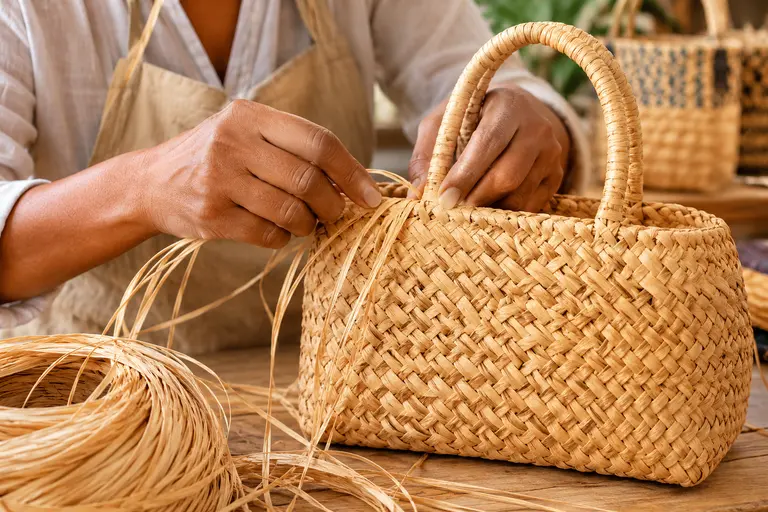
After drying, artisans sort the fibres by quality. Then, they weave, crochet, or braid the strands into bags, hats, and baskets. Unlike uniform factory thread, natural raffia varies in thickness, colour, and length. Consequently, artisans adjust their weaving technique as they work to ensure structural integrity. In addition, intricate designs demand patience, steady tension, and careful finishing. This creative process closely resembles gem cutting. A lapidary studies a rough stone before choosing how to shape and polish it to maximize its beauty. Similarly, a raffia artisan studies the raw fibres before choosing a construction method. In both cases, deep knowledge of the material shapes the final result.
Brands Championing Malagasy Raffia Craftsmanship
Several well-known brands now credit Malagasy craftsmanship openly. For instance, Loewe describes its Font tote as made with raffia leaves that artisans in Madagascar cultivate, harvest, sun-dry, and handweave. Likewise, Saint Laurent partners with Akanjo, a Madagascar social enterprise certified by the World Fair Trade Organization, for its raffia Panier bags. Akanjo also runs training programmes that support its local artisans. Affordable labels use the fibre too; for example, Rouje lists its Domi basket as 100% raffia, handmade in Madagascar. However, shoppers should still read each label carefully, because some bags only imitate the look of raffia with synthetic materials. Therefore, check the composition before you buy.
What Raffia Craftsmanship Teaches Gemstone Designers
Knowing Your Material in Raffia Craftsmanship
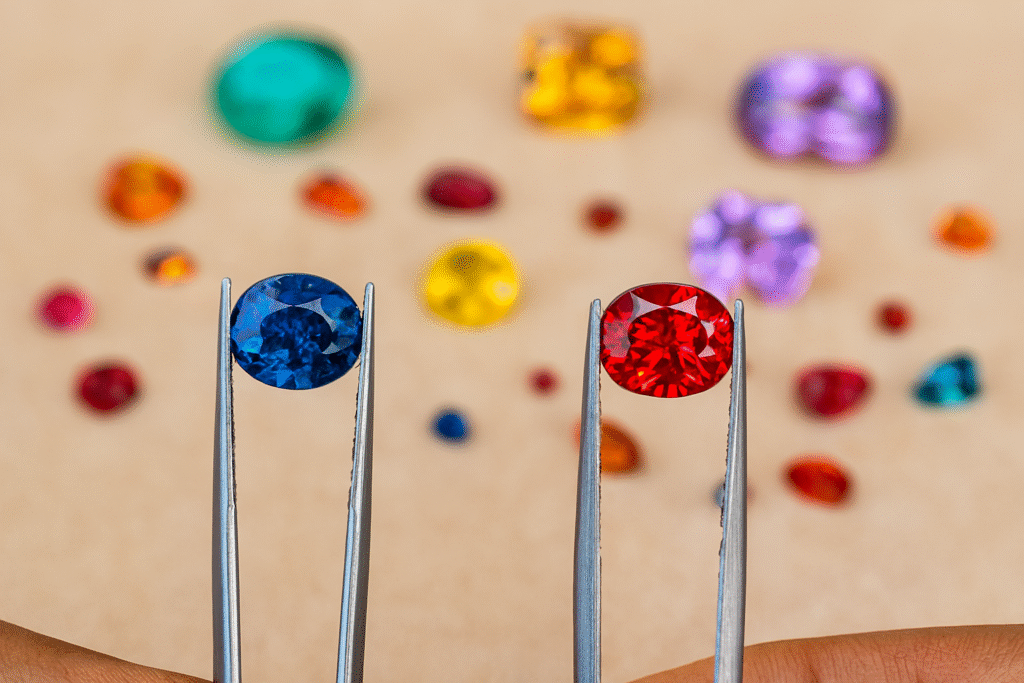
The American Gem Trade Association (AGTA) runs the Spectrum Awards and the Cutting Edge Awards. The Spectrum Awards began in 1984 and honour jewellery that features natural-coloured gemstones and cultured pearls. Meanwhile, the Cutting-Edge Awards form a special division dedicated exclusively to lapidary arts. Both awards reward deep material knowledge. For instance, cutters weigh internal inclusions, colour zoning, cleavage, and crystal structure, while raffia artisans weigh fibre thickness, flexibility, and strength. As a result, skilled workers waste less material and create better, more durable designs.
Precision, Colour, and Texture in Raffia Craftsmanship
Jewellers must secure stones without hurting their beauty or stability. Likewise, raffia artisans control weave density and tension so that a bag keeps its shape over time. Colour also connects the two crafts. Designers pair green tourmaline, blue sapphire, and coloured garnet for contrast, and they use faceting and metalwork to shape light. Similarly, raffia makers combine natural tones, dyed fibres, and varied stitches to build raised and recessed surfaces. As a result, shadows add depth even within a limited colour palette. Finally, neither craft demands total perfection. Natural materials vary, so designers can celebrate that variation instead of hiding it.
Lessons for Buyers of Raffia Craftsmanship
Ensuring Quality in Raffia Craftsmanship at the Source
Natural origin does not automatically mean sustainable. A mapping project by Bondy and Made For A Woman reports that harvesters can collect raffia without felling the palm. However, harvesting at the wrong time or from young plants weakens regeneration, and a new plant needs nearly seven years to become harvestable. Moreover, the same project cites fires, land conversion, and an unstructured collection system as pressures on the resource. It also describes the supply chain as largely informal and untraceable. Therefore, responsible buyers should favour brands that share clear, verifiable sourcing information. Read the ethical sourcing guide for more tips.
Looking Beyond Brand Names in Raffia Craftsmanship
Shoppers should judge workmanship, not just price tags. A handmade bag does not automatically signal high quality, and an expensive gemstone does not automatically signal fine cutting. Instead, check material authenticity, construction, finishing, and durability. In fact, a small artisan workshop can show more care than a mass-produced, heavily branded accessory. Because luxury belongs to human skill and not just diamonds and precious metals, everyday buyers can enjoy it too. See our smart buying guide.
Making Fine Raffia Craftsmanship Accessible
A skilled artisan can turn a palm leaf into a beautiful handbag, just as a lapidary can turn a rough mineral into a remarkable gemstone. Both achievements deserve recognition. Consequently, designers should respect traditional skills, and consumers should learn to see the human effort behind everyday products. This approach gives independent craftspeople the credit they deserve.
Frequently Asked Questions
Does all genuine raffia come from Madagascar?
No. Raffia palms grow in several tropical regions. However, Madagascar supplies most commercial raffia fibre, with estimates at roughly 80%.
How can buyers identify genuine natural raffia?
Buyers should check the material composition and sourcing information. Natural raffia varies in colour and texture, so clear product documentation offers the strongest evidence.
Why do raffia craftsmanship and gemstone design feel similar?
Both crafts demand material knowledge, precision, and creativity. Both transform natural resources into distinctive, lasting finished products.
Does a higher price guarantee a better raffia bag?
No. Price alone does not establish quality. Instead, buyers should examine fibre authenticity, construction, durability, and sourcing transparency.
Disclaimer
This article offers general educational information. The 80% figure is an industry estimate, not a verified measurement. Check all manufacturer specifications before buying. The author has no financial affiliation with the brands or organizations mentioned.