
Introduction
At first glance, Vipassana meditation and gemology seem entirely unrelated. One practice explores the depths of the human mind and body, while the other studies the physical properties of diamonds, pearls, and coloured gemstones. However, both disciplines teach a shared, vital habit: you must observe carefully before you judge. Many people wrongly assume that true expertise means arriving at quick answers. In reality, real expertise often requires slow, deliberate, and objective looking. This habit matters significantly to ordinary people. For example, a jewellery buyer must separate an attractive appearance from verified quality. Similarly, a meditator learns to notice internal feelings without reacting immediately. In both cases, hasty conclusions lead to significant mistakes. Therefore, this article explains five shared lessons in plain language, supporting the educational mission of Saju Elizamma.
Observe Before You Judge in Vipassana and Gemology
Seeing Reality Through Vipassana and Gemology
Vipassana means insight, or seeing things as they really are. In the tradition S. N. Goenka taught, practitioners observe natural breathing and bodily sensations. Meanwhile, they practise equanimity toward pleasant, unpleasant, and neutral experiences. The official Vipassana website describes this systematic approach to self-awareness.
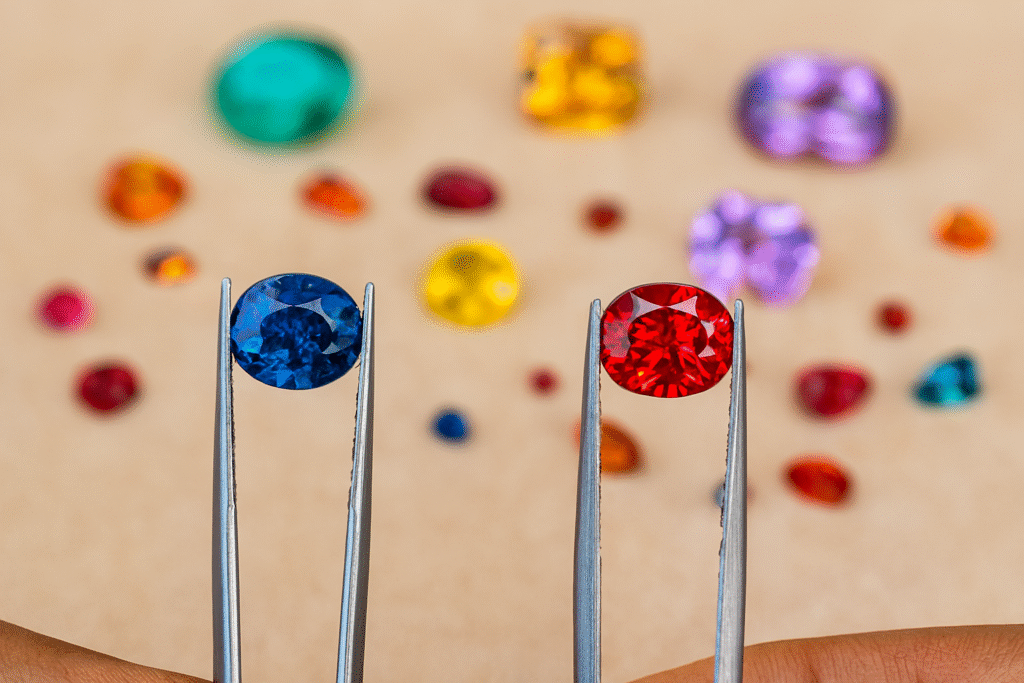
Gemologists follow a very similar rule. They never rely on colour alone to identify a stone. Instead, they rigorously test its physical and optical properties. For instance, a bright red stone may be a ruby, a garnet, a spinel, or simply glass. Likewise, a beautiful diamond does not automatically earn a high-clarity grade. Thus, both disciplines require you to separate your first impressions from objective evidence.
Notice Your Bias in Vipassana and Gemology
Keeping Independent Judgment in Vipassana and Gemology
Expectations, emotions, and financial motives often shape human judgment. In Vipassana, practitioners notice their craving and aversion without following these impulses. Over time, they respond to situations with more calm.
Gemologists face different pressures. A seller may hope for a higher value, and a buyer may expect rare quality. However, neither hope changes the actual composition of the stone. Consequently, professionals must separate commercial interest from technical findings. Good lighting, standard laboratory procedures, and independent testing reduce bias. Moreover, laboratories often add multi-stage review procedures to improve consistency. Still, no method removes every error, and meditation does not erase human prejudice. Both practices ask people to admit their limits.
Following a Method for Vipassana and Gemology
Building Skills for Vipassana and Gemology
Vipassana follows an organised path. In the Goenka tradition, students start with Anapana, which trains attention through natural breathing. Then, they observe bodily sensations step by step.
Gem testing also follows a precise sequence. First, the gemologist records the stone’s general appearance. Next, they choose tests that fit the specific question, such as refractive index, specific gravity, microscopy, or spectroscopy. For example, a ruby and a red spinel can look almost identical to the eye. However, their optical properties differ, so careful testing reveals the truth. Similarly, diamond grading rests on the Four Cs of carat weight, colour, clarity, and cut. The Gemological Institute of America explains how trained graders assess these factors under controlled conditions. Pearls need a different approach involving lustre, surface quality, and nacre thickness. Overall, a method works best when the user also brings knowledge and experience.
Accepting Uncertainty in Vipassana and Gemology
Using Humility to Protect Vipassana and Gemology Standards
Experience sharpens your judgment, yet it never provides complete, perfect knowledge. A meditator may struggle to understand a complex experience. Likewise, a gemologist may meet an unfamiliar synthetic stone, a new treatment, or a deceptive imitation. Therefore, good professionals stay curious. When routine tests cannot confirm identity, they recommend further analysis rather than guessing. Similarly, meditators ask qualified teachers for guidance. Furthermore, continuing education, peer review, and honest records keep professional standards high. You can build this habit of careful inquiry through our gemstone buying guides.
Turning Vipassana and Gemology into Public Benefit
Improving Decisions Through Vipassana and Gemology
These principles help far more than just specialists. Reliable identification and transparent reports show buyers a gemstone’s documented features. As a result, shoppers ask better questions, understand treatments, and challenge pushy sales claims. However, a report has a defined scope. It does not guarantee resale value or investment returns. Therefore, buyers should understand what a report covers before they make an expensive purchase.
Meditation also offers practical benefits. Regular practice may help some people notice emotional reactions and respond thoughtfully. Nevertheless, results vary, and meditation does not guarantee freedom from stress. Similarly, a jeweller who explains limits and avoids exaggeration earns lasting trust. Ultimately, disciplined observation leads to better decisions, greater transparency, and more responsible behaviour. Consequently, patient observation protects both your money and your peace of mind.
Frequently Asked Questions
What do Vipassana and gemology share?
Both encourage careful observation before judgment. However, Vipassana explores personal experience, whereas gemology examines physical materials through scientific testing.
Can meditation improve gemstone identification?
Meditation may sharpen your attention and focus. Nevertheless, it cannot replace formal gemological education, years of experience, or specialized testing equipment.
How can jewellery buyers apply these principles?
Buyers should read documentation, ask clear questions, and resist sales pressure. Moreover, for valuable purchases, they should request an independent laboratory report.
Can anyone remove bias completely?
No. However, systematic procedures, independent review, and honest disclosure significantly reduce the effect of bias on your final decisions.
Disclaimer
This article offers an educational comparison. It does not claim that meditation can identify gemstones, nor does it provide spiritual or medical advice. Consult qualified teachers for meditation and recognised laboratories for professional gem identification. The author has no financial affiliation with the brands or organizations mentioned.