Introduction
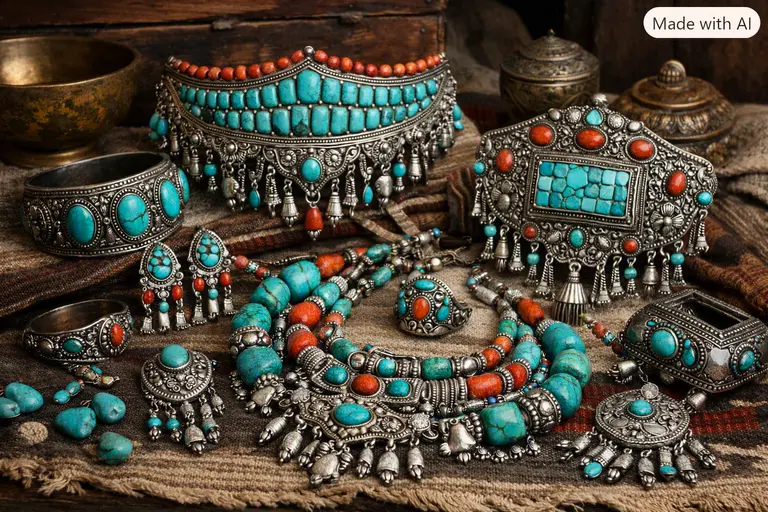
Spiti jewellery tells the fascinating story of a high Himalayan valley in Himachal Pradesh, and this Spiti Jewellery Guide explores the deep cultural roots of these stunning ornaments. Specifically, it reflects a unique culture where silver and gemstones carry both aesthetic beauty and profound spiritual meaning. Traditionally, silver forms the solid foundation of most pieces, while turquoise, coral, and pearls add the vibrant colour and character that define the Himalayan look. Moreover, this jewellery works as an essential part of traditional dress rather than as simple decoration.
Spiti also shares strong cultural links with nearby regions such as Ladakh, Lahaul, and Kinnaur. However, it keeps its own specific jewellery forms, local names, and distinct styles of wearing them. Therefore, buyers should avoid labelling every Tibetan-style ornament sold in northern India as Spitian. This Spiti Jewellery Guide aims to help you distinguish authentic local craft from general Himalayan styles.
Today, travellers can find both traditional and contemporary jewellery in Kaza and across the valley. Still, smart shoppers should always separate locally made pieces from mass-produced jewellery brought in from elsewhere. By following a reliable Spiti Jewellery Guide, you can appreciate the craftsmanship of the “Middle Land” while protecting your investment.
Why Consult a Spiti Jewellery Guide?
Traditional Spiti jewellery often looks incredibly substantial and elaborate compared to urban styles. In particular, a full bridal set can stretch from the head down to the waist. According to one widely cited estimate, a complete set can weigh around 10 to 12 kilograms. Although this figure varies by source, it highlights how much importance families place on these precious heirlooms.
At the same time, this jewellery also serves a practical purpose in a harsh climate. Traditional accounts describe how heavy ornaments help secure clothing and shawls against the wind. Furthermore, these pieces protect the head and ears from the cold Himalayan elements. Consequently, the beauty of the piece often acts as a secondary benefit to its functional utility.
Notably, Spiti jewellery stays closely connected to important life occasions. These include weddings, religious festivals, and community celebrations. As a result, it plays a vital role in preserving the valley’s cultural identity against the pressure of modern fashion trends. To learn more about Himalayan travel, visit Incredible India’s Spiti Valley Guide. Every Spiti Jewellery Guide should emphasize that these items are living pieces of history.
Head Ornaments in the Spiti Jewellery Guide
The Perak, also spelled Perag, ranks among the most recognisable head ornaments linked to Spiti and Ladakh. Historical records describe it as a crimson cloth headdress covered in rows of turquoise. Specifically, they identify it as the traditional headdress of married women across these high-altitude regions. Experts believe the stones symbolize a woman’s wealth and her family’s social status.
However, buyers should not treat the Perak as unique to Spiti alone. Similar traditions exist across neighbouring Himalayan communities. The Berag stands out as another important bridal head ornament specifically from Spiti. Local accounts describe the Berag as an elaborate covering made from silver and cloth.
Interestingly, while most Berags feature turquoise, some historical sources instead mention sapphire. Therefore, the exact stone can vary based on the family’s heritage and the specific piece. Furthermore, these accounts note that while turquoise once came exclusively from Tibet, modern artisans sometimes use stabilized or even artificial turquoise to manage costs. For tips on buying precious metals, see our related silver jewellery guide.
Necklaces and the Spiti Jewellery Guide
Spiti jewellery goes far beyond its famous headdresses. The system of adornment is comprehensive, covering every part of the body. For instance, Kondha refers to traditional earrings made from silver, turquoise, and coral beads. Meanwhile, Ghiyun describes a gold or silver pendant set with semi-precious stones.
Adornment Terms: Spiti Jewellery Guide
To navigate the markets in Kaza effectively, use this Spiti Jewellery Guide to learn these common terms:
- Pitsup: A traditional waist-band ornament.
- Digra: A functional and decorative waist-belt holder.
- Docha: A heavy traditional waist ornament, sometimes called Dhikra.
- Ghyool: Jewellery specifically belonging to young girls.
- Chimkut: Decorative ornaments specifically for the hair.
- Ultik: Traditional necklaces made of multi-layered beads.
- Doo: Heavy silver bangles worn on both wrists.
Consequently, Spiti jewellery works as a complete ecosystem of adornment. Each piece interacts with the woollen fabrics of the local dress to create a silhouette that is iconic to the Himachal highlands. You can find more details on regional styles in our Himachal Pradesh jewellery guide.
Verification in the Spiti Jewellery Guide
Silver shapes the traditional look of most Spiti ornaments. Meanwhile, turquoise and coral add the bold blue-green and red colours that define the aesthetic. Historical sources also mention that pearls and amber frequently appear as decorative materials in older pieces.
Nevertheless, buyers should never assume that every blue-green stone they see is natural turquoise. Modern markets are flooded with treated turquoise, reconstructed material, or even dyed magnesite imitations. Therefore, you must always ask the seller exactly what material a piece contains. Indeed, professional labs like the GIA (Gemological Institute of America) provide the only 100% certain way to identify these stones.
Testing Gemstones Safely
In the mountains, people often suggest “folk tests” to prove a stone’s identity. However, you must avoid these:
- The Scratch Test: This can permanently ruin a genuine stone.
- The Hot Needle Test: This can melt plastic imitations but also damages real amber or resin.
- Magnet Tests: While silver is non-magnetic, many base metals are also non-magnetic, making this test unreliable.
Instead, examine the piece under a 10x loupe. Look for natural matrix patterns rather than perfectly uniform colours. If a deal seems too good to be true, it probably is. Following a Spiti Jewellery Guide helps you avoid common tourist traps.
Where to Buy Authentic Himalayan Jewellery
Kaza serves as the primary hub for travellers seeking local jewellery and handicrafts. Shoppers can find silver and turquoise pieces throughout the main market. However, the surge in tourism has attracted traders who sell mass-produced items from outside the state.
Therefore, you should always ask where a piece was made. Does the design reflect genuine Spiti tradition? Many local cooperatives help sustain authentic artisans, and buying from them ensures your money supports the local community. For deep cultural insights, check out Himkatha’s documentation on Spiti dress.
FAQ: Your Spiti Jewellery Guide
What are the primary materials used in Spiti?
Traditional pieces mainly use 925 silver or higher purity. The stones are almost always turquoise, coral, and occasionally sapphire or amber.
How can I tell if a Perak is authentic?
Authentic Peraks are passed down through generations. They feature hand-stitched leather or cloth backing and irregular, natural turquoise stones. New versions often use synthetic glues and uniform, dyed stones.
Is Spiti jewellery an investment?
While it holds significant cultural and metal value, its resale value depends on the purity of the silver and the quality of the stones. Always obtain a receipt and a purity certificate if possible.
Can men wear Spiti jewellery?
Yes. While the most elaborate sets are for women, men traditionally wear silver rings (Surundup) and sometimes simple necklaces or ear studs.
Conclusion
You do not need a massive budget to own a piece of Spiti heritage. A modest silver ring or a simple turquoise pendant can still connect you meaningfully to Himalayan craftsmanship. Moreover, a smaller piece backed by honest information is a better purchase than an expensive item built on unverified claims. Ultimately, buy what you love, understand the materials, and pay a fair price. This simple approach protects both your finances and the cultural soul of the Spiti Valley.
Disclaimer
Spiti jewellery traditions can vary between villages and families. Names and materials may differ across sources. The bridal set weight cited reflects an estimate rather than a verified standard. This article offers general guidance only. For expensive purchases, always obtain independent gemological testing and metal purity verification. The author has no financial affiliation with the brands or organisations mentioned.