Introduction to Wayanad Robusta and coffee gemstones
Keralam produces some of India’s most distinctive agricultural and natural treasures. Few pairings capture that diversity as well as Wayanad Robusta coffee and coffee-coloured gemstones. Although coffee and gemstones belong to entirely different worlds, they share a remarkable range of brown, golden, green, and earthy tones that nature creates in both.
Therefore, exploring the colours of Wayanad Robusta and coffee gemstones offers an enjoyable way to appreciate the beauty found across Keralam’s highlands. This article explains what makes GI-tagged Wayanad Robusta special and identifies the gemstones that most closely resemble its palette. Furthermore, it provides practical buying advice for everyday consumers who value quality. To understand the wider market for such high-value assets, you can read our guide on industry sheepdogs in tech and jewelry.
GI Status of Wayanad Robusta and coffee gemstones
Wayanad, located in the northern highlands of Keralam, has cultivated quality coffee for many generations. The district benefits from a cool climate, abundant rainfall, and fertile forest soils. Consequently, in 2019, Wayanad Robusta received Geographical Indication (GI) registration. This status legally protects the name for qualifying coffee grown within this designated area. To see other regional masterpieces, explore our section on GI-tagged products from Keralam.
Unlike large-scale plantation coffee grown in open fields, most Wayanad Robusta develops under the shade of native trees such as silver oak and jackfruit. Moreover, pepper vines often climb these trees alongside the coffee plants. As a result, the coffee cherries mature slowly. This contributes to the coffee’s heavy body, rich aroma, and distinctive flavour profile. Specialty roasters typically describe this variety as bold and full-bodied, often featuring notes of dark chocolate and roasted nuts. For official industry data, you can visit the Coffee Board of India.
Soil Influence on Wayanad Robusta and coffee gemstones
Many people assume that Wayanad’s famous lateritic red soil directly gives the coffee beans their distinctive brown colour. However, the reality is more nuanced than that. While the district’s red loamy soils certainly influence plant health and terroir, they do not directly dye the beans.
Instead, bean colour depends on the Robusta variety, the processing method, and, above all, the roasting process. For example, the same batch of green beans can develop noticeably different shades when roasted lightly or darkly. Even so, Wayanad’s reddish landscape provides an attractive visual connection with several earthy-coloured gemstones. This aesthetic synergy makes the comparison between Wayanad Robusta and coffee gemstones a worthwhile study for designers.
Smoky Quartz: Ideal Wayanad Robusta and coffee gemstones
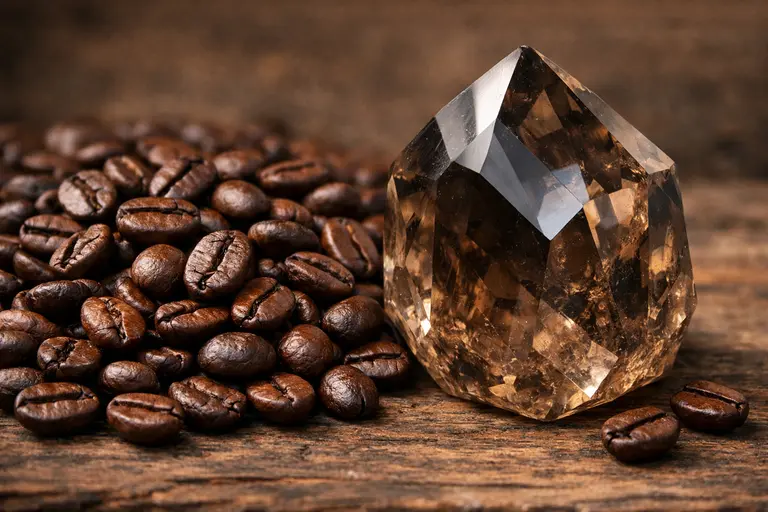
Among natural gemstones, smoky quartz provides the closest visual match to a roasted Wayanad Robusta coffee bean. Specifically, smoky quartz displays transparent to translucent shades ranging from light tan to deep espresso brown. Its darkest material closely resembles freshly roasted coffee beans.
In the jewellery trade, some retailers use commercial names such as “Coffee Quartz” or “Chocolate Quartz.” However, you should remember that these are marketing terms rather than separate gemstone species. In most cases, they refer simply to dark smoky quartz. Therefore, consumers should always ask for the actual mineral name before making a purchase. Smoky quartz ranks 7 on the Mohs scale, which means it resists ordinary scratches effectively. For more details on choosing stones, see our coloured gemstones buying guide. You can also cross-check mineral facts at the Gemological Institute of America (GIA).
Natural Hues in Wayanad Robusta and coffee gemstones
Although smoky quartz offers the closest overall match, several other stones reflect different stages of the coffee journey. Tiger’s Eye, for instance, displays warm golden-brown bands. These resemble the rich highlights on freshly roasted beans. Its silky sheen, known as chatoyancy, creates an appearance similar to light reflecting off the natural oils on a bean’s surface. This is a popular choice for those interested in gemstones inspired by Keralam.
Similarly, brown tourmaline—also known as dravite—displays deep earthy shades that resemble dark roasted espresso. Meanwhile, raw, unroasted Robusta beans display muted olive-green colours. Consequently, olive-toned peridot provides a closer comparison with green coffee beans before they enter the roaster. Finally, brown jasper resembles the earthy appearance of dried coffee cherries. Unlike the translucent stones, its opaque texture connects visually with the region’s agricultural environment. To explore more about the history of such minerals, visit the Mindat website.
Sourcing Wayanad Robusta and coffee gemstones
If you enjoy premium coffee, buying authentic Wayanad Robusta is worth the effort. Since it is a GI-tagged product, it is recommended that you buy from reputable cooperatives or specialty roasters. While some packages display the official GI logo, you must read the label carefully to verify the producer’s details.
Additionally, look for the words “Single-Origin Wayanad” whenever possible. Single-origin coffee usually reflects the character of the soil more clearly than blended alternatives. Choosing whole beans is also a smart move, as freshly ground coffee retains more aroma. This attention to detail is similar to the Chow Tai Fook business model, which prioritizes sourcing and authenticity to build trust.
When selecting Wayanad Robusta and coffee gemstones, the same rules of authenticity apply. Always ask whether a “Chocolate Quartz” is natural smoky quartz or treated. Purchase from a reputable jeweller who clearly discloses whether the stone is natural, treated, or laboratory-grown. This transparency is vital for building India’s global brands in both the agricultural and luxury goods sectors.
FAQ About Wayanad Robusta and coffee gemstones
Is Wayanad Robusta stronger than Arabica coffee?
Yes, generally speaking, Robusta contains almost double the caffeine of Arabica. Therefore, Wayanad Robusta typically produces a stronger, fuller-bodied cup with a thicker crema.
Which gemstone is the best budget alternative to brown diamonds?
Smoky quartz is the most popular budget alternative. It offers a similar deep brown “champagne” or “cognac” look at a much more accessible price point.
Why does Wayanad Robusta have a GI tag?
The GI status recognizes the coffee’s unique geographical origin and traditional shade-grown cultivation practices. Furthermore, it protects local farmers from people selling inferior coffee under the Wayanad name.
Are coffee-coloured gemstones durable for daily wear?
Yes, most coffee-toned stones like smoky quartz and Tiger’s Eye are quite hard. Consequently, they are suitable for rings and bracelets that you might wear every day.
Does the “coffee” name in gemstones mean they are dyed?
Not necessarily. While some stones are dyed to achieve a brown color, high-quality smoky quartz gets its color naturally from aluminum impurities and natural radiation within the earth.
Disclaimer
This article serves educational and general information purposes only. The gemstone comparisons describe visual colour similarities and do not represent scientific classifications. The author has no financial affiliation with the coffee brands or gemstone laboratories mentioned. Always purchase from reputable sellers and verify all product information independently.