
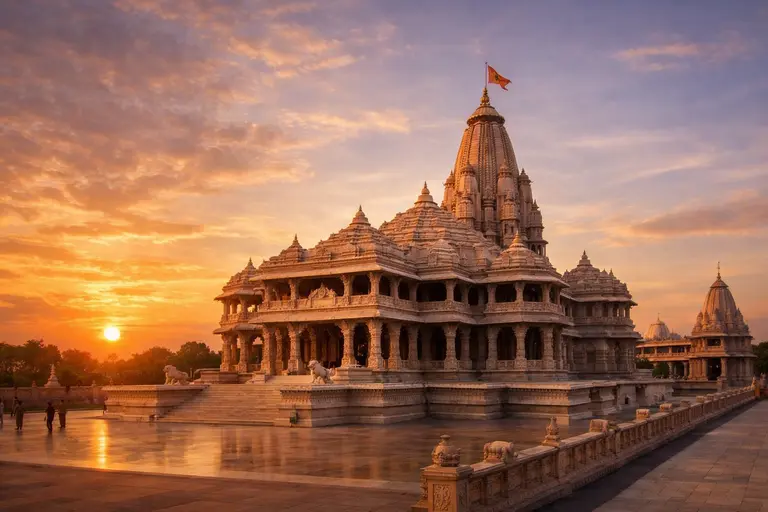
Introduction to the Ayodhya Travel Guide
India holds hundreds of historic cities; however, few carry the cultural weight that Ayodhya does. For anyone planning a journey, this Ayodhya travel guide explains why the ancient city along the Saryu River has shaped the way Indians understand their civilizational stories for thousands of years. While most people recognize Ayodhya as the birthplace of Lord Rama, the city offers far more than a single religious identity.
Today, Ayodhya stands where history, culture, and modern development meet. Consequently, it draws not only pilgrims but also photographers, historians, and curious travelers from every corner of the globe. Furthermore, the city’s sweeping transformation in recent years has placed it firmly at the center of India’s tourism map. Whether you travel for faith or curiosity, this Ayodhya travel guide explains why the city rewards every kind of visitor.
History Lessons in this Ayodhya Travel Guide
Ayodhya holds a central place in the very fabric of Indian civilization. The Ramayana—one of the world’s oldest and most influential epics—unfolds here. These stories have shaped Indian literature and art for generations. Even individuals outside the Hindu faith recognize Lord Rama as a symbol of duty and principled leadership.
Significantly, the reach of Ayodhya’s legacy extends well beyond India. Southeast Asian countries, such as Thailand and Indonesia, have woven these stories deeply into their own traditions. Therefore, visiting Ayodhya connects you to a global heritage. To understand how other sacred sites manage their treasures, you can read our article on the historic jewels of the Kollur Mookambika Temple. For official cultural context, visit the Ministry of Culture, Government of India.
Architecture Tips from Our Ayodhya Travel Guide
Ayodhya has become one of India’s most significant destinations for those who love design. Most notably, the Ram Janmabhoomi Temple showcases traditional Nagara-style architecture at a grand scale. A large number of artisans contributed intricate stone carvings, making the temple a living demonstration of India’s artistic skill.
Carvings to See in Your Ayodhya Travel Guide
The level of detail in the pink sandstone is truly breathtaking. Artisans spent years carving motifs of flowers, deities, and celestial beings. This focus on natural beauty and craftsmanship is similar to why Indian designers choose raw diamond and Polki jewelry today. Each pillar tells a story, and each dome reflects a mathematical precision that has existed in India for centuries.
Exploring River Ghats via Ayodhya Travel Guide
Beyond the main temple, visitors must explore the historic ghats. Specifically, the Naya Ghat and Guptar Ghat offer a serene atmosphere where the river meets ancient stone steps. As evening arrives, the Saryu Aarti creates a spectacular display of light and sound. Consequently, photographers find these moments to be the highlight of their trip. For a deeper look at Indian architectural heritage, visit Uttar Pradesh Tourism.
Multi-faith Legacy in the Ayodhya Travel Guide
Although the city is most closely associated with Lord Rama, Ayodhya’s history spans multiple religious traditions. Ancient Buddhist texts refer to the city as Saketa, an important center during the time of the Buddha. Similarly, Jainism holds Ayodhya in high regard because several Tirthankaras were traditionally born here.
In addition, the city contains historic Islamic sites and Sufi shrines that reflect centuries of cultural exchange. As a result, Ayodhya offers every visitor a chance to appreciate how different communities have contributed to the same landscape. This broader heritage makes the city meaningful regardless of your personal beliefs. Therefore, the city serves as a bridge between the past and the future of building India’s global brands in the heritage sector.
Festival Planning with Your Ayodhya Travel Guide
If you want to experience Ayodhya at its most spectacular, you should plan your visit around a major festival. During Deepotsav, millions of oil lamps light up the riverbanks all at once. This creates one of the most breathtaking cultural spectacles in the country. Likewise, Ram Navami draws enormous crowds of devotees.
Importantly, these events are not simply religious gatherings. Instead, they showcase classical music, folk dance, and traditional arts. Therefore, even travelers with no religious interest find themselves moved by the energy. For cultural travelers, these festivals provide images and memories that stay with you for a lifetime.
Regional Routes in Your Ayodhya Travel Guide
Many travelers use Ayodhya as the starting point for a wider journey through northern India. For example, the city pairs naturally with visits to Varanasi and Prayagraj. Together, these destinations build a rich picture of India’s spiritual landscape.
Furthermore, traveling through this region exposes you to local cuisines and regional languages that no book can replicate. You can sample local delicacies like pedas and chaat that reflect the flavors of the heartland. Therefore, Ayodhya works beautifully as the anchor of a longer itinerary rather than just a standalone day trip. This interconnectedness is a prime example of the that keep our traditions alive.
2026 Logistics for the Ayodhya Travel Guide
In recent years, the government has invested heavily in making Ayodhya accessible. The Maharishi Valmiki International Airport now connects the city to major Indian metros with daily flights. Additionally, the modernized Ayodhya railway station handles large visitor volumes with ease.
New roads, improved public spaces, and better crowd management have significantly enhanced the experience on the ground. At the same time, planners worked carefully to preserve the city’s character. Consequently, Ayodhya demonstrates how India can develop historic cities without erasing their soul. This thoughtful balance makes the city an instructive example for urban development.
Ayodhya Travel Guide FAQ
Do I need to book temple entry in advance?
While entry is generally free, you should check the official temple trust website for “Darshan” slots during peak festival seasons. This helps you avoid long queues and ensures a smoother experience.
What is the best month to visit Ayodhya?
October to March offers the most comfortable weather. During these months, the temperature remains pleasant for exploring the outdoor ghats and temple complexes.
Is Ayodhya safe for solo female travelers?
Yes, the city has seen a massive increase in security and tourist police presence. However, as with any major travel destination, you should stay alert and use authorized transport services.
Can I find luxury accommodation in Ayodhya?
Absolutely. Several international and domestic luxury hotel chains have opened properties in Ayodhya. These hotels offer modern amenities while reflecting the city’s heritage through their decor.
Are there any specific dress codes for temples?
Most temples in Ayodhya prefer that visitors dress modestly. It is advisable to cover your shoulders and knees as a mark of respect for the local traditions.
Disclaimer
This article is for educational and travel-information purposes only. The author has no financial affiliation with the tourism boards or companies mentioned. Development plans and event schedules may change; therefore, readers should consult official government sources before making final travel arrangements.