Introduction to California Gold Lessons for Indian Jewelers
Most consumers never pause to think about exactly where their gold originated. Typically, they walk into a jewelry store, select a piece they love, and complete the transaction. However, a small family business in Santa Monica, California, is currently changing that habit, and the global jewelry industry should take notice. Specifically, the California Gold Lessons for Indian Jewelers revolve around a rare “mine-to-market” operation run by Bracken Jewelers.
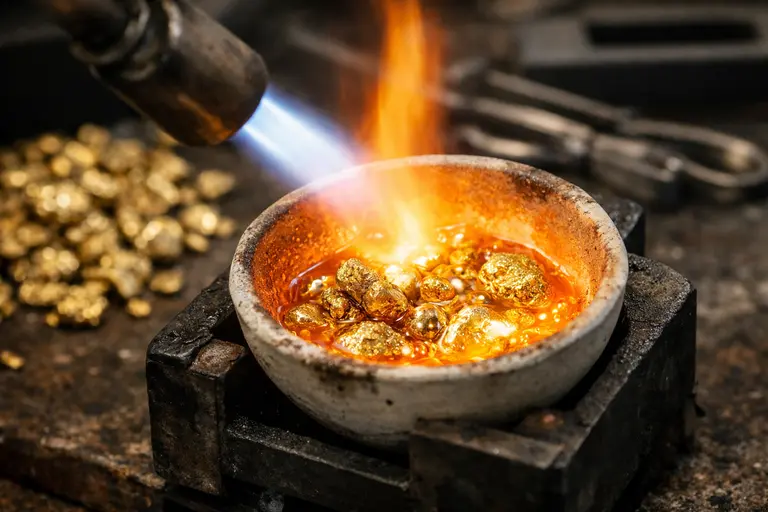
The Bracken family mines gold from their own Northern California operations, refines it, and crafts it into jewelry in their own studio. There are no middlemen and no mysteries involved in their process. This model is exceptionally uncommon in an industry where metal typically passes through dozens of traders before it reaches the showcase. Consequently, this guide explores how Indian retailers can adopt this transparency. You should also read our guide on gemstone buying mistakes to understand how quality standards apply to both stones and precious metals.
The California Gold Lessons for Indian Jewelers Model
Most jewelry businesses purchase their metal through massive international bullion markets. As a direct result, they often struggle to tell their customers exactly where the metal originated. Bracken Jewelers, conversely, promotes gold from its own Sierra Nevada foothills operations. Interestingly, this California river gold naturally averages around 20 karats in purity.
Furthermore, the gold carries a warm, distinctive greenish-gold color because of its unique natural alloy composition. Rather than hiding this variance, the company highlights it as a primary selling point. This approach proves that consumers in 2026 do not just buy a product; they buy a story. Therefore, provenance now matters almost as much as the quality or the price tag. For more on how supply chain transparency is reshaping consumer choices, you can visit the Responsible Jewellery Council.
Why Provenance Matters for Indian Jewelers
India currently remains one of the world’s largest and most active jewelry markets. Millions of families invest in gold for weddings and festivals every year. However, most Indian jewelers rely on imported bullion and complex, fragmented supply chains. Consequently, providing detailed sourcing information to the end-user remains a significant challenge.
The good news is that Indian jewelers do not need to own their own mines to apply the California Gold Lessons for Indian Jewelers. Instead, they can begin by documenting their sourcing practices more clearly. For example, a boutique could build a specific collection linked to verified recycling programs. Similarly, partnering with certified “Green Gold” suppliers builds immense trust. You may also read our article on Understanding BIS Hallmark to see how India’s existing certification system provides a strong foundation for this story.
Using California Gold Lessons to Reach Gen Z
This shift in strategy is not only about ethical compliance; it is about staying relevant to a new generation of shoppers. Older customers traditionally viewed gold purely as a financial safety net. Today, however, many younger buyers in cities like Mumbai and Bengaluru want authenticity and sustainability. They want a brand they can feel good about supporting on social media. Therefore, jewelers who communicate their sourcing journey clearly are likely to build much longer-lasting customer relationships. If two rings look identical, the one with the transparent origin story will almost always win the sale in 2026.
Traceability Benefits from California Gold Lessons
The strongest feature of the Bracken model is the ability to trace the metal from the source to the showcase. Customers can follow the journey of their gold from the Yuba River to the finished piece in the Santa Monica studio. In contrast, the global gold supply chain moves through so many hands that tracing exact origins often becomes impossible for the average retailer.
This matters because consumers worldwide are now asking harder questions about labor conditions and environmental impacts. As a result, traceability has transitioned from a luxury “add-on” to a genuine business advantage. For Indian jewelers, this trend represents a massive opportunity to differentiate themselves. Digital tracking tools and blockchain-based records can help bridge this gap. Organizations such as the London Bullion Market Association (LBMA) are already encouraging these practices to improve global standards.
Sourcing Strategy for California Gold Lessons for Indian Jewelers
Bracken Jewelers explicitly states that its mining operations avoid mercury and cyanide. Instead, they utilize water and gravity through physical separation. This responsible approach forms a central part of their brand identity and attracts eco-conscious buyers.
Of course, small artisanal operations will never replace large-scale industrial mining. Nevertheless, they prove that ethical sourcing can become a meaningful narrative. Indian jewelers can apply the same principle by sourcing recycled gold or supporting fair-trade supply chains. By doing so, they build a reputation that competitors cannot easily duplicate. To learn more about the minerals often found alongside gold, you can check the data at mindat.
Storytelling and California Gold Lessons for Indian Jewelers
Bracken Jewelers utilizes a unique “grizzly bear” hallmark to identify California Gold and reinforce its regional identity. In India, the BIS Hallmark already performs the vital task of certifying purity. However, hallmarking can do more than just guarantee the karatage. It can also tell a story of origin.
Regional identity marks or collection-specific symbols could help Indian jewelers build stronger emotional connections with their buyers. In other words, a hallmark can serve as both a quality guarantee and a sophisticated brand statement. As consumer awareness continues to grow, these small details will help independent brands stand out in an overcrowded market. Ultimately, the California Gold Lessons for Indian Jewelers teach us that transparency is the most valuable currency a jeweler can hold.
FAQ: California Gold Lessons for Indian Jewelers
What makes Bracken Jewelers different from Indian chains?
They follow a “mine-to-market” model where they own the source of the gold. This allows for total transparency that most large retailers with complex supply chains cannot offer.
Why is 20-karat gold used in California?
California river gold naturally occurs at around 20 karats. By leaving it at its natural purity, the jeweler preserves the unique color and “story” of the specific river it came from.
How can an Indian jeweler show traceability?
Jewelers can use blockchain-based certificates or source their gold from refineries that offer “Chain of Custody” (CoC) certification from the Responsible Jewellery Council.
Does ethical gold cost more for the consumer?
Sometimes there is a small premium for “fair-mined” or traceable gold. However, many buyers are willing to pay this to ensure their purchase supports ethical labor and environmental safety.
What is the “grizzly bear” hallmark?
It is a custom stamp used by Bracken Jewelers to signify that the gold was mined in California. It acts as a regional certificate of origin.
Disclaimer
This article is for informational and educational purposes only. Details regarding specific mining companies reflect publicly available information as of June 2026. Always verify sourcing and sustainability claims independently before making high-value investments. The author has no financial affiliation with Bracken Jewelers.