Introduction to Chhattisgarh Tribal Jewellery
The tribal communities of Chhattisgarh wear their rich identity directly on their bodies. Specifically, every necklace, bangle, and heavy anklet tells a story about who they are, where they originate, and what they believe. From the Gond and Baiga to the Muria and Maria tribes, artisans craft Chhattisgarh Tribal Jewellery to celebrate physical beauty, mark social status, and invite spiritual protection. If you want to understand Indian tribal culture at its most personal, you must begin with these handcrafted treasures.
Moreover, these ornaments connect deeply to the specific land where they form. Artisans draw inspiration from dense forests, winding rivers, and everyday village life. Consequently, they utilize local materials alongside techniques that families have passed down through dozens of generations. When you choose to purchase authentic Chhattisgarh Tribal Jewellery, you support both ancient culture and environmental sustainability at the same time. You should also read our guide on gemstone buying mistakes to understand how quality standards apply to all high-value ethnic acquisitions.
Historical Origins of Chhattisgarh Tribal Jewellery
Early tribal communities initially made their jewelry from whatever materials they found in their immediate surroundings. These included seeds, forest wood, cowrie shells, animal bones, and brightly colored threads. As a result, these ornaments grew directly out of the seasonal rhythms of the forest. Over several centuries, however, metal entered the cultural picture and transformed the aesthetic completely.
The Ghadwa metalworking community in the Bastar region began to utilize a sophisticated lost-wax casting method known globally as Dhokra. In this labor-intensive process, artisans shape a piece in beeswax, cover it with fine clay, melt the wax out, and finally pour in molten brass or bell metal. The result is a hollow, rustic, and beautifully textured ornament that no modern machine can replicate. You can explore more about this history through the official Tribal Heritage portal.
The Evolution of Coin Necklaces
Furthermore, economic history significantly shaped specific pieces. As formal coinage spread through the central Indian region, families began gifting silver coins during wedding ceremonies. Instead of hiding the coins away, women started wearing them as ornate necklaces. This practical habit gave birth to the Rupiya Haar—a coin necklace that functions as a portable savings tool and a visible symbol of household wealth. This blend of finance and fashion remains a hallmark of Chhattisgarh Tribal Jewellery today.
Identifying Key Chhattisgarh Tribal Jewellery Pieces
Once you understand the basic forms, you can easily identify the major ornament types found across the state. Each piece serves a specific function on the body and within the community.
Necklaces, Waist Belts, and Armlets
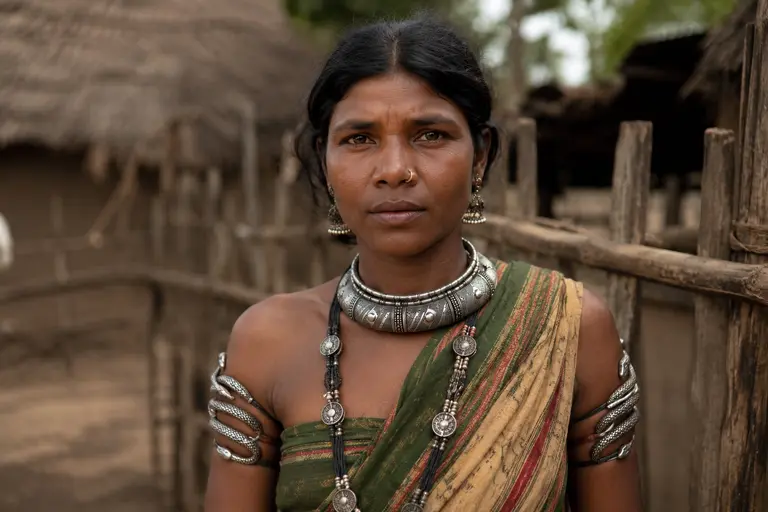
Around the neck, women typically wear the Suta or Sutia. This is a sturdy, solid choker that sits very close to the throat. They also favor the Rupiya Haar, which may use several rows of silver coins to cover the chest. Both pieces feel noticeably heavy when artisans make them in solid silver.
Around the waist, the Kardhan stands out as a broad, elaborately patterned silver belt. Many communities believe this belt helps young mothers support their abdomen after childbirth, although this reflects cultural tradition rather than medical advice. On the arms, you will frequently find Bahuta armlets and Nag-mori bangles. The latter feature stylized serpent motifs that symbolize protection. Finally, heavy anklets called Painjna or Toda produce a rhythmic, musical sound as the wearer walks or dances. To learn more about the culture and technical classification of these pieces, visit the Sahapedia Chhattisgarh Heritage.
Materials and Modern Market Challenges
Traditionally, artisans utilized brass and bell metal for Dhokra pieces, while they reserved silver for more prestigious status symbols. However, as global metal prices have climbed, many makers have shifted toward lighter alloys to keep Chhattisgarh Tribal Jewellery affordable for the masses.
Today, some urban workshops use industrial presses and stamping machines to create mass-produced imitations. Artisans then finish these items with “gilat,”—a white metal alloy—so they shine like silver at a much lower cost. Therefore, you will increasingly find hair ornaments that look like silver but weigh significantly less. As a result, rural markets now mix authentic local work with imported designs from commercial centers like Rajkot or Surat. Consequently, buyers must be more vigilant than ever when searching for genuine handcrafted pieces.
Why Tribal Ornaments Still Matter in 2026
Cultural and environmental changes have certainly affected how people wear these traditional items. As cash incomes grow and younger generations move toward global fashion trends, heavy anklets appear less often in daily life. Despite these shifts, Chhattisgarh Tribal Jewellery still anchors the belief systems of the forest communities.
Coins engraved with auspicious symbols still protect against the “evil eye” and remind wearers of their ancestral strength. Furthermore, designs based on wildlife keep spiritual connections to the forest alive on the wearer’s body. Environmentally, the earliest ornaments had almost zero ecological footprint. While demand for mined metals has increased, supporting local artisans who work in small batches encourages low-waste production. You can find more sustainable craft options through Arts and Crafts of Chhattisgarh.
FAQ: Chhattisgarh Tribal Jewellery
What is Dhokra metal art?
It is a 4,000-year-old lost-wax casting technique used by the Ghadwa community. It produces unique, non-symmetrical metal ornaments with a distinct “wiry” texture.
Is Chhattisgarh Tribal Jewellery made of pure silver?
Antique pieces are often high-purity silver. However, modern versions may use “gilat” or silver-plated alloys. Always ask the seller for a specific metal breakdown before you buy.
What does the serpent motif signify?
The Nag-mori or snake motif represents protection and the sacred connection between the tribal people and the forest deities who guard the earth.
Where can I buy authentic pieces safely?
You should visit government-backed outlets like Tribes India or state emporiums such as Shabari. These organizations ensure that a fair share of the profit reaches the actual artisans.
How do I clean my tribal ornaments?
You should use a soft, dry cloth to wipe away dust. For silver pieces, a gentle rub with a microfiber cloth is sufficient. Specifically, avoid harsh chemicals that might strip the natural patina.
Disclaimer
This article provides cultural and educational information about Chhattisgarh Tribal Jewellery. It does not constitute medical, legal, or financial advice. Always verify materials and certifications with reputable sellers before making a high-value purchase. The author has no financial affiliation with the institutions mentioned.