Introduction
Uttarakhand Jewellery Traditions tell the captivating story of a people, a place, and a resilient way of life. Local artisans in the Kumaon and Garhwal regions craft these pieces by hand, drawing direct inspiration from Himalayan rivers, jagged mountains, and local flora. Specifically, families pass down these complex techniques across generations to keep ancient skills alive in the modern era. Brides and married women wear these ornaments to celebrate their cultural identity and a sense of belonging. However, rising gold prices and urban migration now threaten these delicate crafts. Consequently, imitations flood the market, and fewer young people choose to learn the trade. This guide walks you through everything you need to know about Uttarakhand Jewellery Traditions—from spotting authentic pieces to supporting the artisans behind them. You should also read our guide on gemstone buying mistakes to ensure you avoid common pitfalls when purchasing high-value jewelry.
Iconic Pieces of Uttarakhand Jewellery Traditions
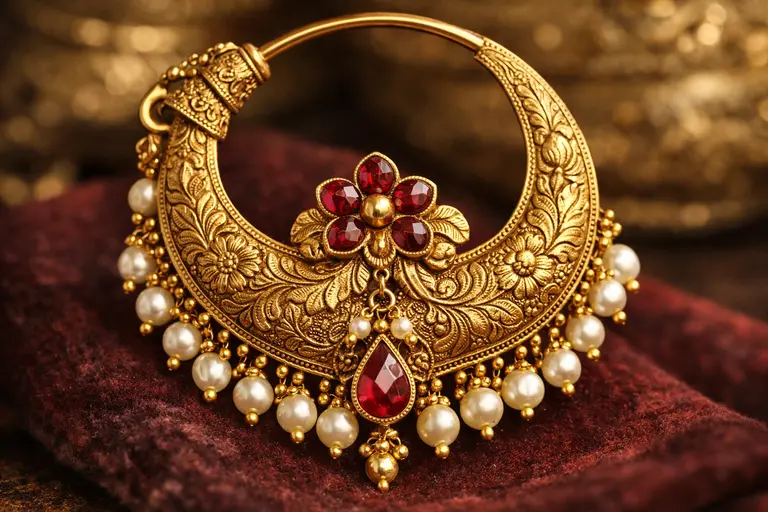
Each ornament within the Pahadi repertoire carries deep cultural and spiritual meaning. First, the Tehri Nath (also called Nathuli) stands as a large, moon-shaped gold nose ring. Artisans adorn it with delicate pearl beads and intricate Kundan stonework. Furthermore, they often engrave peacock and floral motifs onto its surface to represent grace. A bride’s maternal uncle typically gifts it to her on her wedding day as a prized possession.
The Guloband and Pahunchi
Similarly, the Guloband is a gold choker that artisans assemble by arranging square gold blocks along a red cloth belt. Married women in Kumaon and Garhwal wear it as a symbol of domestic harmony. In addition, Pahunchi bracelets consist of multiple strands of gold beads filled with lac wax. Married women wear them as auspicious lucky charms during major festivals. The Hansuli, known as a classic minimalist choker, offers an understated beauty that both Garhwali and Kumaoni women admire. Finally, the Bulaq serves as a nasal septum ornament that signifies a woman’s transition into married life. Together, these pieces form the iconic “Pahadi Bride” look—a style rooted in ancient Vedic culture. To understand the legal standards of the gold used in these pieces, check our guide on Understanding BIS Hallmark.
How to Identify Authentic Uttarakhand Jewellery Traditions
Spotting a genuine piece is easier than most buyers assume if they know the specific markers of quality. To begin with, authentic items utilize 22-karat gold or high-purity silver. Because artisans craft each piece by hand, you will notice slight irregularities in the patterns. Interestingly, these imperfections serve as a good sign—they confirm human craftsmanship, unlike the sterile uniformity of machine-made copies.
Furthermore, you should follow four practical checks. First, examine the hallmark to confirm metal purity. Second, feel the weight; genuine gold feels noticeably heavy compared to brass alternatives. Third, look for handmade motifs like the Himalayan poppy or peacock. Finally, always ask for a certificate of authenticity. Reputable sellers like Battulaal Prayag Narayan Jewellers provide documentation without hesitation. As a result of these steps, any everyday shopper can verify value without expert knowledge. You can learn more about Indian craft heritage at the Indian Handicrafts Portal.
Treatments and Imitations in the Modern Market
High gold prices naturally push both artisans and buyers toward alternative materials. Consequently, many makers now apply overlay techniques, adding brass designs over thin layers of precious metals to lower costs. Others produce gold-plated alloy versions, which are especially common for popular pieces such as the Tehri Nath.
While these imitations successfully mimic the original look, they lack long-term durability. Specifically, the plating wears off relatively quickly, exposing the base metal. Therefore, you must always ask the seller up front about any treatments. Ethical sellers disclose this information immediately. For budget-conscious buyers, these plated versions offer a stylish option for occasional wear, provided they understand the limited lifespan. To see how these standards compare to global gemology, visit the Gemological Institute of America or the Gemmological Institute of India.
Preserving the Heritage of Uttarakhand Jewellery Traditions
These jewelry traditions do far more than simply look beautiful on a shelf. They sustain thousands of artisan families across the Himalayas and preserve skills that might otherwise disappear. Unfortunately, younger generations increasingly migrate to cities for modern corporate careers. This shift directly threatens the survival of ancestral techniques.
On the environmental side, handcrafting jewelry operates as a form of “slow fashion.” It avoids the waste associated with mass industrial production. Furthermore, government initiatives like the Devbhoomi Udyamita Yojana actively promote eco-friendly practices among local craftsmen. Consequently, your choices as a buyer carry significant weight. When you choose authentic, handcrafted pieces, you directly support artisan livelihoods and reduce the global demand for fast-fashion alternatives.
FAQ: Uttarakhand Jewellery Traditions
What makes Uttarakhand jewellery traditions unique?
Artisans hand-craft each piece with specific Himalayan motifs—including Kundan work and peacock designs—that carry deep spiritual and regional meanings not found in other parts of India.
How do I spot fake Pahadi jewelry?
You should first check for official BIS hallmarks. In addition, look for the slight irregularities that characterize handmade work and ensure the piece feels heavy for its size.
Are there affordable alternatives to solid gold pieces?
Yes, gold-plated silver and brass versions are widely available. However, you must verify the plating thickness to ensure the piece lasts for more than a few wears.
Which jewelers sell authentic Kumaoni designs?
Historic sellers like Battulaal in Ramnagar are famous for their gold work. For those seeking silver, brands like Ejaa provide quality Pahadi designs online.
How should I clean traditional Uttarakhand jewelry?
You must avoid harsh chemicals. Specifically, use a soft cotton cloth to wipe the metal and a very soft brush to clean the velvet or silk bases of chokers and bracelets.
Disclaimer
This article provides general guidance based on publicly available information as of May 2026. Jewellery authenticity varies by seller and region. Always consult certified experts and verify official hallmarks before making any purchase. Prices and product availability change frequently — confirm current details directly with sellers. Some links in this article may be affiliate links, but all recommendations prioritise quality and authenticity.