Introduction to our Grandidierite Gemstone Guide
Grandidierite represents one of the rarest gemstones currently known to science. Specifically, it glows with a soft blue-green color that looks like a calm tropical sea frozen in stone. Because most people have never heard of it, this Grandidierite Gemstone Guide breaks down everything you need to know in plain language. Specifically, we will explore its Madagascar origins, its unique optical properties, and the safest ways to purchase it. Consequently, you can make an informed decision when adding this “unicorn” to your collection. You should also read our guide on gemstone buying mistakes to understand how quality standards apply to such rare and high-value acquisitions.
Origins in this Grandidierite Gemstone Guide
Miners initially discovered grandidierite in 1902 along the southern coast of Madagascar. Specifically, French mineralogist Alfred Lacroix collected the earliest known samples from the cliffs of Andrahomana. He then named the stone after Alfred Grandidier, a French explorer who spent decades documenting Madagascar’s natural history.
Today, Madagascar remains the primary source of high-quality material. Specifically, the Anosy region and areas near Tranomaro produce the most saturated crystals. In addition, Sri Lanka produces a small number of rare transparent stones suitable for precision cutting. While other countries like Australia and India have recorded smaller finds, these stones are usually too cloudy for fine jewelry. As a result, nearly all top-grade specimens mentioned in this Grandidierite Gemstone Guide still originate from Madagascar. For detailed mineral locality data, you can refer to Mindat.
Visual Appeal in the Grandidierite Gemstone Guide
Grandidierite typically displays a cyan, turquoise, or bluish-green color with an elegant, muted tone. When a stone contains higher levels of iron, the color shifts toward a deeper blue. Because of this chemical variation, stones from different mine pockets can look noticeably different.
Pleochroism of the Grandidierite Gemstone
One of the most exciting features of this gem is its trichroic pleochroism. In simple terms, this means the gem shows three different colors depending on the viewing angle. Specifically, you can see dark blue-green, pale yellow, and dark green. Therefore, if you gently rotate a piece of grandidierite in front of a light source, you will see these shifts happen in real time. This is a rare optical phenomenon that you will not find in most other blue-green gemstones. To understand the physics behind light scattering in crystals, visit the Gemological Institute of America.
Mining the Grandidierite Gemstone
Small-scale artisanal miners in Madagascar perform most of the extraction work. They utilize basic tools like spades and pickaxes in remote, rugged terrain. Because the deposits are difficult to reach, the global supply remains unpredictable. In fact, gemological research suggests that only about 1 in 10,000 crystals actually reaches gem quality. This scarcity is a major highlight of our Grandidierite Gemstone Guide.
Madagascar’s government has recently taken steps to improve oversight of gemstone exports. Furthermore, large global mining companies typically focus on industrial minerals rather than grandidierite. Therefore, this gemstone remains deeply connected to local mining communities. Consequently, buying a stone often supports small-scale local economies directly.
Treatments for Grandidierite Gemstones
Unlike many common colored gemstones, grandidierite rarely undergoes artificial treatment. Sellers do not routinely heat or oil it to improve its appearance. Because of this, “untreated” grandidierite is the industry standard rather than a special selling point.
This characteristic makes the stone stand out in a market where treatments are frequent. For example, most rubies receive heat treatment, and many emeralds receive oil filling. With grandidierite, however, what you see is exactly what nature produced. Scientists do create synthetic versions for research, but this material rarely enters the jewelry trade. If you are concerned about authenticity, you should check our guide on Understanding BIS Hallmark to see how certification protects consumers in the luxury market.
Jewelry Styling in this Grandidierite Gemstone Guide
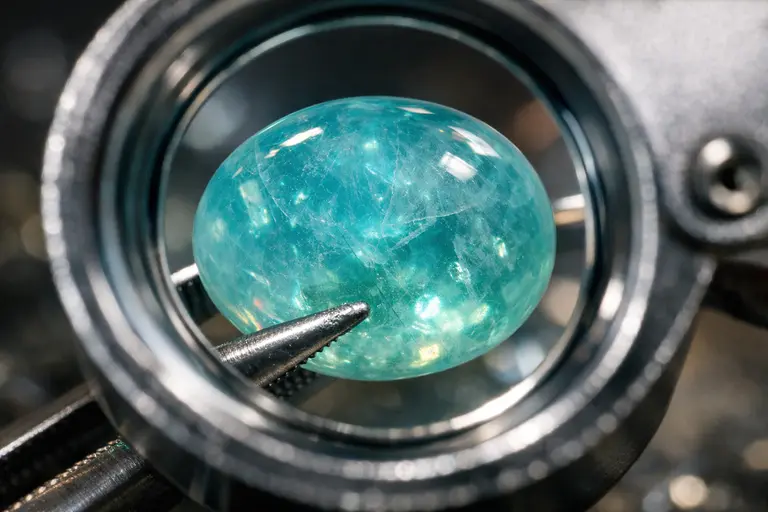
When jewelers work with transparent crystals, they typically choose oval or cushion shapes to maximize brilliance. Meanwhile, translucent material often becomes smooth cabochons that display a soft, glowing effect. Because grandidierite has cleavage in two directions, it can chip if you strike it sharply.
Consequently, earrings and pendants are excellent choices because they avoid daily impact. If you want a grandidierite ring, you should choose a protective bezel setting. Additionally, you should remove your rings before engaging in sports or heavy housework. For routine cleaning, use only warm soapy water and a soft brush. Avoid ultrasonic cleaners, as the vibrations could potentially expand existing internal fractures.
2026 Prices: Grandidierite Gemstone Guide
Price varies widely depending on the level of transparency. Fully transparent, faceted grandidierite of top quality is extremely scarce. Specifically, it can cost between $20,000 and $26,000 per carat in the 2026 market. However, the majority of stones are translucent cabochons, which range from $5 to $200 per carat. This makes the gem accessible to a wide range of buyers.
As we emphasize in this Grandidierite Gemstone Guide, you should always request a lab certificate for any significant purchase. Reputable labs like the GIA verify gemstones independently to protect your investment. Furthermore, you should be cautious of vividly colored stones offered at suspiciously low prices. Natural eye-clean grandidierite is genuinely scarce; therefore, if a deal looks too good to be true, it likely involves a simulant (imitation) or glass.
FAQ: Grandidierite Gemstone Guide
Is grandidierite rarer than a diamond?
Yes, in terms of geological occurrence and the number of gem-quality crystals found annually, it is significantly rarer than a standard white diamond.
Can I wear it every day?
You can wear it regularly in earrings or necklaces. However, for daily-wear rings, you must use a protective setting to prevent edge chipping.
Why is Madagascar the main source?
The specific geological conditions of the Anosy region—combining high heat and specific mineral concentrations—provide the perfect environment for grandidierite to form.
What is the best cut for this stone?
Facet cuts like ovals and cushions are best for transparent stones to show off pleochroism. Cabochons are better for translucent material to highlight the rich body color.
How can I spot a fake?
Natural grandidierite has specific refractive index readings and pleochroic shifts. Consequently, a professional gemologist using a refractometer can identify a fake in seconds.
Disclaimer
This article provides general educational information based on current gemological sources and trade reports as of 2026. It does not replace a professional gemological examination or financial advice. Always consult a qualified gemologist before making a significant purchase. The author has no financial affiliation with the mining regions mentioned.