
Introduction
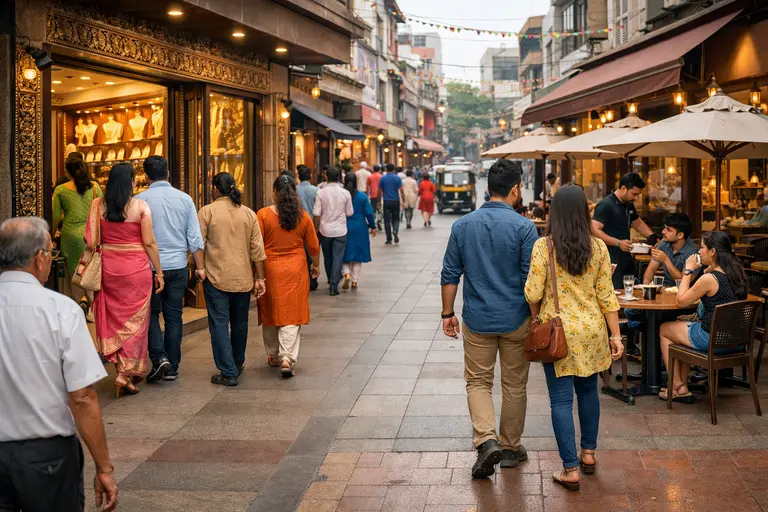
Step out of your home. Walk down your street for five minutes. Buy fresh vegetables, sip a hot chai, visit your local gold shop, and return home within 15 minutes. This is the core vision behind the 15-minute city India movement. It allows you to meet your daily needs close to home without enduring long commutes or heavy traffic. Today, urban planners across the country are paying more attention to this concept. However, a critical question arises for entrepreneurs: Does it really help small businesses? For local shops, including jewelers and small restaurants, the answer is mostly yes. Still, the final outcome depends on how planners manage these neighborhoods. Consequently, you must understand the real impact clearly to thrive in this new environment. You should also read our guide on gemstone buying mistakes to understand why trust remains the most valuable asset for any local retailer.
How Walkable Neighborhoods Help Jewelry Shops
First, every local jeweler depends heavily on long-term trust. Customers do not buy gold or silver casually from strangers. Instead, they consistently return to shops they know well and visit frequently. In a walkable neighborhood, residents pass the same jewelry shop every single day. As a result, familiarity grows naturally over time. Consequently, customers feel more confident to walk in and make spontaneous small purchases.
Rather than waiting for major weddings or large religious events, people begin to buy smaller items more often. For instance, they may purchase everyday earrings, request repairs for old pieces, or pick up simple silver items during local festivals. Therefore, these steady, small-scale transactions help shops maintain a regular daily income. Moreover, most jewelry purchases in India still happen in physical stores because buyers prefer to touch the product before making a final decision. In addition, they value direct interaction with the seller. Because of this, nearby stores gain a clear advantage over distant malls or online options. To see how these urban trends align with global standards, you can explore the C40 Cities 15-Minute City framework.
Why Food and Beverage Businesses Benefit Even More
Next, consider the impact on food businesses. Chai stalls, tiffin centers, and small family restaurants depend almost entirely on passing foot traffic. When more people walk, more people stop to eat. As a result, business volumes naturally increase without expensive advertising. In fact, local food outlets often perform better than large international chains in walkable areas. People prefer familiar flavors that sit close to their doorstep. Instead of traveling long distances, they choose convenience and authentic taste within their own neighborhood.
In addition, reduced commuting plays a vital role in consumer behavior. When people spend less time stuck in traffic, they gain extra time and energy in their day. Simultaneously, they save significant money on fuel and transit costs. Consequently, they often choose to spend those savings within their local area. For example, families may choose to eat out more frequently because the process feels easy and affordable. Similarly, office workers may take short tea breaks nearby instead of skipping them. As a result, small food vendors receive consistent daily business that sustains the local economy.
Challenges of the 15-Minute City India Model
However, this success brings a serious challenge known as gentrification. As neighborhoods improve and become more desirable, commercial rents often increase rapidly. This process can push out the very small traders the model intended to help. When rents rise too quickly, large corporate chains often replace local family vendors. Consequently, the original character and cultural soul of the area can disappear.
Therefore, better infrastructure alone is not enough to ensure success. Authorities must also protect small businesses by ensuring affordable commercial spaces remain available. Without such protection, the benefits of the 15-minute city India will not reach the intended people. At the same time, combining food stalls with jewelry shops can create powerful local markets. During festivals, these areas become lively hubs where food attracts the crowds while jewelry shops benefit from the increased visibility.
Adaptation: Does This Model Work Across India?
India is incredibly diverse, and each region faces its own unique planning challenges. Therefore, it is natural to ask whether this model can work in every state. In many ways, this pattern already exists in traditional areas. Older parts of cities such as Ahmedabad and Jaipur have followed this pattern for centuries. People live, work, and shop within incredibly short distances. Similarly, traditional neighborhoods in Chennai and Kolkata support everyday local living through high-density mixed-use streets.
However, modern suburbs present a different picture. In cities like Gurugram and Bengaluru, long commutes remain the standard. Many people spend hours in traffic every day, which leaves them with less time for local shopping. Still, positive change has begun. In Pune, the municipal corporation has started a dedicated 15-minute neighborhood project. They focus specifically on improving walkability and bringing essential services closer to residents. In regions like Kerala, while terrain makes walking difficult, solutions such as e-bikes and covered walkways are addressing these hurdles. You may also read our article on Understanding BIS Hallmark to see how quality standards remain consistent regardless of your location.
FAQ: 15-Minute City India
What exactly is a 15-minute city?
It is a place where you can reach all your daily needs—including groceries, healthcare, work, and local shops—within a 15-minute walk or a short bicycle ride from your home.
Does the 15-minute city India model help small jewelry shops?
Yes. When people pass the same shop daily, they build a sense of community trust. As a result, they visit the store more often for repairs and small gift purchases.
Why do food businesses benefit from walkability?
Food businesses depend on daily foot traffic. When cities prioritize pedestrians, more people stop for tea, snacks, or meals, which leads to steady daily income for the vendor.
Is this model practical for new suburbs?
Yes, but it requires better planning. Newer areas need mixed-use zoning, which allows homes and shops to exist in the same building or block.
What is the biggest risk for small traders?
Rising rents remain the biggest threat. If the neighborhood becomes too popular, landlords may raise prices, making it difficult for independent shops to stay profitable.
Disclaimer
This article is based on publicly available urban planning concepts, general market observations, and practical industry insights as of April 2026. The views on jewelry retail and small business behavior reflect real-world experience and informed analysis, not academic or financial advice. Urban policies, infrastructure projects, and local regulations vary by city and may change over time. Therefore, readers should check with their local municipal authorities for the latest updates. This content is intended for general awareness and does not constitute investment, legal, or business advice.