Introduction
Chilean blue opal stands out as one of the most striking gemstones to enter the global market in recent years. With its vivid ocean-to-sky blue color and distinctive natural banding, this rare stone captures attention instantly. Whether you are a jewelry enthusiast, a seasoned collector, or simply curious about alluring gemstones, you will find their history fascinating. For this reason, we have compiled this comprehensive guide.
Where Does Chilean Blue Opal Come From?
Miners extract Chilean blue opal from the rugged Atacama Desert in northern Chile. This region is famous for being one of the driest places on Earth. Furthermore, the Atacama holds massive copper deposits that contribute directly to the opal’s remarkable color. Researchers believe that chrysocolla — a copper-rich mineral — possibly creates the signature blue-green hue through its internal light scattering. In addition, you can learn more about the unique geological formations of the Andes Mountains at the EBSCO.
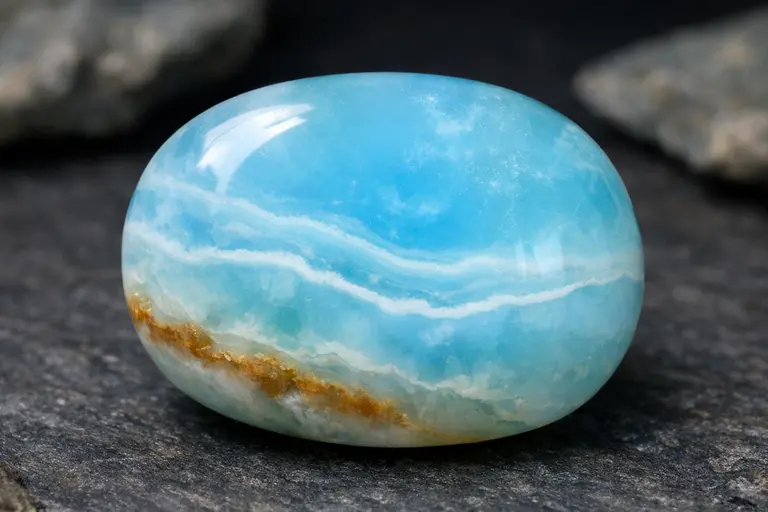
Unlike precious opals found in Australia, Chilean blue opal belongs to the “common opal” family. This means it generally does not display a “play of color” or rainbow flashes. Instead, it earns its value purely from its intense, saturated body color. High-quality specimens appear semi-translucent with deep blue saturation. Notably, other pieces show white, green, or brown matrix bands that add a unique, organic character to the stone. If you are interested in other blue stones, visit our Ghost Glass Frog vs Blue Spot Jasper: Nature’s Mirror for comparison.
How to Identify a Real Chilean Blue Opal
Because Chilean blue opal is a common opal without “fire,” you must examine its physical and optical properties to confirm its authenticity. Specifically, you should look for the following markers to ensure you are buying a genuine specimen.
Natural vs. Synthetic
Natural Chilean opal shows irregular color banding and small natural inclusions when you examine it closely. In contrast, lab-grown synthetic opals often reveal a “lizard skin” or columnar pattern under magnification. Therefore, if you notice extreme regularity in the pattern, treat it as a red flag. For a deeper look at mineral structures, visit Mindat, the world’s largest mineral database.
Simulants to Watch Out For
Glass, plastic, and dyed chalcedony sometimes pass as blue opal in the market. However, you can spot the difference with a few simple tests. Real Chilean blue opal (SG=1.98-2.25) feels lighter than glass (SG=2.30-4.50) because it has a lower specific gravity. Additionally, it ranks between 5.5 and 6.5 on the Mohs hardness scale. Specifically, this means a steel needle might scratch it, but a fingernail will not. You can read more about the Mohs Scale of Hardness to understand how experts test gemstones.
Chilean vs. Peruvian Blue Opal
Buyers frequently confuse Chilean blue opal with Peruvian (Andean) blue opal. The key difference lies in the opacity and saturation. Specifically, Chilean opal tends to be more saturated and opaque, while Peruvian opal is generally more translucent and softer in tone. For more technical data on South American opal varieties, visit the Gemological Institute of America (GIA).
Common Treatments You Should Know About
Like many gemstones, Chilean blue opal often undergoes treatments to improve its appearance and stability. Sellers do not always disclose these treatments, so you should always ask. To learn more about industry standards, check the American Gem Trade Association (AGTA) website.
Stabilization is the most common process. Jewelers impregnate the stone with colorless resin to prevent “crazing,” which is the fine cracks that form when an opal dehydrates. As a result, stabilized stones are more durable and more suitable for everyday jewelry. Similarly, surface enhancements like waxing can improve the luster temporarily.
Dyeing occasionally intensifies the blue color in lower-grade stones. You can detect dyed stones by looking for color concentrated along surface cracks. In any case, always request full treatment disclosure from your seller.
Popular Jewelry Designs and Aesthetics
Jewelers and designers love working with Chilean blue opal because of its bold presence. Because the stone is relatively soft, artisans usually shape it into smooth cabochons. These dome-topped pieces highlight the color bands and the stone’s characteristic greasy luster. For example, many designers use these stones in statement pendants to draw the eye.
Sterling silver remains the most popular metal pairing for this gem. Twisted rope or bezel settings frame the stone beautifully. More importantly, these settings protect the edges of the stone from chipping or cracking. Consequently, the stone fits perfectly into nature-inspired and bohemian aesthetics.
Consumer Tips: How to Buy and Care for Your Gem
Following a few practical guidelines will help you enjoy your Chilean blue opal for years to come. First, avoid temperature extremes. Opal contains a significant amount of water. Consequently, sudden heat or dry environments cause the stone to crack.
Second, clean your jewelry gently. Use only warm, soapy water and a soft cloth. Never place opal in an ultrasonic cleaner, as the vibrations can shatter the internal structure. For a step-by-step breakdown, read GIA’s complete jewelry care guide. Finally, store it carefully. Keep your opal separate from harder gemstones like diamonds to prevent scratches. Moreover, for long-term storage, place a small, damp cotton ball near the jewelry box to maintain humidity.
Frequently Asked Questions (FAQ)
Is Chilean blue opal expensive?
The price varies widely. While opaque, matrix-heavy stones are affordable, highly translucent, deeply saturated specimens command premium prices.
Can I wear Chilean blue opal every day?
Yes, but you must be careful. Its moderate hardness makes it vulnerable to knocks, so avoid wearing it during heavy physical activity.
Is stabilized opal less valuable?
Not necessarily. Stabilization is a widely accepted treatment that adds durability. However, the seller must disclose this information clearly.
How do I tell if my opal is dyed?
Look for color pooling in cracks or surface fractures under a magnifying glass. A professional gemologist can confirm this with certainty.
Where can I buy authentic Chilean blue opal?
Reputable gem dealers and established jewelry stores are your safest options. Always ask for a certificate of authenticity or a professional appraisal.
Which mine produces this opal?
Several operations in the Atacama region produce this stone. Notably, no single mine name is standard in commercial trade, so be wary of “exclusive” mine claims.
Disclaimer
This article is for general informational and educational purposes only. It does not constitute professional gemological, legal, or financial advice. Always consult a certified gemologist or the Gemological Institute of America (GIA) for professional evaluation of gemstones before making significant purchasing decisions. Gemstone treatments, market prices, and availability are subject to change.