Introduction
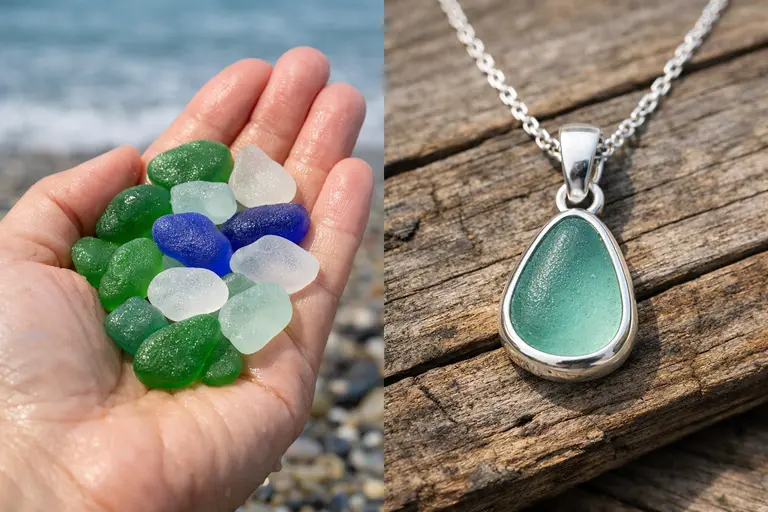
Forget UPI. Forget cash. Currently, a bold new idea is taking root along the world’s coastlines—and it draws directly from the ancient tradition of barter. Imagine walking into a coastal jewellery boutique in Goa or Kerala, handing over a pouch of ocean-tumbled sea glass you collected at sunrise, and walking out with a handcrafted sterling silver pendant. No rupees exchanged. This concept already works brilliantly in the United States. Consequently, with a 7,500-kilometre coastline and a deep love for artisanal jewellery, India’s Sea Glass Moment could spark a retail revolution here.
The inspiration comes from Betty Belts, a boutique in Ventura, California. Specifically, owner Donna von Hoesslin built her business around genuine, ocean-found sea glass. For years, she has run a “Sea Glass Trade” programme, accepting beach-tumbled glass as store credit. Recently, a TikTok video about her “Mermaid Money” system racked up over 500,000 views. Suddenly, the whole country wanted to participate. As a Gemologist and retail consultant, I see massive potential here. In this article, we will explore how this system works and how Indian jewelers can adapt it using local treasures.
What Is India’s Sea Glass Moment?
To begin with, Betty Belts operates a straightforward but carefully considered exchange system. Beachcombers bring in sea glass they found by hand. Crucially, the store only accepts glass that the ocean has tumbled and frosted naturally, never artificially tumbled in a machine. As an expert, I compare genuine sea glass to natural Obsidian or Moldavite—it is essentially naturally frosted silica.
Thereafter, the store then assesses each piece for rarity and quality.
- Naturally, rare colours (such as Red, Pink, Purple, and Cobalt Blue) command the highest trade value.
- Common colours (like Green, White, and Brown) fetch less.
Here is the genius part: Customers who trade sea glass for store credit receive three times the assessed value to spend in the shop. Those who prefer cash receive only the base value. Therefore, the incentive clearly encourages people to reinvest in the boutique’s handcrafted jewellery. As a result, Betty Belts has built an international community of beachcombers.
Would India’s Sea Glass Moment Work?
Undeniably, the short answer is yes—and perhaps even better than in California. In fact, India already has a rich coastal culture of shell collecting and beachcombing along shores like Marari Beach in Kerala, Marina Beach in Chennai, and Radhanagar Beach in the Andamans.
Moreover, Indian consumers have a deep, centuries-old relationship with handcrafted jewellery. Naturally, the concept of exchanging a natural treasure for an artisanal craft is not foreign; it is deeply rooted in our trade history. Additionally, sea glass is genuinely available along India’s coastline. Specifically, a boutique in Fort Kochi, for instance, could turn this into a thriving, community-driven programme within months. For more on India’s growing interest in handcrafted coastal jewellery, the Crafts Council of India actively promotes artisan-made goods.
India’s Unique Alternative: Sacred Rudraksha Beads
While sea glass works beautifully as a concept, India has something even more culturally resonant as an alternative trade currency. Instead of glass, imagine a boutique leveraging Rudraksha beads.
Historically, Hindus and spiritual practitioners across the country revere these dried seeds for their sacred properties. Here is the creative idea: An Indian artisan boutique—perhaps based in Rishikesh or Mysore—could launch a Rudraksha Exchange Programme. Financially, customers would bring in authentic, ethically sourced Rudraksha beads. Technically, the boutique would assess each bead’s Mukhi (the number of natural grooves), which determines rarity and value.
For example:
- A Five-Mukhi bead (common) earns modest store credit.
- A Fourteen-Mukhi bead (extremely rare) earns premium store credit toward high-value jewellery. The system mirrors Betty Belts exactly—but replaces ocean glass with one of India’s most spiritually significant natural objects. You can read more about spiritual jewelry in my Payyannur Pavithra Ring guide.
Other Alternatives to India’s Sea Glass Moment
Furthermore, Rudraksha beads are not the only option. India’s diversity offers several other creative possibilities for boutiques willing to think beyond cash.
Conch Shells (Shankha)
Historically, sacred in Hindu tradition, conch shells from the Lakshadweep Islands could serve as trade currency. In fact, rare, right-handed conch shells (Dakshinavarti Shankha) command especially high cultural and market value.
Natural Gemstone Rough
India is a global centre for the gemstone trade. Furthermore, boutiques in Jaipur could accept small pieces of uncut Sapphire, Ruby, or Garnet rough from collectors in exchange for finished jewellery. Effectively, this approach keeps the community engaged with the raw materials, much like the miners I discussed in Panna Diamond Mining.
Why India’s Sea Glass Moment Resonates
Betty Belts went viral not because sea glass is particularly valuable on a commodity market. Rather, it went viral because the idea tapped into something people genuinely crave: a more human, tactile, and meaningful exchange. In a world of one-click digital purchases, trading something you personally found on a beach for something a craftsperson made by hand feels deeply romantic.
In India, this resonance runs even deeper. We carry a long memory of barter—of Haat bazaars where farmers exchanged grain for cloth. Consequently, a modern jewellery boutique that revives that spirit is not simply running a clever marketing campaign. It is connecting itself to something much older. For more on retail strategies, read my Jewelry Retail Etiquette in Kerala guide.
Conclusion on India’s Sea Glass Moment
Ultimately, India’s Sea Glass Moment is about participation. Customers do not just buy—they contribute. For jewellers across India, thinking about community engagement and brand differentiation, the lesson is clear. Half a million TikTok views do not lie. In summary, the sea glass may already be taken, but India has plenty of sacred, beautiful, ocean-tumbled treasures of its own.
FAQ: India’s Sea Glass Moment
What started India’s Sea Glass Moment?
Betty Belts, a jewellery boutique in California, accepts genuine ocean-tumbled sea glass as store credit toward finished jewellery. They assess the rarity of the glass and offer three times the cash value in store credit.
Can Indian jewellery boutiques adopt a similar system?
Yes. India’s coastline and cultural landscape offer several natural alternatives. Jewelers can use Rudraksha beads, sacred conch shells, uncut gemstone rough, and tribal beads to create India’s Sea Glass Moment.
What is the Rudraksha Exchange idea?
This is a creative concept where an Indian boutique accepts authentic Rudraksha beads from collectors, assesses their value based on the Mukhi count, and offers store credit toward handcrafted jewellery.
How do I know if sea glass is authentic?
Genuine sea glass takes 20 to 50 years to form in the ocean. Visually, it has a frosted, pitted surface (“C-shaped” marks) and smooth, rounded edges. Conversely, machine-tumbled fake glass looks uniformly cloudy and lacks the natural pores.
Why does the barter system work in modern retail?
Psychologically, it creates an emotional bond between the brand and the buyer. The customer feels like a “Co-Creator” or treasure hunter, rather than just a walking wallet.
Disclaimer
This article is intended for informational and inspirational purposes only. The “Rudraksha Exchange” and other Indian barter concepts described are hypothetical business models suggested by the author. They do not constitute formal financial, legal, or business advice. Furthermore, the author has no commercial or affiliate relationship with Betty Belts or any other brands mentioned. Retailers and consumers should conduct their own market research and feasibility studies before implementing alternative trade or barter programs.