Introduction
In the world of luxury materials, few things carry as much dark history as elephant ivory. Fortunately, nature provides a beautiful, ethical, and sustainable alternative: Vegetable Ivory. Also known as the Tagua nut or Corozo, artisans and consumers worldwide are increasingly choosing it for jewelry, buttons, and decorative objects. Because it comes from the hard white endosperm of seeds from a palm tree, it carries no legal restrictions and no ecological guilt.
As a Gemologist who advocates for ethical sourcing, I find this organic gem fascinating. It mimics the density and polish of real ivory so perfectly that even experts must look closely to distinguish them from one another. In this guide, you will discover where Vegetable Ivory comes from, how to identify it, and how to care for it wisely. Whether you are a jewelry designer in Kerala looking to replace traditional ivory or a conscious consumer, let’s explore this rainforest treasure
Where Vegetable Ivory Comes From
To begin with, the Tagua palm grows wild in the tropical rainforests of South America. Primarily, it thrives in Ecuador, Colombia, and Peru. Two main species produce the material: Phytelephas aequatorialis (Ecuador) and Phytelephas macrocarpa (Peru). Local communities affectionately call these trees “Elephant Plants.”
Workers harvest the nuts by collecting the heavy fruit pods that fall naturally to the ground. Consequently, the palms remain entirely unharmed throughout the process. Sustainability is one of the strongest selling points here. According to the Rainforest Alliance, a single Tagua palm produces roughly the same volume of usable ivory per year as a female elephant. Therefore, it is an extraordinarily efficient natural resource. Furthermore, harvesting tagua provides a reliable income for rural communities. This, in turn, discourages deforestation and illegal wildlife poaching. Read more about sustainable materials in my Future of Single Mine Origin Gold guide.
Treatment and Processing of Tagua
After harvesting, the transformation begins. Workers allow the fresh nuts to dry naturally in the sun for several weeks or even months. During this drying period, the initially soft, jelly-like interior transforms into a material of remarkable hardness. In fact, it becomes harder than many tropical hardwoods. This natural hardening process is what makes Vegetable Ivory genuinely useful for carving.
Once dry, artisans carve, turn on a lathe, and sand the nuts into beads and pendants. Because the material is naturally porous, it absorbs dyes exceptionally well and holds vibrant colors for years. However, the material is sensitive to prolonged moisture exposure. Thus, careful drying and sealing (often with beeswax) after dyeing are essential steps in quality production.
How to Identify Vegetable Ivory
Identifying Vegetable Ivory correctly matters, especially when shopping in markets or online. Although it resembles plastic, bone, and genuine animal ivory at first glance, several distinctive features set it apart.
The Visual Checks
- The Grain: Tagua exhibits a subtle, organic pattern reminiscent of fingerprints or fine wood grain. Conversely, animal ivory exhibits a distinct cross-hatched pattern known as “Schreger Lines.”
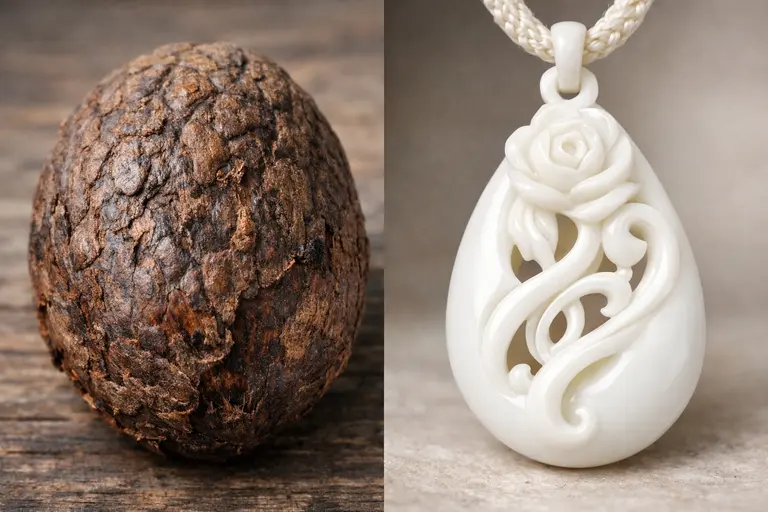
- The Rind: Unworked areas of Tagua retain a rough, dark-brown, scaly outer skin. Naturally, this bark layer rarely appears on plastic imitations.
- The Color: Natural Tagua ranges from creamy white to pale yellow and develops a glossy luster when polished.
The Physical Tests
Beyond visual cues, texture and weight play a significant role. Tagua feels slightly cooler and denser than plastic, though lighter than stone. Additionally, when artisans dye Tagua, the color typically penetrates only the surface layer. Scratching a dyed piece lightly reveals the natural white interior. The Hot Needle Test: If you touch a hot needle to plastic, it melts and emits a chemical-like smell. If you touch it to Tagua, it burns and smells like toasted nuts. For a deeper technical comparison, visit the Gemological Institute of America (GIA).
Vegetable Ivory in Jewelry and Arts
Tagua jewelry is organic, vibrant, and unique. Because each nut grows differently, no two finished pieces are ever identical. This gives tagua items an artisanal appeal that factory-made plastics simply cannot replicate. Common applications include necklace beads, oversized statement rings, and earrings.
In India, there is a massive opportunity here. Historically, Kerala used elephant ivory for Nettipattam (elephant caparisons) and temple artifacts. Today, Vegetable Ivory can replace these banned materials, preserving the traditional look legally and ethically. You can read about other traditional crafts in my Thanjavur Art Plate guide.
Consumer Tips: Buying and Caring for Vegetable Ivory
Shopping for Tagua wisely means knowing what to look for. Follow these practical guidelines.
Before Buying:
- Inspect for Grain: Always check for the fingerprint-like grain to ensure it is not plastic.
- Buy from Reputable Sources: Purchase from artisan markets or certified fair-trade retailers who clearly disclose the material.
For Ongoing Care:
- Keep it Dry: Avoid prolonged contact with water (do not wear it in the shower). Moisture can cause swelling and cracking.
- Avoid Chemicals: Do not apply perfumes or body lotions directly onto the piece.
- Clean Gently: Wipe with a dry cloth. Occasionally, apply a thin layer of natural wax to protect the surface and restore the shine.
Conclusion: The Ethical Choice
In summary, Vegetable Ivory represents the perfect intersection of luxury and conservation. It proves that we do not need to harm animals to create beautiful, lasting art. Ultimately, by choosing Tagua over plastic or bone, you are supporting rainforest communities and protecting global wildlife.
FAQ: Vegetable Ivory Essentials
Is Vegetable Ivory legal to buy and sell?
Yes, absolutely. It faces no trade restrictions anywhere in the world. It is a plant-based material and falls entirely outside the scope of CITES wildlife protection laws that govern elephant tusks.
How is Vegetable Ivory different from animal ivory?
Animal ivory comes from elephant tusks. Vegetable Ivory comes from the seeds of a palm tree. Visually, animal ivory has distinctive “Schreger lines” visible under magnification, while Tagua displays a fibrous, fingerprint-like granular structure.
Can Vegetable Ivory get wet?
Brief contact with water will not damage it, but prolonged exposure to moisture can cause cracking or warping over time. Always dry Tagua pieces promptly.
How long does Tagua jewelry last?
With proper care, it can last for decades. Keeping it dry, away from chemicals, and stored in a cool place will significantly extend its lifespan.
Why should I choose Vegetable Ivory over synthetic alternatives?
Tagua is renewable, biodegradable, and supports the livelihoods of South American forest communities. Unlike plastic, it does not contribute to petroleum waste in landfills.