Introduction
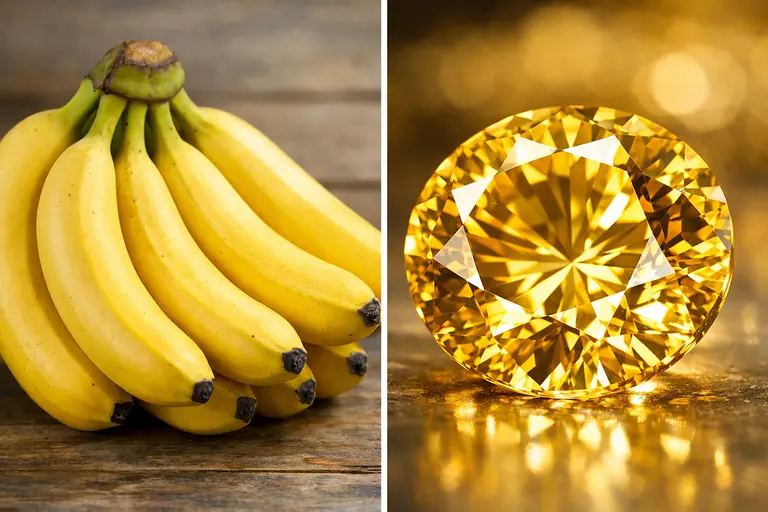
The visual comparison between Jalgaon Bananas and Yellow Beryl is immediate and striking. One is a perishable agricultural treasure from Maharashtra, while the other is an enduring mineral marvel found deep in the earth’s crust. Both objects radiate a warm, vibrant, golden-yellow color that instantly captures your attention.
Nevertheless, both share a sun-kissed brilliance that links them in a surprisingly meaningful way. As a Gemologist who appreciates local produce, I find this comparison fascinating. It shows how nature uses different methods (Pigment vs. Iron) to achieve the same color. In this article, we will explore the color similarities, origins, and consumer tips for both. Whether you are a fruit lover in Mumbai or a gem collector in Jaipur, these golden twins have a story to tell.
Golden Glow: Jalgaon Bananas and Yellow Beryl
At first glance, the connection between a glass of wine or a fruit and a cut gemstone may seem unusual. However, Jalgaon Bananas and Yellow Beryl are celebrated specifically for their luminous, sunny appearance.
The Gem: Gift of the Sun
Yellow Beryl earns its nickname, Heliodor, from the Greek words Helios (Sun) and Doron (Gift). Visually, it captivates with a range of light yellow to deep golden-yellow tones. Furthermore, it possesses a Vitreous (glass-like) luster that sparkles brilliantly. If you like yellow gems, compare this to Mandarin Fruit vs Mandarin Garnet.
The Fruit: Edible Gold
Similarly, Jalgaon Bananas develop a consistent, appetizing, and vibrant yellow skin as they ripen. Although the banana is opaque, its smooth, waxy skin mimics the luster of a polished, semi-translucent cabochon. Consequently, both have become symbols of cheerfulness and warmth. You can read about color science at the International Gem Society.
Origins of Jalgaon Bananas and Yellow Beryl
Despite their visual similarities, they come from different worlds.
The Banana City
Farmers grow Jalgaon Bananas in the Jalgaon district of Maharashtra, India. Primarily, the region produces mainly the Grand Naine (G9) variety. In fact, growers cultivate them in nutrient-rich alluvial soil under strict, high-tech drip irrigation systems. Critically, the GI (Geographical Indication) Tag confirms its authenticity. Just as a Kashmir Sapphire must come from Kashmir, a Jalgaon Banana must come from Jalgaon. For more on GI tags, check the IP India Registry.
The Beryl Mine
On the other hand, Yellow Beryl forms naturally in Granitic Pegmatites. Technically, these are coarse-grained igneous rocks. For instance, trace amounts of iron within its hexagonal crystal structure produce the color. Major sources include Brazil, Namibia, and Ukraine. Therefore, while farmers shape the banana through agriculture, geological forces shape the gem over millions of years.
The Science: Chlorophyll vs. Iron
Why are they yellow? The chemistry differs.
- The Banana: As the fruit ripens, Chlorophyll (green pigment) breaks down. This reveals the underlying Carotenoids (yellow pigments). It is a biological clock.
- The Gem: The color is permanent. It is caused by Ferric Iron (Fe3+). Unlike the banana, which turns black (oxidizes) after a week, the gem remains yellow forever.
This contrast highlights the difference between “Organic Life” and “Inorganic Stability.” Read more about stability in my Gemstone Buying Mistakes guide.
Treatments for Jalgaon Bananas and Yellow Beryl
Both Jalgaon Bananas and Yellow Beryl undergo treatments to improve their market appeal. However, the methods differ.
Ripening Rooms
Banana growers use Ethylene-based ripening rooms. This process accelerates natural ripening to ensure the fruit develops a uniform, vibrant yellow color suited for retail. Importantly, it does not alter the nutritional value.
Heat and Irradiation
Yellow Beryl, meanwhile, frequently undergoes Heat Treatment. First, gem cutters apply heat to remove greenish tints. Second, some producers use Irradiation to deepen the golden color. However, consumers should note that irradiation-induced color can fade with sunlight. As a result, buyers should always ask sellers for full disclosure. Check resources from GIA for more on treatments.
Identification and Quality
Knowing what to look for helps you buy the best.
For Jalgaon Bananas:
- GI Tag: Look for the sticker.
- Color: Bright, even yellow with minimal green tips.
- Texture: Firm skin, sweet pulp.
For Yellow Beryl:
- Hardness: It measures 7.5–8 on the Mohs scale. It is durable for rings.
- Clarity: High-quality stones are “Eye-Clean” (no visible flaws).
- Bubbles: If you see air bubbles, it is glass. Real Beryl has “Rain” inclusions (tubes).
Consumer Tips for Smart Purchases
Whether you are shopping for fruit or gems, follow these rules.
When buying Bananas:
Choose fruits that display a bright yellow color. Specifically, avoid green ones if you want immediate sweetness. Ideally, store them in a cool, dry place. Unlike wine, they do not improve with age!
When buying Beryl:
Prioritize transparency. A cloudy stone looks dull. Select a rich color. An intense, rich “Golden” yellow is far more desirable than pale “Lemon” yellow. Demand certification. Ensure the gemstone carries a report from GIA or IGI. For styling tips, check Men of Platinum Jewelry to see how yellow gems look in white metal.
Conclusion on Jalgaon Bananas and Yellow Beryl
Ultimately, Jalgaon Bananas and Yellow Beryl stand apart in function. One nourishes the body; the other adorns it. However, both are united by the “Golden Frequency” of light. In summary, whether you eat the fruit or wear the stone, you are enjoying a gift from the sun.
FAQ: Jalgaon Bananas and Yellow Beryl
Why are Jalgaon Bananas yellow?
They develop their characteristic color as Chlorophyll breaks down in the skin, revealing yellow Carotenoid pigments. This signals peak ripeness and sweetness.
What causes Yellow Beryl’s color?
The presence of trace amounts of Iron (Fe3+) within the crystal lattice creates the golden hue. Unlike the banana, this color is structural and permanent (unless irradiated).
Is Yellow Beryl the same as Heliodor?
Yes. “Heliodor” is the traditional trade name for Golden Beryl. It comes from the Greek for “Gift of the Sun.” Both terms refer to the same mineral species.
How do I know if my Jalgaon Banana is authentic?
Authentic Jalgaon bananas carry a GI (Geographical Indication) Tag, certifying their origin from Maharashtra. This protects the local farmers from imitators.
Can Yellow Beryl lose its color?
Natural Yellow Beryl is stable. However, Irradiated Yellow Beryl can fade if left in strong sunlight for long periods. Always ask for a “Fade Test” guarantee or a lab report.