Introduction
Imagine biting into a fruit that looks like a precious gemstone. That is the magic of the Allahabad Surkha Guava. At first glance, this variety stands out with its vibrant apple-red skin. However, the real surprise lies inside: a deep pink-to-maroon pulp that glows like a jewel.
For instance, its colors do not just remind us of fruit; they mirror rare colored stones like Ruby, Rubellite, and Coral. Grown mainly in the Allahabad (Prayagraj) region of Uttar Pradesh, it has earned the nickname “City of Green Gold”—though in this case, the gold is red. As a Gemologist, I see nature repeating its best designs. The chemistry that colors a stone is often mirrored by the chemistry that colors a fruit. In this article, we will explore these striking similarities. Whether you are a gemology fan or a fruit lover, these parallels will surprise you.
Origin of the Allahabad Surkha Guava
First, let’s establish the pedigree. Just as a Kashmir Sapphire is valued for its origin, the Allahabad Surkha Guava is valued for its geography. In fact, it was the first product from Uttar Pradesh to receive a Geographical Indication (GI) Tag.
Why? The soil in the Doab region (between the Ganga and Yamuna rivers) creates a unique flavor profile. Unlike common green guavas, the Surkha is not just sweet; it is aromatic. Therefore, when you buy one, you are buying a specific “Terroir,” similar to the concept I discussed in Tea Tasting and Colored Stone Grading.
Pulp Color of the Allahabad Surkha Guava
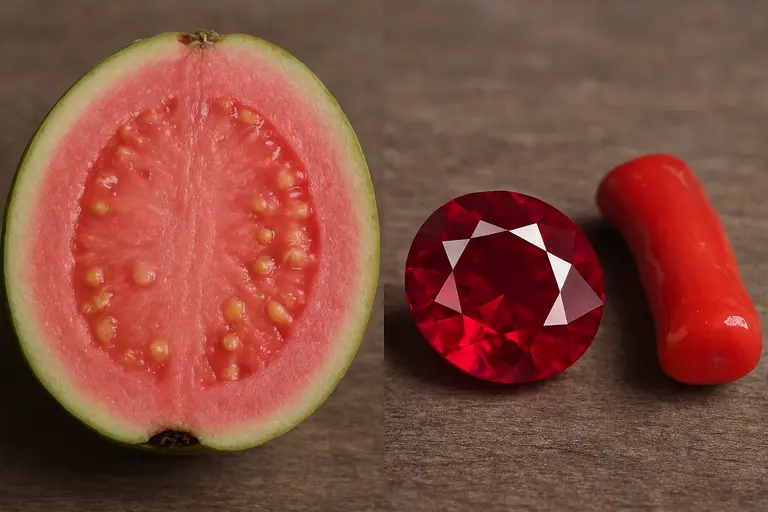
Now, let’s slice it open. This is the moment of “Faceting.” The interior boasts a rich, intense pink that shifts to maroon or magenta shades.
The Ruby Connection
This hue strikingly resembles the deep red fire of a Ruby (Corundum). Rubies glow with a “Pigeon’s Blood” warmth. Similarly, a ripe Surkha has a luscious, translucent core that seems to hold light. For my readers in Kerala, think of the deep red of a ripe Plavu (Jackfruit) segment, but smoother.
The Tourmaline Connection
Moreover, vivid pulp shades recall Rubellite (Pink Tourmaline). This gem bursts with electric pink-red energy. For instance, high-quality Rubellites rival the Surkha’s intensity. Additionally, when you see the green rind transitioning into the pink flesh, it mimics the famous Watermelon Tourmaline I described in my Tourmaline Color Palette guide.
Skin Texture of the Allahabad Surkha Guava
Next, consider the exterior. The Allahabad Surkha Guava develops a uniform apple-red blush, especially in winter. This smooth, polished surface mimics the opaque pink red of Precious Coral (Corallium rubrum).
Coral, formed from marine skeletons, offers a soft, inviting red. Furthermore, the skin often has a golden undertone. This creates a “Schiller” effect similar to Sunstone or Padparadscha Sapphire. Consequently, a basket of these guavas looks less like produce and more like a collection of polished beads ready for a necklace. If you love organic gems, read my guide on Mississippi Pearls.
The Science: Anthocyanin vs. Chromium
What creates these gem-like hues? It is a battle of chemistry.
- The Fruit: Pigments like Anthocyanin and Lycopene play key roles. Anthocyanins produce the deep pinks (triggered by cold winter nights), while Lycopene adds red richness.
- The Gem: Trace elements color gems. For example, Chromium turns a Sapphire into a Ruby.
Thus, nature uses different ingredients to achieve the same visual result. Physically, the skin stays smooth and thin, enhancing its polished look. Therefore, Allahabad farmers cherish it as “Red Gold” for both beauty and bounty.
Buying Guide: How to Pick a “Flawless” Guava
As an expert, I apply gem grading rules to fruit buying.
- Color (Hue): Look for a deep, uniform red blush on the skin. Green patches indicate it is “Under-Carat” (under-ripe).
- Texture (Luster): The skin should be shiny and taut, not wrinkled. A dull skin suggests it has lost moisture (like a dehydrated opal).
- Clarity: Avoid spots or blemishes.
- Hardness: Unlike a diamond, you want some give. Press gently. It should feel firm but yielding, like a rubber eraser.
In Kerala, where we love colorful feasts, the Surkha inspires recipes. Blend its pulp into smoothies or serve slices in a fruit salad to add a “Ruby” touch to your table. For more diet tips, check my Healthy Living and Diet page.
Conclusion on the Allahabad Surkha Guava
Ultimately, these parallels aren’t coincidental. Nature loves the color red. The Allahabad Surkha Guava is a seasonal wonder. It appears in winter, dazzles us with its color, and nourishes us. Gem experts like me see ruby fire or coral warmth in every bite. In summary, next time you see this fruit in the market, treat it with respect. It is a biological gem.
FAQ: Allahabad Surkha Guava
What makes Allahabad Surkha Guava look like gemstones?
Its unique genetics create an apple-red skin and pink-maroon pulp. This color palette mimics Ruby, Coral, and Rose Quartz due to high concentrations of Anthocyanin pigments.
How does Surkha pulp compare to Ruby?
The deep maroon-pink flesh shares the Ruby’s intense red glow. When sliced, the translucency of the fruit allows light to pass through, creating a “gem-like” brilliance.
Is the skin like Precious Coral?
Yes. The smooth, opaque apple-red blush resembles the organic texture and color of polished Red Coral, especially the variety used in traditional Indian jewelry.
Why is it called “City of Green Gold”?
Allahabad (Prayagraj) is famous for its Guava production. While standard guavas are green (Green Gold), the Surkha is the rare “Red Gold” variant that fetches premium prices.
Is this fruit available in South India?
Yes, during the winter season (November to January), premium fruit vendors in cities like Bangalore, Chennai, and Kochi import stocks from Allahabad due to high demand.
Author Bio
P.J. Joseph, also known as Saju Elizamma, Gemstone & Gold Consultant serving Kerala, Tamil Nadu, and Karnataka.