Introduction
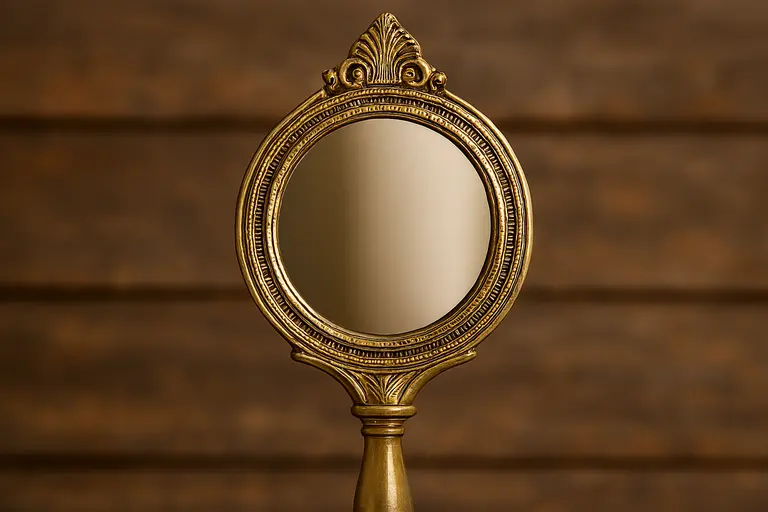
In a world dominated by mass-produced glass, there is a village in Kerala that defies modern logic. Aranmula Kannadi Magic stands as India’s oldest mirror-making tradition, captivating enthusiasts with its timeless allure. Unlike everyday glass mirrors, this handcrafted metal-alloy wonder delivers distortion-free reflections through a secret metallurgical process handed down for centuries.
Originating from the serene village of Aranmula (Pathanamthitta District, Kerala), it reflects light directly from its polished front surface. As a certified gemologist with deep roots in Kerala’s heritage, I have long admired how this craft mirrors the precision of fine gem cutting—both demand flawless execution. In this article, we will explore the secret alloy, the grueling polishing process, and why this mirror remains a collector’s dream in 2026.
The Secret Behind Aranmula Kannadi Magic
To begin with, we must understand that this is not “Glass” with a silver coating. It is solid metal. Crafting an authentic mirror begins with a closely guarded alloy recipe. Primarily, it blends Copper and Tin into a high-tin bronze known as Speculum Metal.
However, the ratio is the secret. Artisans, hailing from just a handful of families in Aranmula, mix these metals in precise proportions. For instance, even slight variations could ruin the reflective quality, much like impurities spoiling a gemstone’s fire. Consequently, the metal becomes extremely brittle (like glass) but incredibly reflective (white like silver). Comparing this to other crafts, while the Kunjimangalam Bell-Metal is designed to sing (Resonance), Aranmula Kannadi Magic is designed to shine (Reflectance).
The Lost-Wax Casting Process
Next, let’s look at the construction. The process is remarkably similar to the ancient Cire Perdue technique used for temple idols.
- Molding: Artisans create a mold using local clay from the Pamba River valley.
- Casting: Two metal discs are cast. One becomes the mirror; the other acts as a heater plate during polishing.
- Cooling: After hours of cooling, the mold is broken. This ensures that every mirror is unique.
Therefore, no two mirrors are identical in size or thickness. It is the definition of “Handmade.” You can read more about the value of handmade items in my guide on Temple Jewelry South India.
Mastering the Polishing Technique
Furthermore, the true magic unfolds in the polishing stage. This transforms the raw, dull grey disc into a mesmerizing mirror. Unlike modern machinery, this demands days of relentless handwork.
Traditionally, artisans use a paste of rice bran mixed with oil from indigenous seeds. They rub the metal rhythmically across a jute cloth. This sequence builds layer by layer, smoothing imperfections until the metal gleams like liquid silver. Additionally, the process requires an expert touch; one uneven stroke could create a scratch that ruins the reflection forever. Ultimately, this patience creates a surface so flat that it reflects 100% of the light spectrum without the color bias of glass.
The Physics: Why It Outshines Glass
What truly sets Aranmula Kannadi Magic apart is its optics. As a Gem Expert, I look for “Refractive Index.”
- Glass Mirrors: Light travels through the glass, hits the back coating, and travels back through the glass. This causes “Refraction” and “Ghost Images.”
- Aranmula Metal: Light hits the surface and bounces back immediately.
The Fingertip Test:
This is how you spot a fake. Place your fingertip against the mirror surface.
- If it is Glass: You will see a gap between your finger and its reflection (the thickness of the glass).
- If it is Aranmula Metal: Your finger will touch its reflection perfectly. There is no gap.
Consequently, this “Front Surface Reflection” provides a true image, ideal for detailed viewing.
Cultural Significance and the GI Tag
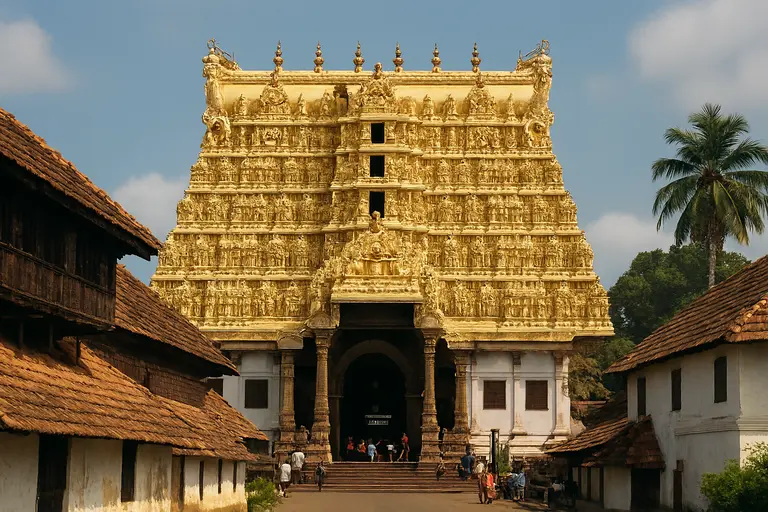
Culturally, the mirror symbolizes prosperity. It is one of the Ashtamangalyam (eight auspicious items) used in Kerala Hindu weddings and during the Vishu festival. Moreover, its 500-year history traces back to the Aranmula Parthasarathy Temple. Legend says the King of Travancore brought these artisans to build the temple, and they discovered the mirror alloy by accident.
Because of its uniqueness, it received a Geographical Indication (GI) Tag in 2004. Therefore, only mirrors made in Aranmula by the registered artisans can legally bear the name. Unfortunately, fakes abound in tourist shops. Always look for the hologram sticker from the Viswabrahmana Aranmula Metal Mirror Nirman Society.
Caring for Your Mirror
Finally, a word of caution on maintenance. Since it is metal, it can tarnish if neglected.
- Do not touch the surface with sweaty fingers (acid causes tarnish).
- Cleaning: Use the special red oxide powder provided by the artisan. Wipe gently with a soft cotton cloth.
- Fragility: Despite being metal, it is brittle. If you drop it, it will shatter into pieces just like an emerald.
For more tips on caring for precious items, check my guide on Jewelry Sales Secrets.
Conclusion: A Reflection of the Soul
In summary, Aranmula Kannadi Magic endures as a living art. In a world of mass-produced goods, these artisans labor tirelessly to preserve a technique that should have been forgotten. Whether for personal use or investment, it bridges ancient wisdom and contemporary appeal. Ultimately, when you look into an Aranmula mirror, you are not just seeing your face; you are seeing 500 years of Kerala’s history.
FAQ: Aranmula Kannadi Magic
What makes Aranmula Kannadi different from glass mirrors?
It uses Front Surface Reflection. Light bounces off the polished metal surface directly, avoiding the distortion, gap, and refraction caused by the glass layer in standard mirrors.
How long does it take to make one mirror?
The entire process spans 7-10 days. The polishing alone takes several days of rhythmic hand labor to achieve the perfect finish.
Is Aranmula Kannadi suitable for daily use?
Yes, but with care. It requires gentle cleaning with specific powder to maintain the shine. It is best used as a vanity mirror or a display piece rather than a bathroom mirror exposed to humidity.
Where can I buy authentic Aranmula Kannadi?
Look for the GI Tag. Purchase directly from the Parthasarathy Temple precincts in Aranmula or authorized government emporiums (like Kairali). Avoid roadside stalls selling cheap imitations.
Why is it called “Kannadi”?
In Malayalam, “Kannadi” simply means Mirror. “Aranmula” is the village. Together, it signifies the unique heritage of this specific location.
Author Bio
P.J. Joseph, also known as Saju Elizamma, Gemstone & Gold Consultant serving Kerala, Tamil Nadu, and Karnataka.