Introduction
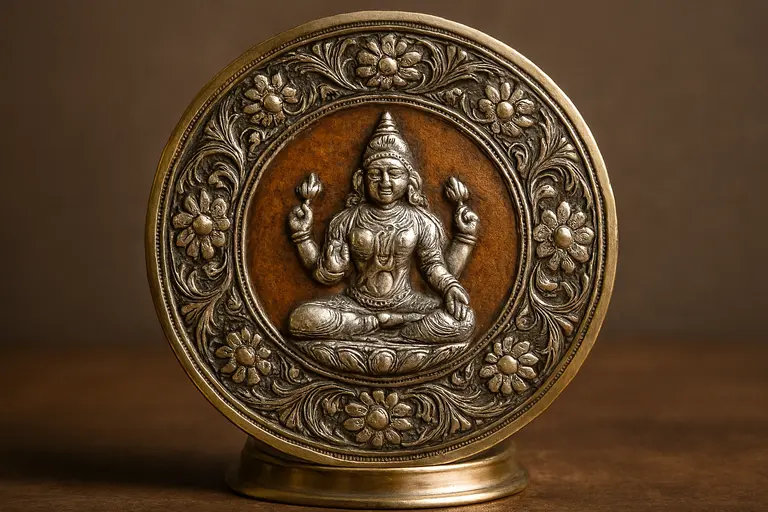
In the cultural heartland of Tamil Nadu, there exists an art form that glitters like jewelry but hangs on a wall. Historically, the Thanjavur Art Plate (Thanjavur Kalai Thattu) is a cherished traditional handicraft that blends artistry, heritage, and metallurgy. Specifically, this masterpiece is a “Tri-Metal” wonder, combining the strength of Brass, the warmth of Copper, and the brilliance of Silver.
Awarded a prestigious Geographical Indication (GI) Tag in 2007, the craft is geographically protected to ensure only genuine pieces hail from this historic region. As a Gemologist who appreciates the setting of precious metals, I find the Repoussé (embossing) technique used here fascinatingly similar to that of Nagercoil Temple Jewellery. In this guide, we will explore its rich history, the intricate three-step craftsmanship, and 2026 buying tips to help you spot the authentic from the fake.
What Makes a Thanjavur Art Plate Unique?
At the heart of every Thanjavur Art Plate lies its signature composition. Actually, it is not a solid casting. Instead, it is a layered assembly.
- The Base: A sturdy Brass plate provides the foundation.
- The Relief: Delicate Copper and Silver sheets are embossed with motifs.
- The Visual: This combination creates a stunning contrast.
For instance, imagine a gleaming brass foundation adorned with shimmering silver figures of Hindu deities—it is a sight that evokes devotion and luxury. Furthermore, the designs draw from deep cultural roots. Common motifs include beloved figures like Goddess Lakshmi or Lord Ganesha, alongside mythological scenes from the Ramayana. Additionally, the GI tag protects this exclusivity. Consequently, mass-produced plastic fakes cannot legally use the name “Thanjavur Art Plate,” preserving the livelihood of the local Vishwakarma community. If you love traditional crafts, compare this to the Kunjimangalam Bell-Metal heritage of Kerala.
Historical Origins of the Thanjavur Art Plate
Historically, the story of the Thanjavur Art Plate begins in the late 18th century. Uniquely, it flourished under the patronage of Rajah Serfoji II during the Maratha rule in Thanjavur. Originally, these plates were crafted not for sale, but as royal gifts for visiting dignitaries and colonial officials. Significantly, they symbolized the wealth and piety of the Thanjavur kingdom.
Over time, they evolved from palace treasures to cherished heirlooms found in Pooja rooms across South India. Moreover, this heritage continues to thrive in 2026. As you admire one today, you are connecting with a legacy that has endured wars, colonial shifts, and modern industrialization. For more on royal patronage, read my article on Madurai Meenakshi Temple Jewels.
Craftsmanship of the Thanjavur Art Plate
Creating a single Thanjavur Art Plate is a labor of love that requires a specialized team. It involves three distinct types of artisans collaborating seamlessly.
1. The Base Maker
First, the heavy metal worker forges the brass base plate and polishes it to a mirror finish. Essentially, this provides the canvas.
2. The Jeweler (Relief Maker)
Next, a jeweler takes center stage. Using the ancient Repoussé technique, they emboss intricate designs onto wafer-thin sheets of Silver and Copper. This hammering method pushes metal from the reverse side, forming raised 3D motifs with exquisite detail. It is similar to the work done on Thewa Jewelry.
3. The Diamond Setter
Finally, the setter encrusts and secures these embossed sheets onto the brass base. Crucially, they use a traditional natural mixture of Wax and Lac (Kungiliyam) to fill the hollow reliefs, ensuring they don’t dent. The result? A plate that is not just decorative but a testament to handmade precision.
Modern Uses and Pricing of Thanjavur Art Plate
Once reserved for royalty, these plates now grace modern Indian homes. Today, they shine as mementoes, corporate trophies, and wedding gifts. For example, recall how one was famously gifted to Britain’s Prince Charles (now King Charles) in 1980.
Understandably, pricing has evolved due to the rising cost of Silver.
- Small (4-6 inch): Starts at ₹700 – ₹1,200. Ideal for return gifts.
- Standard (8-10 inch): Ranges from ₹3,600 – ₹5,500.
- Large (12-16 inch): Can go from ₹6,000 to over ₹15,000, depending on the intricacy and silver weight.
Additionally, these plates pair beautifully with fine North vs South Indian Jewelry traditions, making them ideal gifts for festivals like Pongal or Diwali.
Authenticity of a Thanjavur Art Plate
In an era of counterfeits, spotting a genuine Thanjavur Art Plate is crucial. Unfortunately, machine-made copies often use cheap adhesive strips or synthetic aluminum foils instead of silver.
Here is how to verify:
- Inspect the Back: Authentic plates reveal the “negative” impression of embossing or subtle wax marks. Fakes are often flat glued pieces.
- Silver Purity: Insist on High Purity Silver foil. Typically, alloyed metals cannot handle the delicate repoussé hammering without cracking.
- Source Wisely: Stick to certified hubs like Poompuhar (TN Government Emporium) or GiTAGGED online.
By following these steps, you invest in true heritage. Read my Jewelry Sales Secrets to learn more about inspecting metals.
Care and Maintenance
Since the plate uses Silver and Copper, it is prone to oxidation (tarnishing). Therefore, proper care is vital.
- Importantly, do not scrub with harsh steel wool.
- Ideally, cover the plate with a thin plastic wrap or glass frame if displaying it for long periods.
- Clean gently with a soft cloth and ash or specialized silver polish powder.
Conclusion: A Wall of Heritage
In summary, the Thanjavur Art Plate is more than decor; it is a piece of history frozen in metal. It captures the divine energy of Thanjavur’s temples and the artistic skill of its people. Ultimately, whether you hang it in your office or your prayer room, it serves as a shining reminder of India’s artistic soul.
FAQ: Thanjavur Art Plate
What is a Thanjavur Art Plate?
It is a GI-tagged handicraft from Tamil Nadu. It features a circular brass plate adorned with raised (embossed) relief work in Copper and Silver, typically depicting gods and goddesses.
How can I tell if it is authentic?
First, check for the GI Logo. Also, look at the relief work—it should be high and distinct, filled with traditional wax, not flat-stamped aluminum stickers.
Who invented Thanjavur Art Plates?
They originated in the late 18th century under the patronage of Rajah Serfoji II, the Maratha ruler of Thanjavur, who encouraged the innovation of mixed-metal crafts.
Can I customize the design?
Yes. In fact, many artisans in Thanjavur accept custom orders. You can request specific deities (like Christ or Mecca motifs) or corporate logos for gifting purposes
Where to buy genuine plates online?
Trusted government sources include Poompuhar (Tamil Nadu Handicrafts) and Central Cottage Industries Emporium. Private sites like GiTAGGED also guarantee authenticity.