
Summary
Technology is reshaping the jewelry and gemstone industry from mine to market. It drives accuracy in sourcing, precision in design, and personalization in retail. You’ll learn how tools like blockchain, CAD, 3D printing, and AI improve trust, speed, and creativity across the entire jewelry value chain.
Introduction
Technology in jewelry and gemstones connects every stage of production — from mining to retail. Moreover, it brings speed, accuracy, and transparency to how gems are sourced, designed, and sold.
If you care about jewelry authenticity, read our post on Understanding BIS Hallmark: What It Means for Your Jewellery — it explains purity standards that complement technology-driven traceability.
1. Mining and Sourcing in Jewelry Technology
Detection and Mapping
Scanning tools and imaging systems locate and analyze gemstone deposits. They reduce waste and improve extraction accuracy.
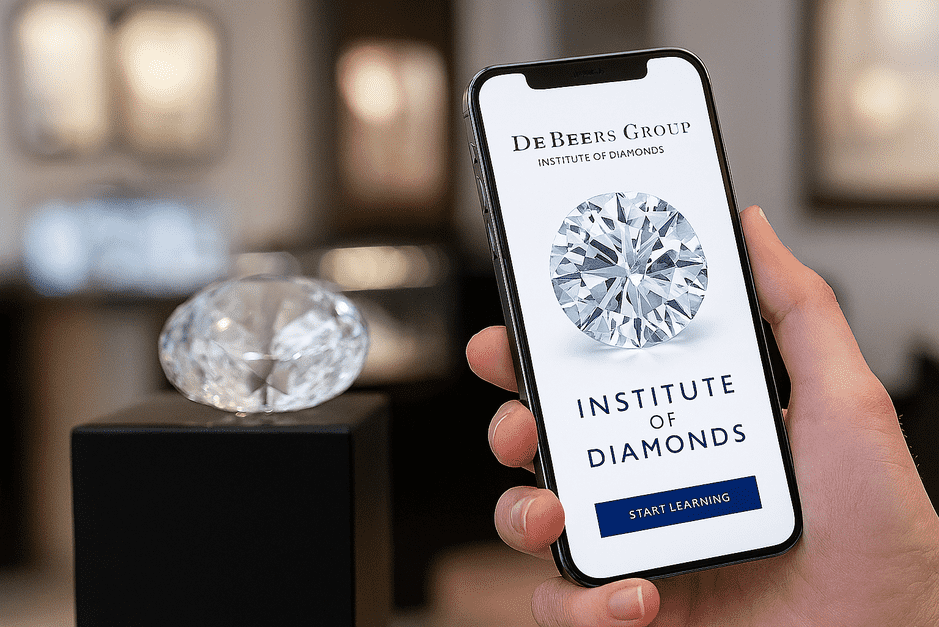
For example, De Beers Group uses X-ray fluorescence detection to identify diamonds in rock formations. As a result, mining becomes safer and more efficient.
Blockchain and Traceability
Blockchain creates a transparent digital record for each gemstone. You can track a stone from mine to the showroom. This way, it ensures ethical sourcing and builds consumer confidence.
Projects like Everledger and Tracr by De Beers show how technology in jewelry and gemstones improves transparency and trust.
Lab-Grown Alternatives
Technology now replicates natural diamond growth using high-pressure or plasma methods. Lab-grown stones are physically identical to mined gems. They offer sustainable and conflict-free options.
Additionally, you can learn more in 24K, 22K, 18K: What Every Malayali Gold Buyer Must Know.
2. Cutting and Manufacturing with Technology
Computer-Aided Design (CAD) and Manufacturing (CAM)
Designers create detailed 3D models using CAD software. After that, CAM machines cut and cast metals based on those models. This process significantly improves precision and allows complex shapes.
A designer can therefore perfect symmetry or prong height before production begins.
3D Printing in Jewelry Making
Formlabs and other 3D printers create prototypes in wax, resin, or even metal. They not only reduce waste but also make custom designs affordable. In addition, technology in jewelry and gemstones supports faster prototyping and personalization.
Laser and AI Technologies
Lasers mark serial numbers, cut metal, and engrave names. They handle delicate details without damaging the surface. Moreover, jewelers use laser welding to repair filigree settings accurately.
AI scans gemstones for clarity, color, and symmetry. Automated systems sort, grade, and value gems faster and more consistently.
GIA’s AI grading tools already lead this shift. Consequently, quality control is faster and more objective than before.
Advanced Metal Alloys
New alloys — such as rose gold and platinum-silver — expand creative options. Furthermore, these materials enhance durability and color range. They also meet the demand for lightweight yet durable jewelry.
3. Retail and Customer Experience with Jewelry Technology
E-commerce and Global Reach
Online platforms bring jewelry to customers worldwide. Secure payments and fast delivery make global trade easy.
Platforms like Shopify Jewelry Store and WooCommerce power thousands of jewelry retailers. Therefore, even small brands can now sell globally with ease.
Augmented and Virtual Reality (AR and VR)
AR lets you virtually “try on” rings and earrings using your phone camera. VR allows immersive store tours and viewing of full collections. Together, they make online jewelry shopping more engaging.
Bulgari’s Virtual Boutique shows how technology blends luxury with convenience. Likewise, independent jewelers now experiment with virtual try-on tools.
AI-Powered Recommendations
AI suggests designs based on your past purchases and style preferences. Brands like Blue Nile use AI chat assistants to help buyers choose diamonds. This illustrates how technology in jewelry and gemstones enhances personalization.
Data and Customer Insights
Jewelers use CRM and analytics tools to study customer behavior. As a result, insights guide design trends, pricing, and marketing. Ultimately, you get jewelry that fits your taste and lifestyle more precisely.
4. The Future of Technology in Jewelry and Gemstones
From mine to market, technology in jewelry and gemstones builds trust and personalization. It reduces waste, improves quality, and connects every player in the chain. For you, it means knowing where your jewelry comes from — and understanding how it’s made.
As technology advances, technology in jewelry and gemstones will continue to evolve — driving sustainability, precision, and consumer confidence.
FAQ
1. How does technology improve gemstone mining?
It helps locate deposits precisely and minimizes extraction waste.
2. What does blockchain do in jewelry?
It tracks a gem’s journey from mine to retail, therefore proving authenticity and ethical sourcing.
3. Are lab-grown diamonds real?
Yes. They have the same physical and chemical structure as natural diamonds.
4. How does AR help jewelry buyers?
You can preview how a piece looks on you before buying.