Introduction
In the world of luxury, we often assume that “Gold” refers only to the metal. However, nature provides golden hues in many forms. Not everything golden needs to be expensive to be extraordinary. Sula Muscat Blanc and Heliodor share a radiant visual kinship that goes far beyond coincidence. One is India’s pioneering low-alcohol white wine from the vineyards of Nashik; the other is the sun-kissed gemstone of the illustrious Beryl family.
Both glow with warm, vibrant yellow and golden hues that immediately catch the eye. Moreover, both offer remarkable value within their respective categories. As a Gemologist who appreciates the finer things in life, I find this comparison fascinating. One delights the palate, while the other delights the eye. In this article, we will explore their striking color similarities, origins, and practical consumer tips. Whether you are a wine enthusiast exploring India’s growing viticulture or a collector searching for an affordable colored stone, understanding these treasures adds a new layer of appreciation.
The Golden Glow of Sula Muscat Blanc and Heliodor
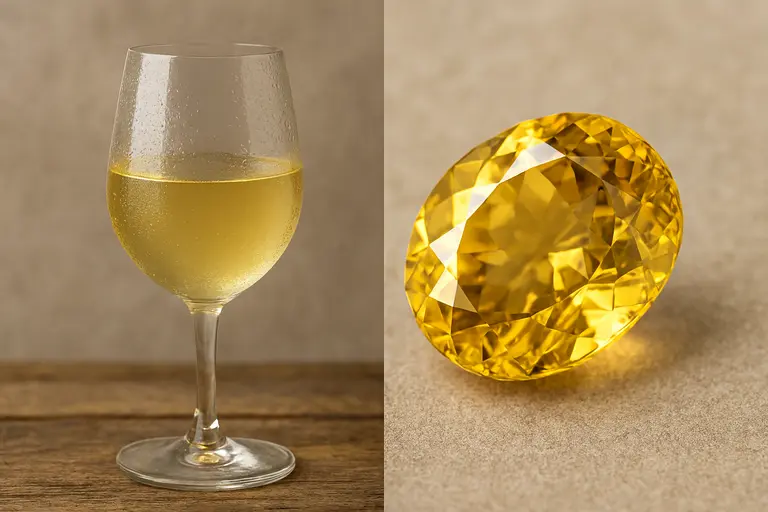
At first glance, the connection between a glass of wine and a cut gemstone may seem unusual. However, Sula Muscat Blanc and Heliodor are celebrated specifically for their luminous, sunny appearance.
The Wine: Liquid Sunshine
Sula Vineyards widely markets Sula Muscat Blanc for its signature ‘golden glow’. Visually, it presents a pale straw-to-light-gold color in the glass. Consequently, this immediately suggests warmth, freshness, and sweetness. When held to the light, the liquid clarity rivals that of a fine gem.
The Gem: Gift of the Sun
Similarly, Heliodor earns its title from the Greek words Helios (Sun) and Doron (Gift). It captivates with a range of light yellow to deep golden-yellow tones. Furthermore, both possess an almost effortless luminosity. The wine shimmers with a liquid brilliance, while Heliodor’s Vitreous (glass-like) luster gives it a bright sparkle. Therefore, both have become symbols of cheerfulness and warmth. For anyone drawn to solar aesthetics, these two make for an unexpectedly harmonious pairing. You can learn more about optical properties in my Colored Stone Grading guide.
Origins of Sula Muscat Blanc and Heliodor
Despite their visual similarities, Sula Muscat Blanc and Heliodor could hardly have more different origins.
The Vineyard
Sula Vineyards produces Sula Muscat Blanc exclusively in the Nashik Valley of Maharashtra, India. Locals often refer to Nashik as the ‘Wine Capital of India’, which provides the warm days and cooler nights required for grapes. Specifically, this wine holds a milestone distinction: it is India’s first aromatic, low-alcohol (7.5% ABV) still white wine. Unlike heavy reds, winemakers craft it from 100% Muscat grapes using modern stainless steel fermentation to preserve fruitiness.
The Mine
On the other hand, Heliodor forms deep within the Earth in Granitic Pegmatites. These are coarse-grained igneous rocks that allow large crystals to develop slowly over geological time. Major sources include Minas Gerais in Brazil, Madagascar, and Namibia. As a variety of the Beryl mineral family, Heliodor is the “Yellow Sister” to the famous Emerald and Aquamarine. Thus, this family connection gives Heliodor a prestige that far exceeds its modest price point. Read more about Beryl in my Synthetic Emeralds in Watches article.
Identification: The Nose vs. The Loupe
Knowing what to look for helps you appreciate the authenticity and quality of both.
Identifying the Wine
When it comes to Sula Muscat Blanc, identification starts with the nose. The wine presents an intensely aromatic profile bursting with Lychee, Citrus, and Rose Petal notes. On the palate, it sits in an interesting middle ground: sweeter than a dry white wine, yet crisp enough to avoid feeling heavy. Notably, its low alcohol content (7.5%) makes it lighter than most table wines.
Identifying the Gem
Conversely, identifying Heliodor requires a technical approach. Gemologists assess it using standard tests:
- Hardness: It ranks 7.5 to 8 on the Mohs scale, making it durable.
- Refractive Index: Falls between 1.566 and 1.579.
- Inclusions: Under magnification, Heliodor often reveals long, hollow tubes or “Rain” inclusions.
For a deeper dive, I recommend checking resources from the Gemological Institute of America (GIA).
Treatments for Sula Muscat Blanc and Heliodor
Understanding treatments is essential for any informed consumer.
- The Wine: Sula Muscat Blanc undergoes no artificial treatments beyond standard winemaking. Winemakers use stainless steel fermentation to preserve the delicate floral aromatics without introducing Oak flavors. As a result, it is an honest expression of the grape.
- The Gem: Dealers, however, frequently heat-treat Heliodor. Heat Treatment is common to improve the yellow color or remove brownish tones. Unlike the wine, which must be fresh, the gem is often “cooked” to look its best. This is a widely accepted practice in the trade. Learn about disclosure in my Gemstone Buying Mistakes guide.
Consumer Tips for Smart Purchases
Finally, how should you buy and enjoy them?
Drinking the Wine
If you are picking up a bottle of Sula Muscat Blanc, timing is everything. Unlike aged reds, you should consume this wine young—ideally within 1-2 years of its vintage. It pairs beautifully with spicy Indian cuisine. For example, try it with a spicy Paragon Biriyani or a Kerala Fish Curry. The sweetness of the wine balances the heat of the spice perfectly.
Wearing the Gem
For Heliodor, color saturation is your primary quality indicator. Stones with a strong, vivid golden-yellow color are the most desirable. Because of its excellent hardness, Heliodor is well-suited for rings and daily wear. Moreover, it remains considerably more affordable than its blue cousin, Aquamarine. Therefore, it is an excellent entry point for collectors. For styling ideas, check my Men of Platinum Jewelry guide to see how yellow gems look in white metal.
Conclusion on Sula Muscat Blanc and Heliodor
In summary, Sula Muscat Blanc and Heliodor prove that luxury is accessible. One offers a sensory journey through the vineyards of Maharashtra; the other offers a geological journey through the crystals of the earth. Ultimately, whether you sip the wine or wear the stone, you are enjoying the golden warmth of nature.
FAQ: Sula Muscat Blanc and Heliodor
What makes Sula Muscat Blanc unique among Indian wines?
It is India’s first aromatic, low-alcohol still white wine. Made from 100% Muscat grapes in the Nashik Valley, it offers a distinct floral sweetness that pairs perfectly with spicy Indian food.
Is Heliodor the same as Yellow Beryl?
Yes. Heliodor is the golden-yellow variety of the mineral Beryl. It is the same species as Emerald and Aquamarine. Trade experts use the name ‘Heliodor’ specifically for the sunny, golden-colored stones.
Are the treatments applied to Heliodor acceptable?
Yes. Heat treatment is standard and permanent. It enhances the yellow hue. However, reputable dealers should always disclose if a stone has been irradiated to achieve its color.
How should I store Sula Muscat Blanc?
Store it in a cool, dark place and consume it fresh. Unlike red wines, it does not benefit from long aging. Serve it chilled at 6-8°C for the best experience.
Can Heliodor be used in everyday jewelry?
Absolutely. With a hardness of 7.5 to 8, it is durable enough for rings and bracelets. It resists scratches better than Amethyst or Opal.