Introduction
In the vast blue expanse of the Pacific Ocean, there exists a gemstone that human hands cannot replicate. Rare Pipi Pearls captivate gem lovers with their exquisite rarity and shimmering allure. Unlike the massive South Sea pearls we see in luxury showrooms, these are tiny, natural miracles produced exclusively by the diminutive Pinctada maculata oyster.
They emerge from the pristine shallow waters of French Polynesia and the Cook Islands. Most importantly, unlike common cultured pearls, Pipi pearls form without human help. As a Gemologist with over 40 years of experience, I classify them alongside Mississippi Pearls and Basra Pearls as true natural treasures. In this guide, we will dive into their physical traits, the failure of culturing attempts, and why their deep golden hue commands premium prices. Whether you are a collector in Kerala or a jeweler in Mumbai, understanding these gems reveals why small is beautiful.
Physical Characteristics of Rare Pipi Pearls
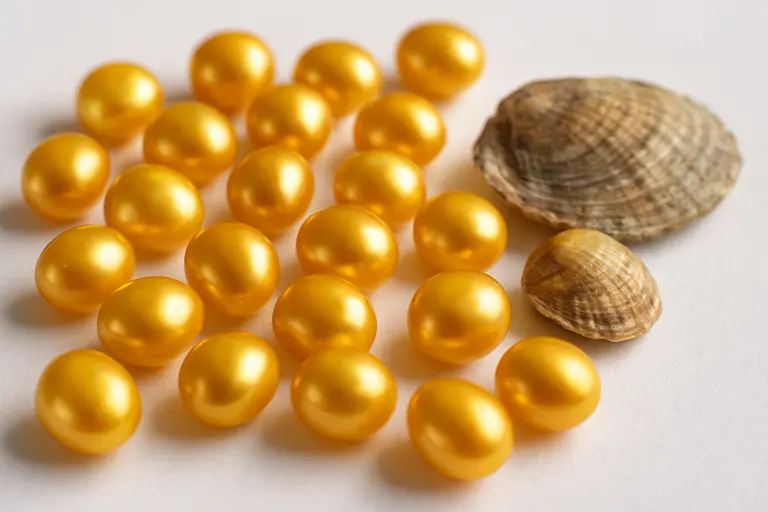
To begin with, Pipi pearls owe their charm to the tiny host oyster. The Pinctada maculata seldom grows beyond 5 cm in diameter. Consequently, the pearls remain remarkably small, usually ranging from 2 mm to 5 mm. However, exceptional finds can reach up to 8 mm. For instance, a perfectly round 6 mm specimen might fetch thousands of dollars due to its scarcity.
The “Kerala Gold” Color
Color defines their appeal. While shades span white, cream, and apricot, the iconic Deep Golden Yellow steals the show. Visually, this hue is reminiscent of Kerala’s 22K Temple Jewelry. It has a rich, saturated glow that looks almost metallic. Additionally, their luster shines with a satiny, high-quality sheen (“Orient”), rivaling the finest Oriental pearls. Therefore, despite their size, they do not disappear when worn; they pop like tiny suns.
Shapes and Setting
Shapes vary widely. You will often find them in desirable round to near-round forms, but “Baroque” (irregular) and “Blister” pearls add artistic flair. Ideally, jewelers set them in clusters or halos to create impact. If you are interested in jewelry design, check my guide on Traditional Rajasthani Jewellery for ideas on setting small gems.
Rarity and Sourcing of Rare Pipi Pearls
What truly elevates Rare Pipi Pearls is their profound rarity. They are almost entirely natural. They form spontaneously inside the oyster when a grain of sand or parasite enters the shell.
Reports highlight their elusiveness: in one study, just one gem-quality Pipi pearl emerged from 355 oysters harvested. This scarcity stems from the oyster’s habitat—shallow, turbulent Pacific lagoons where predators and currents limit survival. Divers in the Cook Islands hand-harvest them while foraging for the edible meat, blending tradition with treasure hunting.
Why Can’t We Farm Them?
Culturing efforts began in the 1950s, yet they have largely failed. For example, attempts to insert beads (nucleation) into the Pinctada maculata usually kill the oyster because its shell is too thin and small. As a result, every Pipi pearl on the market represents a natural accident, not a factory product. This distinction is crucial for investment value. Read more about value in Natural Diamonds Over Lab-Grown.
Identification Secrets of Rare Pipi Pearls
Distinguishing genuine Rare Pipi Pearls requires precision, especially amid lookalikes. Gemologists rely on targeted tests to confirm their origin.
- Structure: Internally, they boast an organic-rich core layered with fine Aragonitic Nacre. Under X-ray, they show “concentric” growth rings like an onion, proving they are non-nucleated (Natural).
- Spectroscopy: UV-Vis reflectance spectroscopy reveals a unique absorption peak at around 495 nm (due to natural pigments), absent in dyed pearls.
- Fluorescence: Under UV light, the golden ones often fluoresce an intense yellow-orange.
Expert Warning: Do not confuse these with the “Pipi Clam” of Australia (Plebidonax deltoides). That is an edible clam that rarely produces pearls. The Rare Pipi Pearls of jewelry fame come only from the Pinctada maculata. Always source from certified suppliers like those vetted by the Cultured Pearl Association of America.
Cultural Ties to Rare Pipi Pearls
Beyond the gem, there is a cultural story. In the Cook Islands, the oyster meat is a delicacy. Just like Pearl Meat in Australia or Kozhikode Halwa in Kerala, it is a local treat. The pearls are merely a “bonus” found during the meal preparation!
For Indian jewelers, these pearls offer a bridge between Polynesian rarity and Indian aesthetics. Imagine a Mangalsutra accented with these natural golden beads. It blends the sanctity of the gold with the purity of the natural pearl.
Conclusion on Rare Pipi Pearls
Ultimately, Rare Pipi Pearls prove that value is not about size. They are the “Baby” of the pearl world, but they command the respect of a giant. In summary, if you own a Pipi pearl, you own a piece of the Pacific Ocean that nature made just for you.
FAQ: Rare Pipi Pearls
What are Rare Pipi Pearls?
They are natural pearls produced by the Pinctada maculata oyster, found primarily in the lagoons of the Cook Islands and French Polynesia. They are famous for their small size and intense golden color.
How rare are natural Pipi Pearls?
Extremely rare. Finding a gem-quality pearl happens in less than 1% of harvested oysters. Since they cannot be successfully farmed, the supply is entirely dependent on wild harvest.
What colors do Rare Pipi Pearls show?
While they can be white or bronze, the Golden Yellow hue is the most prized. It ranges from a soft lemon to a deep, intense orange-gold.
Are they expensive?
Yes. Despite being small (3-5mm), high-quality strands can cost thousands of dollars because it takes years to collect enough matching pearls to make a single necklace.
How do I identify them?
Look for the unique “Golden” color and small size. However, the only way to be 100% sure is to undergo an X-ray test at a lab like GIA, which will confirm the natural growth structure.
Author Bio
P.J. Joseph, also known as Saju Elizamma, Gemstone & Gold Consultant serving Kerala, Tamil Nadu, and Karnataka.