Introduction
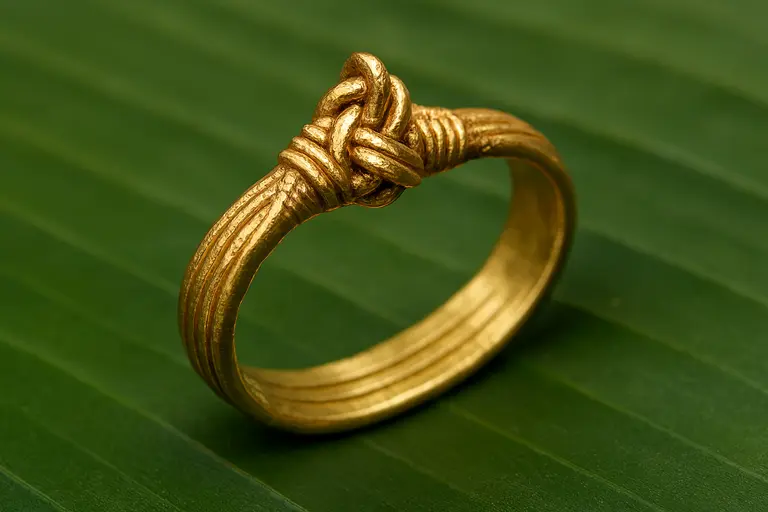
In the rich tapestry of Indian jewelry, most pieces are designed for beauty. However, in Kerala, some pieces are designed for power. The Payyannur Pavithra Ring (Pavithra Mothiram) is a revered Hindu artifact that defies modern jewelry logic. Originating from the northern town of Payyannur (Kannur District), this intricate gold or silver ring mimics ancient grass bands used in temple rituals.
Unlike a decorative diamond ring, this is a spiritual tool. It blends spirituality, craftsmanship, and strict tradition. As a Gemologist who respects the “Energy” of objects, I find this ring fascinating. It is essentially a wearable temple. In this guide, we will explore its history, the secret of the “Knot,” and the strict rules for wearing it. Whether you are a devotee or a collector of heritage art, this ring commands respect.
History of the Payyannur Pavithra Ring
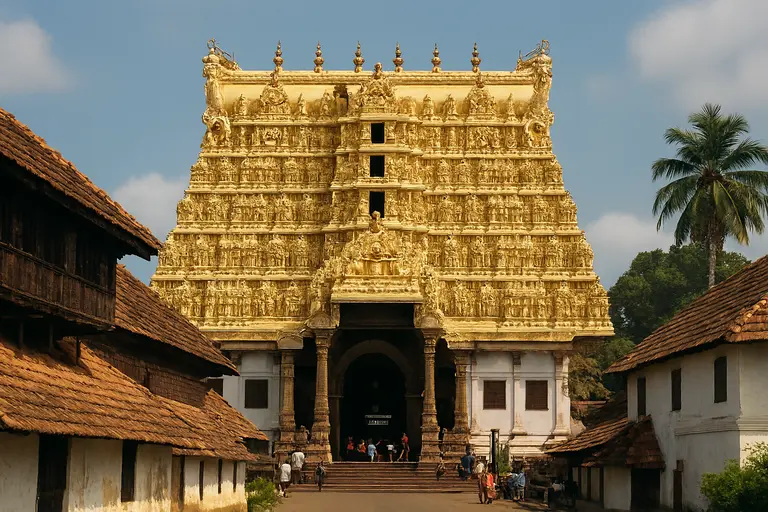
To begin with, the ring traces its roots to the Sree Subrahmanya Swami Temple in Payyannur. Historically, priests wore temporary rings made from Darbha Grass (Kusha grass). These rings ensured ritual purity during sacred ceremonies, specifically during Pithru Bali (prayers for ancestors). However, grass is fragile. It dries up and breaks.
Then, during a major temple renovation in the 19th century (around 1838), a shift occurred. The temple’s Tantri (Chief Priest) sought a lasting solution. He asked the local goldsmith family to replicate the grass knot in pure gold. Thus, the gold Payyannur Pavithra Ring was born. Today, it serves as a permanent symbol of that ancient discipline. You can read about other temple traditions in my Padmanabhaswamy Temple Treasures article.
Symbolism of the Payyannur Pavithra Ring
Moreover, the design is not random. It is sacred geometry. The ring features a unique knot called the “Pavithra Kettu.” Visually, it looks like a flattened “Figure of 8.”
The Anatomy of the Ring:
- Three Lines: The surface has three distinct ridges. These represent the Trimurti (Brahma, Vishnu, Shiva).
- Or, in Yoga philosophy, they represent the three energy channels of the human body: Ida, Pingala, and Sushumna.
- The Knot: Represents the binding of these energies.
Consequently, devotees believe wearing it activates the “Prana” (Life Force). Additionally, folklore suggests it wards off negative influences. Therefore, for the spiritual seeker, it promotes inner peace alongside material well-being.
Crafting the Payyannur Pavithra Ring
Creating an authentic Payyannur Pavithra Ring demands utmost discipline. First, tradition dictates that only one lineage holds the exclusive right: the Chovvatta Valappil goldsmith family of Payyannur. For generations, they alone produced the genuine article.
The process begins with ritual purity. Artisans observe a strict Vratam (Penance). They abstain from meat and alcohol during the crafting period. Next, they hand-knot the gold wire into the intricate design. A single ring takes a full day to craft. Most importantly, once complete, the artisan takes the ring to the Subrahmanya Swami Temple for a special Pooja. Only after this consecration does it become “vibrant” and ready for the wearer. In contrast, mass-produced machine rings lack this sanctity. For more on the value of handcrafted items, read my Jewelry Sales Secrets.
Expert Advice: The Rules of Wearing
As an expert, I must warn you. This is not a casual accessory. If you choose to wear a Payyannur Pavithra Ring, you are expected to maintain a level of purity.
The Traditional Rules:
- Right Hand: You must wear it on the Ring Finger of the right hand.
- Diet: Tradition expects wearers to be Vegetarian and avoid alcohol while wearing it.
- Removal: You should remove it during times of “impurity” (like visiting a cemetery or during mourning periods) and place it in the Puja room.
However, in modern times, some people wear it simply for cultural pride. Yet, knowing the rules shows respect for the heritage.
Where to Buy a Payyannur Pavithra Ring
Sourcing a genuine ring requires care. Skip generic online marketplaces. Ideally, go directly to the source in Kannur.
Trusted Sources:
- Sree Payyannur Pavithram: Located near the Old Bus Stand, Payyannur. They follow the lineage rituals.
- Lakshmi Jewellery: Another reputable maker on the Main Road.
Prices depend on the gold weight (usually 22K) and the size. Pro Tip: Ask for the “Temple Pooja Certificate.” This proves the ring has been blessed. If you are traveling there, check my Kerala’s Gold, Food, and Film guide for other cultural stops.
Conclusion: A Knot of Faith
Ultimately, the Payyannur Pavithra Ring is a link between the human and the divine. It reminds us of a time when art was a form of prayer. In summary, owning one is a responsibility. It is a piece of Kerala’s soul wrapped around your finger.
FAQ: Payyannur Pavithra Ring
What is a Payyannur Pavithra Ring?
It is a sacred ring made of Gold or Silver, originating from the Payyannur Temple in Kerala. It replicates the shape of the Darbha grass knot used by priests during rituals.
Who makes the Payyannur Pavithra Ring?
Traditionally, only the Chovvatta Valappil family of goldsmiths in Payyannur has the hereditary right and knowledge to craft the authentic, consecrated ring.
Can women wear the Pavithra Ring?
Yes. While historically worn by men performing rituals, today many women wear it for spiritual protection. However, they are advised to follow the sanctity rules.
How long does it take to make?
Typically, it takes one to three days. This includes the hand-crafting of the knot and the mandatory Pooja (blessing) at the temple before delivery.
What happens if the ring gets damaged?
According to tradition, jewelers should not repair a damaged Pavithra ring. It should be melted down and a new one made, as a broken knot breaks the flow of energy.
Author Bio
P.J. Joseph, also known as Saju Elizamma, Gemstone & Gold Consultant serving Kerala, Tamil Nadu, and Karnataka.