Introduction
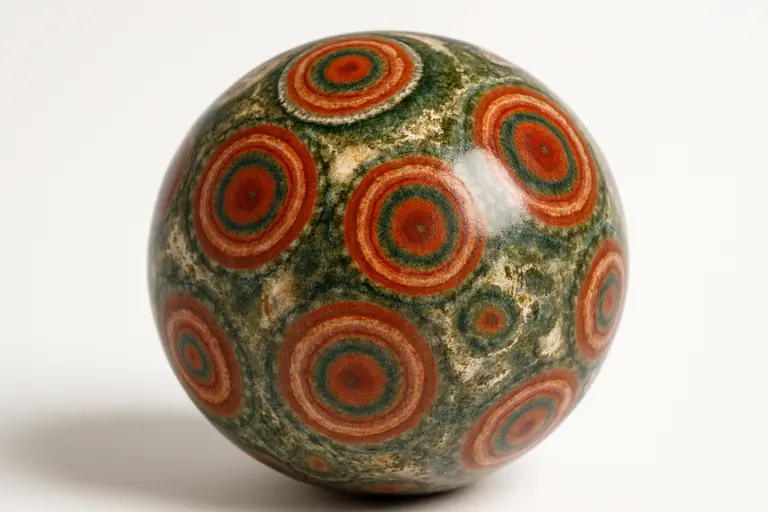
In the world of patterned stones, few can compete with the hypnotic beauty of Ocean Jasper. It captivates gem lovers worldwide with its mesmerizing, eye-like orbicular patterns and vibrant colors. Although often called a jasper, this unique gemstone is technically a type of Orbicular Chalcedony or silicified Rhyolite. Therefore, it stands apart from true opaque jaspers.
Exclusively sourced from the remote shores of Madagascar, Ocean Jasper sparks intrigue due to its ties to the ocean tides and the mythical “Lost Continent of Atlantis.” As a Gemologist who loves unique inclusions, I find this stone fascinating because it looks biological, like cells under a microscope. In this comprehensive guide, we will explore its origins, stunning colors, and the difference between “Old Stock” and “New Stock.” Whether you are a collector in India or a jewelry designer in Europe, understanding this stone helps you appreciate its rarity.
Exclusive Origin of Ocean Jasper in Madagascar
First, let’s look at the source. Ocean Jasper hails from a single, extraordinary location. Specifically, miners extract it along the northwestern coast of Madagascar, near the villages of Marovato and Kabamby in the Analalava district.
However, accessing these deposits is no easy task. The veins lie on the shoreline, often underwater. Consequently, mining happens only during Low Tide when the ocean recedes. This tidal dependency makes mining labor-intensive and weather-reliant. Miners have to race against the returning waves to extract the rough rock.
The Mystery of Rediscovery
Moreover, the stone’s history is shrouded in mystery. Early records from the 1920s mention it, but the location was lost for nearly 75 years. Then, around 1999–2000, enthusiasts rediscovered it, sparking a global frenzy. By 2006, the original “Old Stock” deposit (famous for clear, distinct eyes) was exhausted. Fortunately, new veins have surfaced since, though production remains limited. If you enjoy stories of rare finds, read my guide on Tsavorite Garnet and Tsavo Park.
Colors and Patterns of Ocean Jasper
What truly sets Ocean Jasper apart are its diverse colors and hypnotic designs. The background often features creamy greens, whites, yellows, pinks, browns, reds, or blacks. Additionally, the signature Orbs—concentric circles resembling eyes—pop in contrasting hues.
How do they form? These patterns form naturally through mineral precipitation. As the volcanic rhyolite lava cooled, silica-rich fluids formed spheres of Radial Aggregates.
- Iron Oxides: Create Reds and Browns.
- Chlorite/Epidote: Create lush Greens.
For example, some specimens boast Druzy Quartz pockets—tiny crystal caves that sparkle like stars. According to geologists, these variations stem from millions of years of silicification. Therefore, no two pieces are identical. Each one is a fingerprint of the earth. You can compare these patterns to the “Fractal” designs I discussed in Appuppanthadi and Horsetail Demantoid.
Old Stock vs New Stock Ocean Jasper
As a collector, you must know the difference.
- Old Stock (Pre-2006): Mined from the first vein. Famous for distinct, separated orbs floating in translucent chalcedony. Often features pinks and yellows. Highly valuable.
- New Stock (Post-2010): Mined from later veins (like the “Kabamby” vein). Often features more “banding” or “veining” rather than perfect orbs. Colors are often greener and earthier.
In India, where gemstones like Agate thrive in markets from Jaipur to Kochi, Ocean Jasper offers a fresh alternative. Its scarcity drives prices up. While a common agate might cost ₹100, a fine slice of Old Stock Ocean Jasper can cost ₹5,000+.
Treatments and Polishing of Ocean Jasper
The stone shines best in its untreated form. Generally, reputable sellers avoid enhancements because the stone’s natural patterns are its star feature. Instead, artisans polish it into tumbled stones, cabochons, or intricate carvings (like spheres or skulls).
That said, caution is key. Lower-grade material is sometimes dyed to boost color intensity. For this reason, always source from verified dealers. In India’s gem trade, tools like UV lights help detect treatments—authentic Ocean Jasper often fluoresces subtly under blacklight. Read more about treatments in my Gemstone Buying Mistakes guide.
Care and Limitations of Ocean Jasper
Despite its appeal, Ocean Jasper has vulnerabilities. First, its Mohs hardness of 6.5–7 makes it suitable for jewelry but prone to scratches from harder gems like Spinel or Sapphire. Additionally, druzy pockets or natural voids add fragility. If you drop it, it might crack along a vein.
Therefore, store it away from direct sunlight. Prolonged UV exposure can fade the vibrant colors over the years. For cleaning, use mild soapy water and a soft cloth. Avoid ultrasonic cleaners, which can vibrate the stone apart if it has internal fractures. This care advice is similar to handling Thewa Jewelry.
The Atlantis Connection
Finally, a bit of folklore. Because it comes from the ocean’s edge, spiritualists often link Ocean Jasper to the mythical lost city of Atlantis. It is called the “Atlantis Stone” in New Age circles, believed to hold ancient knowledge. While scientifically unproven, this story adds to the stone’s mystique and marketability.
Conclusion: A Gift from the Sea
In summary, Ocean Jasper is a geological miracle. It captures the chaos of the ocean and the order of crystals in one stone. Ultimately, whether you use it for meditation or set it in a silver pendant, you are holding a piece of Madagascar’s coastline.
FAQ: Ocean Jasper Essentials
Is Ocean Jasper a real Jasper?
Technically, no. It is Orbicular Chalcedony. True Jasper is opaque and grainy. Ocean Jasper is often translucent and has a higher silica content. However, the trade name “Jasper” has stuck.
Where is Ocean Jasper exclusively found?
It is found only along the northwestern coast of Madagascar, specifically in the Analalava district. No other location on Earth produces this specific type of orbicular chalcedony.
Can Ocean Jasper be treated?
Mostly natural. However, some low-grade pieces are dyed or stabilized with resin to fill cracks. Always buy from reputable sources to ensure natural color.
Why is Ocean Jasper so rare?
Because the deposits are small and difficult to reach. The original vein is depleted, and mining can only occur at low tide, limiting the annual yield significantly.
Is Ocean Jasper suitable for daily wear?
Yes, but with care. With a hardness of 6.5–7, it is durable enough for pendants and earrings. For rings, use a protective bezel setting to prevent scratching.