Summary
Many buyers still confuse natural and cultured pearls. This article uses a simple wild berry vs. farmed berry analogy to explain how each type forms, why the price gap exists, and what to check before buying. Learn to tell them apart, avoid paying more than you should, and appreciate the beauty behind your pearls.
Introduction
When you shop for pearls, one mistake can cost you dearly — confusing natural with cultured pearls.
Both are genuine gems created by oysters. However, their origins differ greatly, and that single detail changes everything — from value to rarity.
Let’s break it down with a simple comparison.
Natural Pearls: Nature’s Pure Accident
Think about a wild berry that grows without human help.
A natural pearl forms in the same way — purely by chance.
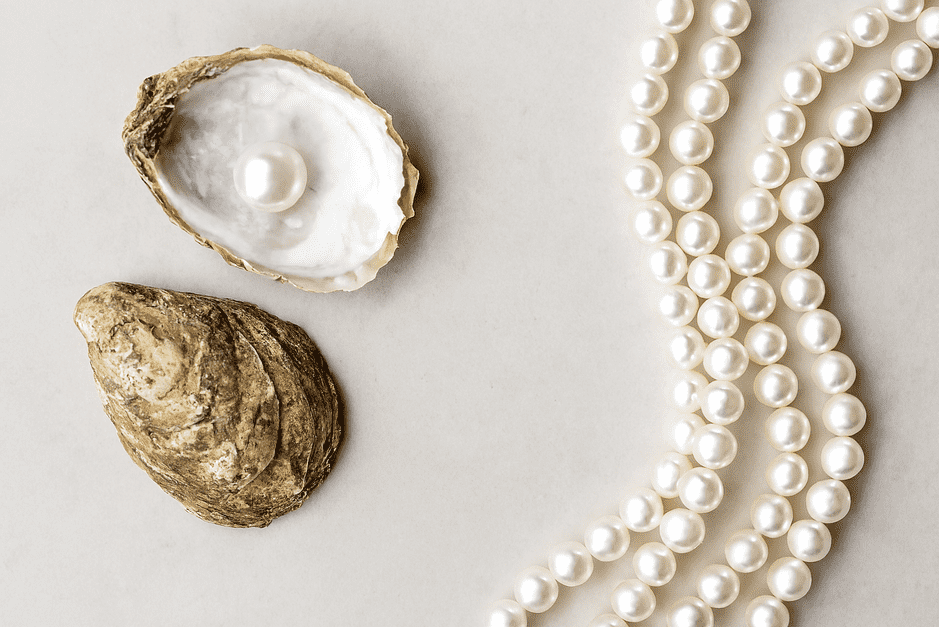
A tiny parasite or grain slips into the oyster. To protect itself, the oyster coats it with layers of nacre. This process can take many years, making natural pearls extremely rare.
Because of this rarity, collectors highly value natural pearls. Only a few vintage or heirloom pieces contain them today. If you find one, you hold a piece of history.
Cultured Pearls: Nature Meets Human Guidance
Now think of a farmed berry — still real but grown with care and planning.
A technician places a bead or tissue inside the oyster, and the oyster reacts the same way as in nature, coating it with nacre. The result is a real pearl — but one guided by human hands.
Cultured pearls are widely available and affordable, appearing in most jewelry stores worldwide. That’s why you see them in collections from brands like Mikimoto or Tiffany & Co.
Why This Difference Matters
Knowing the difference protects your wallet — and your trust.
- Price: Natural pearls can cost dozens of times more.
- Availability: Nearly all pearls sold today are cultured.
- Disclosure: A jeweler must clearly tell you which type you’re buying.
Before you pay, always ask:
“Is this a natural or cultured pearl?”
This small question can save you thousands — and help you appreciate the craftsmanship behind your jewelry.
For more buying tips, explore our guide on how to negotiate jewelry prices.
Also, read Understanding Gem Certification by GIA for a trusted reference.
FAQ
1. Are cultured pearls fake?
No. They are real pearls, just grown with human assistance.
2. How can I tell if a pearl is natural?
Only a lab can confirm it. Natural pearls have no bead nucleus, while cultured pearls usually have one.
3. Are natural pearls still sold today?
Yes, but sellers usually offer them at auctions or in museum collections because they are rare.
4. What is the most common type of cultured pearl?
Akoya, South Sea, and Freshwater pearls are the most popular varieties today.