Introduction to Muga Silk Golden Fabric
Few textiles carry as much prestige as Muga silk golden fabric, a unique treasure produced exclusively in the northeastern Indian state of Assam. This remarkable material glows with a natural sheen that no synthetic dye can fully replicate, making it a cornerstone of India’s handloom legacy. For dozens of generations, local rearers and weavers have kept this laborious tradition alive, ensuring the world experiences its unparalleled beauty.
To understand why Assam calls it its golden fabric, you must look at its biological origins, its complex production, and the resilient people behind every thread. Furthermore, the recent launch of government initiatives in June 2026 highlights the growing economic importance of this textile. In an era where define our global economy, Muga silk serves as a perfect example of a localized ecosystem that supports thousands of families.
Science Behind Muga Silk Golden Fabric
First, it helps to understand what Muga silk actually is from a scientific perspective. The silkworm Antheraea assamensis produces Muga silk. Official Indian sources, including the Central Silk Board, describe Assam as the world’s only source of authentic commercial Muga silk. This specific silkworm feeds mainly on Som and Soalu plants, both of which grow naturally in Assam’s fertile landscape.
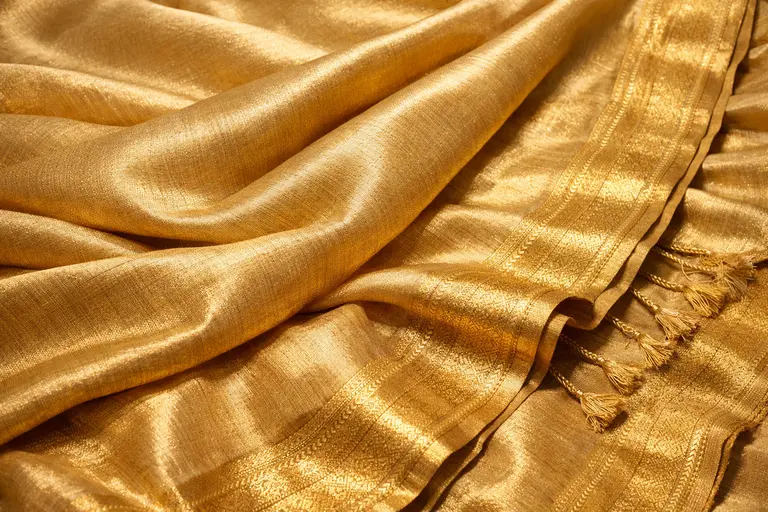
Consequently, the silk that emerges from these cocoons carries a warm golden-yellow lustre. This color appears naturally without any artificial colouring or chemical treatment. Furthermore, Muga silk is notably durable; it often outlives its original owners. Assamese families pass down Muga sarees and mekhela chadors across generations, treating them as heirloom pieces. This combination of natural beauty and long-lasting strength sets Muga apart from almost any other silk in the global market.
Why Assam Leads Muga Silk Golden Fabric Production
Assam does not simply manufacture a product; instead, the state provides a unique ecological system that makes Muga possible. The silkworm, the host plants, the humid regional climate, and the centuries-old weaving knowledge all come together here. These elements cannot be easily moved or replicated in other parts of the world.
In contrast to mulberry silk, which manufacturers produce at a massive scale globally, Muga silk remains firmly tied to its place of birth. Rearers raise the silkworms on outdoor plantations, exposing them to the natural environment. Reelers then draw the silk filament carefully from the cocoons by hand. After that, skilled weavers convert the yarn into finished garments. Each step requires knowledge that has passed from one generation to the next. As a result, Assam does not merely produce Muga silk—it defines it. This dedication to authentic origin is similar to how Indian designers choose raw diamond and Polki jewelry to preserve heritage.
Assamese Heritage and Muga Silk Golden Fabric
Beyond the literal color, the word “golden” also describes the immense cultural weight that Muga silk carries. Families wear Muga garments during the Bihu festival, weddings, and other significant religious ceremonies. Specifically, communities recognize the fabric as a mark of pride and social identity. Therefore, when people call Muga silk Assam’s golden fabric, they are speaking as much about cultural value as they are about the visual shimmer.
Moreover, the production of a fine handwoven Muga garment can take several weeks to complete. Much of this work still happens on traditional handlooms, where skilled weavers apply techniques refined over centuries. That level of intense craftsmanship drives the premium value of authentic Muga textiles. Consumers across the world now seek this type of slow, ethical fashion. Consequently, Muga has transitioned from a local tradition to a luxury asset on the international stage.
Mission Senehjori: Saving Muga Silk Golden Fabric
In June 2026, the Assam government launched Mission Senehjori, a cluster-based initiative aimed at establishing a stronger economic foundation for silk producers. The mission directly addresses a long-standing challenge: Muga silk has always enjoyed high prestige, yet the rearers and weavers have not always earned fair returns.
Specifically, Mission Senehjori targets the following areas:
- Reeling Infrastructure: Upgrading tools to improve yarn quality.
- Digital Traceability: Using QR codes to ensure customers receive 100% authentic Muga.
- Host-Plant Cultivation: Expanding Som and Soalu plantations to increase silkworm seed production.
- Textile Tourism: Creating “Silk Villages” where travelers can see the process firsthand.
Importantly, the mission aims to benefit nearly 2.6 lakh families connected to the Muga economy. In other words, this initiative is not only about preserving a fabric. It is equally about ensuring that the people who sustain that heritage can build a better livelihood. This systemic support is vital, much like how industry sheepdogs in tech and jewelry manage supply chains to prevent market chaos.
Sustainability of Muga Silk Golden Fabric
In an age of synthetic microplastics and fast fashion, Muga silk offers a genuinely sustainable alternative. It tells a story of place, ecology, and human skill. Additionally, Muga gives India a compelling textile identity on the world stage—one built on authenticity rather than industrial volume.
Nevertheless, heritage alone cannot keep the craft alive for another century. The future of Muga silk golden fabric traditions ultimately depends on whether young artisans choose to stay in the trade. Policy support and better market access play a massive role in that goal. When these elements come together, Muga silk can thrive as both a cultural symbol and a living, working tradition. That is why it remains Assam’s golden fabric—golden in colour, golden in culture, and golden in the livelihoods it sustains for the next generation.
FAQ About Muga Silk Golden Fabric
What exactly is Muga silk?
Muga silk is a rare, natural silk produced by the silkworm Antheraea assamensis. It is famous for its natural golden colour and its incredible durability.
Does Muga silk require special dyes?
No. The golden color is 100% natural and comes from the silk fibre itself. In fact, Muga silk actually becomes more lustrous after every hand wash.
Is Muga silk produced only in Assam?
Yes. Because the Antheraea assamensis silkworm requires the specific climate and plants found in Assam, the state produces nearly 99% of the world’s Muga supply.
What is the benefit of Mission Senehjori?
Mission Senehjori provides infrastructure and branding support to over 260,000 families. It helps weavers get better prices and ensures that buyers get authentic, traceable products.
How long can a Muga silk saree last?
A well-maintained Muga silk saree can easily last for over 50 to 100 years. Many Assamese families treat these garments as valuable heirlooms.
Disclaimer
This article is for educational and informational purposes only. The author has no financial affiliation with the government programs or silk brands mentioned. Prices and availability of Muga silk may change based on market conditions. Always verify the “Silk Mark” or authenticity tags before purchasing high-value textiles.