
Introduction
Lotus silk is one of the world’s most unusual plant-based textiles. In fact, artisans extract fine fibres from lotus stems and join them by hand to make yarn. Therefore, lotus silk differs from conventional silk, which comes from silkworm cocoons. Above all, this textile is rare because its fibres are hard to extract, not because every product carrying the name holds real value. Learning to spot the difference between real plant-based fibers and cheap imitations helps you shop smarter for premium, eco-friendly materials. It is a great way to appreciate the depth of Indian textile heritage.
Where Lotus Silk Is Made
Myanmar and Inle Lake traditions
Myanmar holds the best-known lotus silk tradition, especially around Inle Lake. According to local accounts, an Intha woman named Sa Oo developed the craft in Kyaingkhan village and wove cloth for Buddhist monastic robes. However, accounts differ on the exact date and the spelling of her name. Beyond its traditional roots, the art of lotus weaving has expanded across borders. Today, dedicated artisans in Vietnam, Cambodia, and India also produce this rare material, keeping the craft alive alongside the famous Inle Lake lotus weaving source.
Lotus silk production in India
In India, Bijiyashanti Tongbram developed lotus-stem fibre production in Manipur through her enterprise, Sanajing Sana Thambal. She gathers stems from Loktak Lake and trains local women to extract and weave the fibre. As a result, Manipur has become India’s main reference point for this craft. Still, buyers should separate lotus plants growing in a region from actual textile production, as the presence of the plant does not guarantee the existence of a weaving industry.
What Colour Natural Lotus Silk Has
Cream, ivory, and beige hues
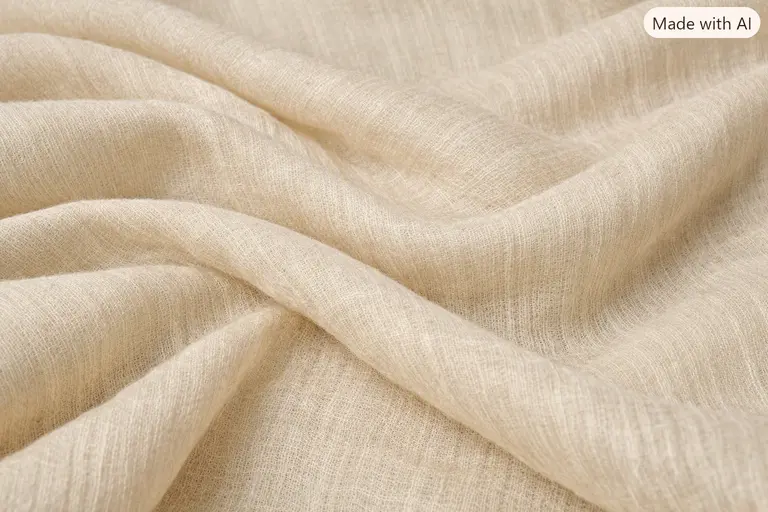
Natural lotus silk does not match the pink or orange of the lotus flower. Instead, undyed fibre appears in cream, ivory, beige, tan, and light brown. For example, a warm cream moonstone or ivory chalcedony comes closer than a padparadscha sapphire. Keep in mind that this comparison only applies to the colour. Unlike the actual gem, the textile features a soft, matte surface and lacks that signature shifting glow, which you can read about in this Moonstone guide.
Understanding dyed lotus silk
Artisans can also dye these fabrics, and researchers have studied natural dyeing for these specific textiles. Consequently, colour alone cannot prove authenticity. Similarly, a bright fabric is not automatically fake, and a cream fabric is not automatically genuine. Always inspect the fibre quality alongside the colour.
Why Lotus Silk Is Rare and Expensive
The process of manual fibre extraction
Artisans extract and join fine fibres from individual lotus stems by hand. Furthermore, producers make far less fabric than conventional mills. Estimates of the stems needed for one metre of fabric vary widely between producers, so treat any single figure as a rough guide. The labour-intensive nature of the process is the primary driver of the high retail price.
Price transparency and value
Labour, limited output, and specialist skills explain the high prices. Nevertheless, no single worldwide price exists, since fibre content, workmanship, design, and provenance all vary. Instead, compare composition and craftsmanship rather than treating a high price as proof of authenticity.
How to Identify Genuine Lotus Silk
Inspecting the fabric
Hand-produced lotus silk may show subtle irregularities in yarn and weave. However, modern textiles can imitate irregular surfaces. Therefore, treat visual inspection as one step only.
Verifying fibre composition
First, ask the seller what the textile contains. A product may hold pure lotus fibre, or it may blend lotus with cotton, linen, silk, or synthetics. In addition, ask where makers produced the material. For this reason, a clear fibre declaration beats a vague phrase such as “lotus-inspired silk.”
Why you should skip the burn test
A burn test cannot confirm lotus silk. Moreover, blends and finishes change burning behaviour, and burning fabric creates hazards. Accordingly, skip home burn tests and rely on documentation instead.
Grading, GI Tags, and Treatments
No gemstone-style colour grade
This textile has no universal grading system like the one gem laboratories apply to coloured stones. Gem experts weigh hue, tone, saturation, clarity, and cut. By contrast, buyers of this fabric weigh fibre content, workmanship, weave, durability, and provenance.
GI tag status in India
A Geographical Indication (GI) ties goods to a territory and its reputation. Therefore, buyers should not call a textile an Indian GI product unless they verify the registration in the Intellectual Property India database. After all, regional fame alone does not create GI protection.
Treatments and chemical finishes
Scientists have studied chemical purification of these fibres with sodium hydroxide and sodium chlorite. Consequently, buyers should not assume every piece is untreated or chemical-free. Some producers do claim chemical-free methods. Thus, ask the maker directly if dyes or finishes matter to you.
What Buyers Should Watch For
Extraordinary claims at unusually low prices deserve caution. First, check the label for fibre composition. Second, ask whether the product is pure lotus or a blend. Finally, research the seller. Keep in mind that labels can be tricky. Seeing the term “lotus fabric” on a tag doesn’t automatically mean it’s made from 100% pure fiber, which is why it helps to consult a Guide to buying authentic textiles.
Frequently Asked Questions
What is the natural colour of lotus silk?
Natural lotus silk appears in cream, ivory, beige, tan, or light brown. However, plant material and processing change the exact shade.
Which gemstone matches lotus silk?
A warm cream or ivory moonstone offers a useful colour comparison. Likewise, white or ivory chalcedony works well. However, neither gem reproduces the textile surface.
Is lotus silk real silk?
It is the established name for a textile made from lotus-plant fibres. Technically, however, lotus fibre is plant-based cellulose, whereas conventional silk is an animal protein fibre.
Can colour prove that lotus silk is genuine?
No. Colour offers a clue, but it cannot establish fibre identity. Therefore, check composition, provenance, and seller information.
Does lotus silk have a GI tag in India?
Verify the official GI register before making that claim. After all, regional production alone does not create GI protection.
Disclaimer
This article offers general educational information about lotus silk. Moreover, composition, production methods, prices, and certification status vary. Therefore, buyers should verify composition, provenance, treatment, and current certification directly with the seller before purchasing. The author has no financial affiliation with the brands or organizations mentioned.

Disclosure: This post contains Amazon affiliate links. If you make a purchase through them, I may earn a small commission at no extra cost to you.