Introduction to the Jubilee Diamond Tata Legacy
Most people instinctively think of diamonds as mere symbols of immense wealth and static luxury. However, the Jubilee Diamond Tata Legacy tells a completely different kind of story. Instead of simply sitting in a high-security display case, this remarkable gemstone helped save thousands of Indian jobs, rescued a struggling national industry, and eventually funded one of the country’s most vital cancer hospitals. In other words, a single diamond changed countless lives—and not in the way you might expect.
Although miners first discovered the stone in South Africa, its most meaningful chapters unfolded entirely on Indian soil. Moreover, the family behind that story—the Tatas—made courageous decisions that still affect ordinary Indians today. Consequently, this guide traces the diamond’s extraordinary journey from a dusty mine in Africa to the very heart of India’s industrial history. You should also read our guide on gemstone buying mistakes to understand how recognizing true quality and provenance protects high-value assets.
Geological History of the Jubilee Diamond
In 1895, miners at the Jagersfontein Mine in South Africa unearthed a massive rough diamond weighing exactly 650.80 carats. At the time, it was one of the largest rough crystals ever found. Expert cutters soon polished it into a magnificent cushion-shaped gem of 245.35 carats. This placed it among the finest and largest cut diamonds in existence. In fact, it currently ranks as the sixth-largest diamond on Earth.
Initially, the trade called it the “Reitz Diamond” to honor Francis William Reitz, the president of the Orange Free State. However, the owners later renamed the stone the “Jubilee Diamond” to commemorate the 60th anniversary of Queen Victoria’s coronation in 1897. As a result, the gemstone quickly captured the imagination of royal families and wealthy collectors across Europe. To understand the technical grading of such massive stones, you can visit the Gemological Institute of America.
The Tata Family and the Jubilee Diamond
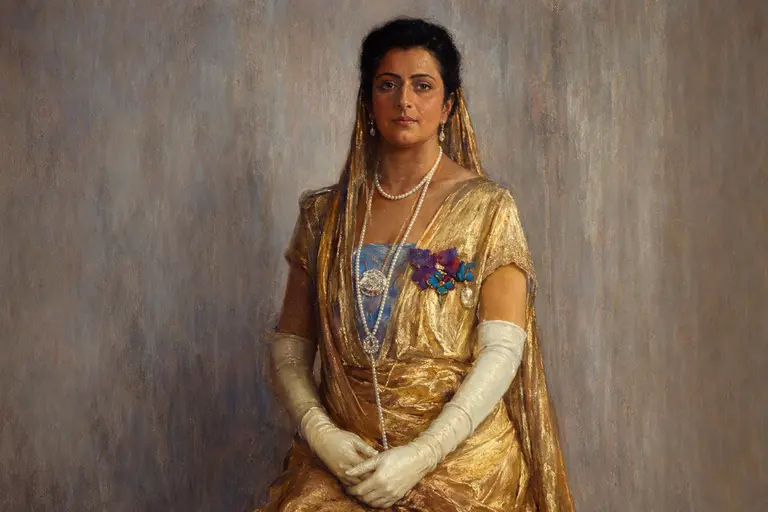
Around 1900, Sir Dorabji Tata—the eldest son of Jamsetji Tata, the legendary founder of the Tata Group—acquired the Jubilee Diamond from London merchants for approximately £100,000. He gifted the gemstone to his wife, Lady Meherbai Tata, on their second wedding anniversary. She subsequently had it set on a platinum claw and wore it proudly at royal courts and global social events.
At the same time, the Tata family was rapidly constructing one of India’s most powerful industrial empires. Therefore, the diamond gradually became more than just a piece of personal jewelry. Specifically, it grew into a symbol of India’s rising industrial confidence and global presence. You can learn more about the family’s monumental legacy at the official Tata Group website.
Saving Tata Steel with the Jubilee Diamond
This is where the Jubilee Diamond Tata Legacy becomes truly extraordinary. After the conclusion of World War I, cheaper Japanese steel began to flood global markets. Consequently, Tata Steel—then known as the Tata Iron and Steel Company—faced a severe liquidity crisis. The company could not pay its workers or meet its urgent financial obligations. Thousands of jobs were at serious risk.
Philanthropy and the Tata Legacy
At that critical moment, Sir Dorabji Tata and Lady Meherbai Tata made a decision that stunned the business world. Rather than protecting their personal fortune, they pledged nearly everything they owned—including the Jubilee Diamond—to the Imperial Bank of India (today’s State Bank of India). Because of that courageous pledge, the bank approved a massive loan of ₹1 crore.
As a result, Tata Steel successfully paid its workers, settled its debts, and kept its doors open. Furthermore, this rescue prevented mass layoffs during one of India’s most difficult economic periods. Unlike many wealthy industrialists of that era, the Tatas risked their personal heritage to protect ordinary working people. For that reason, historians still regard this act as the finest example of corporate responsibility in Indian business history. You may also read our article on Understanding BIS Hallmark to see how certification today ensures the purity of the wealth we save.
Establishing Tata Memorial Hospital
Sadly, Lady Meherbai Tata died of leukemia in 1931. Her death deeply affected Sir Dorabji, who passed away the following year. Nevertheless, before his death, he bequeathed his entire wealth—including the Jubilee Diamond—to the Sir Dorabji Tata Trust. He specifically dedicated this trust to cancer research in her memory.
In 1937, the Trust’s heirs sent the diamond to the jewelry firm Cartier, which sold it to a French industrialist. The proceeds then went directly into the Trust’s medical fund. This funding helped establish the Tata Memorial Hospital in Parel, Mumbai. The hospital opened on February 28, 1941, as India’s first dedicated cancer treatment facility. Since then, the institution has treated millions of patients. As a result, the Jubilee Diamond Tata Legacy evolved far beyond prestige; it became permanently linked to national healing.
The Jubilee Diamond Tata Legacy in 2026
Today, the Jubilee Diamond rests in the Mouawad private collection, hidden in a secure vault. Although the physical gem no longer remains in India, its legacy certainly does. In contrast to diamonds like the Koh-i-Noor, which many associate with colonial power, the Jubilee Diamond stands for sacrifice and resilience.
Specifically, it proves that wealth should serve the people, not just the individual. First, the diamond rescued an entire industry and protected the livelihoods of thousands. Later, it helped build a medical sanctuary that has served the public for over eight decades. Therefore, the Jubilee Diamond Tata Legacy remains a lasting symbol of nation-building and humanitarian commitment. Above all, it reminds us that true brilliance comes from the good we do for others.
FAQ: Jubilee Diamond Tata Legacy
Was the Jubilee Diamond found in India?
No. Miners discovered the diamond in South Africa in 1895 at the Jagersfontein Mine. It only came to India after Sir Dorabji Tata purchased it in London.
How big is the Jubilee Diamond compared to the Koh-i-Noor?
The Jubilee Diamond weighs 245.35 carats, which is more than twice the size of the 105.6-carat Koh-i-Noor. It is currently the sixth-largest cut diamond in the world.
How did the diamond specifically save Tata Steel?
In 1924, it served as collateral for a ₹1 crore loan from the Imperial Bank of India. This cash infusion allowed the company to survive a global steel crisis and pay its employees.
Who owns the Jubilee Diamond in 2026?
The Mouawad family currently holds the Jubilee Diamond in their private international collection.
Is the Tata Memorial Hospital still funded by the diamond?
While the initial construction utilized the proceeds from the diamond’s sale, the hospital is now supported by the Government of India and the Tata Trusts, continuing the legacy of Sir Dorabji Tata.
Disclaimer
This article is for educational and historical purposes only. Timelines and financial figures reflect publicly available archival data. The author has no financial affiliation with the Tata Group or Mouawad. Always consult professional historians for academic research.