Summary
Many visitors to Jaipur hunt for cheap gemstones, thinking they’re getting a bargain. In reality, the lowest-priced gems often end up costing more due to poor clarity, heavy treatments, and weak cuts. Learn how to identify real value, ask the right questions, and avoid the “cheap stone” trap with these practical Jaipur gem buying tips.
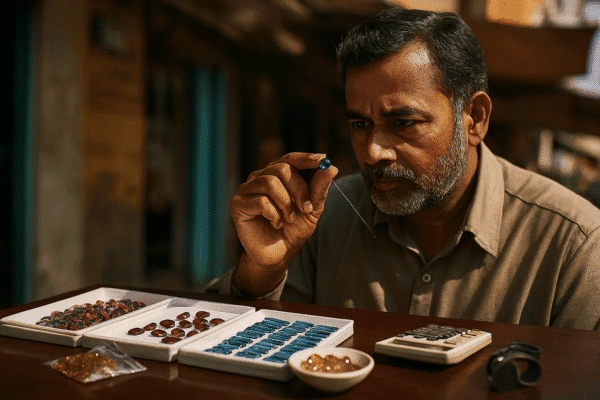
You come to Jaipur looking for a deal. A shopkeeper shows you an emerald. The price sounds low, and you feel lucky. But before celebrating, stop and think: is it really a good buy?
What Determines a Gem’s Price?
A gemstone’s price depends on more than just size or weight. Several key factors make all the difference:
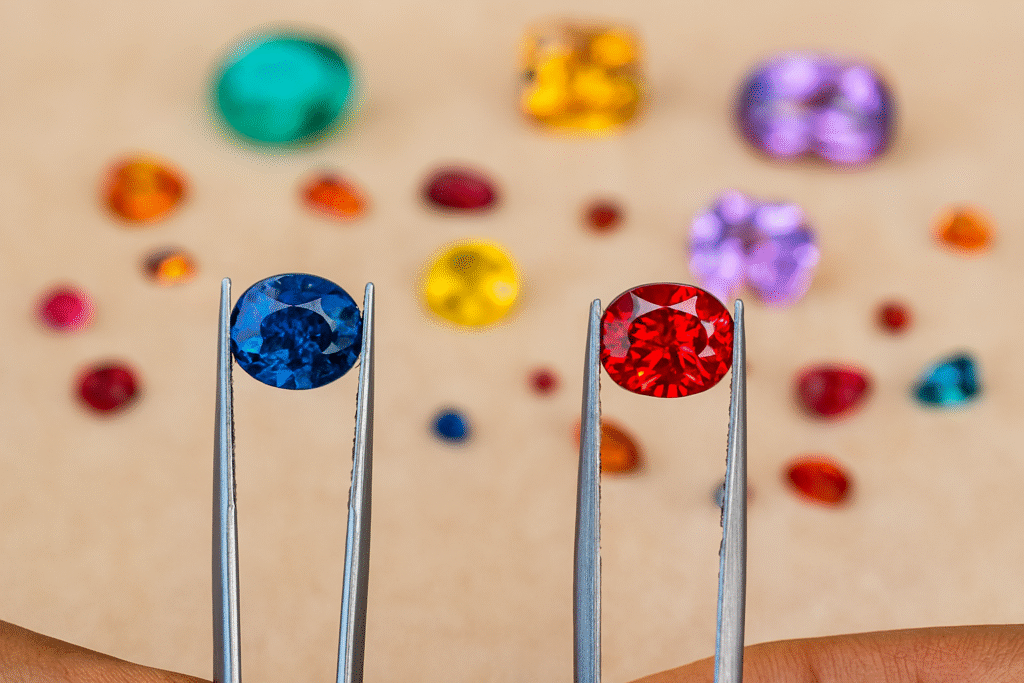
- Color: Rich, even color always costs more. A pale or patchy stone looks cheap but also lacks appeal.
- Clarity: Fewer visible flaws mean higher value. A heavily included gem may sparkle under shop lights but disappoint later.
- Cut: A well-cut stone reflects light beautifully, while a poor cut makes even a good color look lifeless.
- Treatment: Many low-priced gems are dyed, glass-filled, or oiled. They appear perfect now but lose their beauty over time.
Because of these factors, you must look beyond the price tag and compare stones carefully.
(Read also: Understanding BIS Hallmark: What It Means for Your Jewellery)
Cheap vs. Worth It
Imagine you see two emeralds:
- One costs ₹2,000. It’s pale and cloudy.
- Another costs ₹4,500. It’s clearer, brighter, and more vibrant.
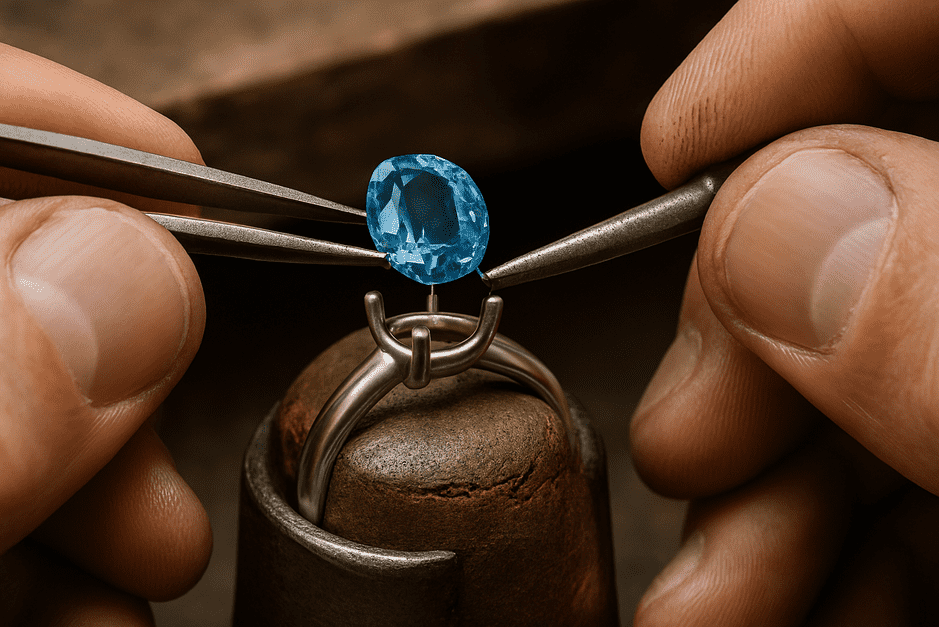
At first, the cheaper one feels like a deal. However, once set in gold, it looks dull. The pricier gem, on the other hand, shines brilliantly and keeps its charm for years.
In Jaipur’s markets, quality always outlasts price.
How to Avoid the “Cheap Stone” Trap
To make smart gemstone choices, follow these practical Jaipur gem buying tips:
- Always ask for a lab report or authenticity certificate.
- Compare gems under natural daylight, not artificial lighting.
- Inquire about treatments and origin before deciding.
- Check reputable shops—ideally GJEPC-registered dealers for assurance.
- Take your time. A genuine gem will look good in every light and setting.
(Read next: Pigeon’s Blood & Cornflower Blue: Why Gem Color Matters More Than You Think)
Final Tip
In Jaipur, the cheapest gem is rarely the best buy. A ₹5,000 stone that lasts is a smarter choice than a ₹2,000 one that fades.
So, pay for quality—not hype. Because in gemstone buying, cheap often turns expensive.
FAQ
1. Why are some Jaipur gems so cheap?
Because they’re often treated, synthetic, or low-grade. These stones lose value quickly after purchase.
2. How do I know if a gem is treated?
Ask for certification from recognized labs like GIA or IGI. A report reveals whether the gem has been enhanced.
3. Is Jaipur still a good place to buy gems?
Yes—but buy only from trusted dealers who share full details about color, clarity, and treatment.
4. Should I bargain in Jaipur?
You can, but do it wisely. Focus on quality first; negotiate later if the stone truly holds value.