Introduction
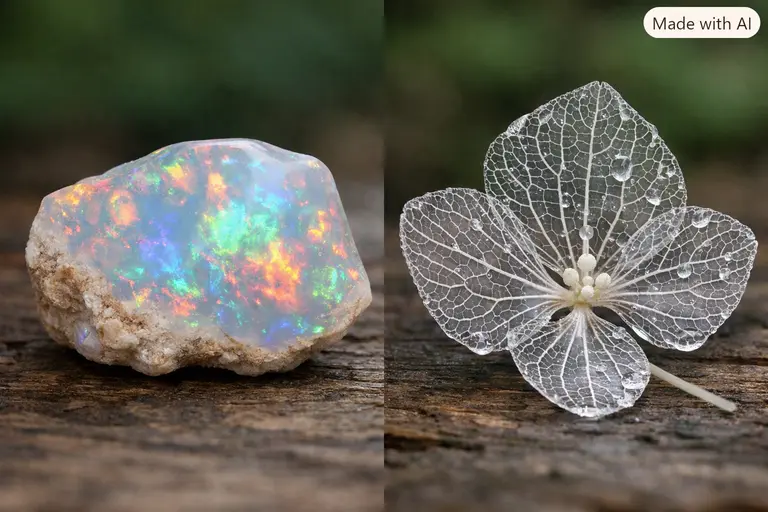
Which gemstone looks like a skeleton flower? Hydrophane opal offers the closest natural match. This isn’t just a visual coincidence, however; both the skeleton flower and hydrophane opal show how water changes the way light travels through tiny spaces inside a material. You may know the skeleton flower by its scientific name, Diphylleia grayi. When the petals stay dry, they look plain white. But once rain soaks them, the petals turn remarkably clear. This happens because water enters microscopic gaps inside the petal and stops light from scattering the way it normally would. Hydrophane opal works on this same principle. When it is dry, this porous stone often looks cloudy or hazy. Once it absorbs water, though, many specimens become noticeably clearer. This unusual flower beautifully illustrates a core principle of Gemology and Jewellery Education: the microscopic structures hidden within a gemstone are what ultimately dictate its outer beauty and brilliance to the naked eye.
What Is a Skeleton Flower Compared to Hydrophane Opal?
The skeleton flower belongs to the Berberidaceae family. Most people still call it Diphylleia grayi, although Kew’s Plants of the World Online now lists Podophyllum grayi as the accepted name. You find it growing wild in Japan, the Kuril Islands, and Sakhalin. It thrives in cool, damp woodlands, and its odd nickname comes directly from how its petals turn ghostly and see-through once they get wet. The wider Diphylleia genus also includes species native to China and the United States. However, scientists have documented the rain-triggered transparency most thoroughly in D. grayi. Therefore, you should not assume every related species behaves the same way.
Why Hydrophane Opal and Skeleton Flowers Turn Transparent?
The answer sits inside the petal’s microscopic structure. When the petal is dry, tiny air pockets inside its cells create sharp differences in refractive index. Because of this, light bounces around and scatters heavily, so the petal reads as solid white to your eye. Once rainwater fills those same pockets, though, that optical contrast shrinks dramatically. As a result, light passes through more easily instead of scattering, and the flower suddenly looks glass-like.
Importantly, no chemical reaction removes the flower’s colour. Instead, water simply changes the internal optical environment. In short, the transformation comes down to structure and refractive-index contrast, not chemistry. This process also takes time to unfold. For instance, field observations in Japan record the flowers gradually turning transparent during steady light rain, then slowly returning to their normal white appearance as they dry out again.
Which Gemstone Comes Closest to the Skeleton Flower Effect?
Hydrophane Opal as a Visual Match to Skeleton Flowers
Among natural gemstones, hydrophane opal gives you by far the best comparison. “Hydrophane” simply describes porous opal capable of absorbing water. Ethiopian Wollo opal is especially famous for this trait, and the Gemological Institute of America (GIA) has documented how it becomes more transparent after soaking up water. When dry, its microscopic structure scatters light and creates a cloudy or whitish look. Once water enters those pores, though, the optical properties shift—transparency often increases, and any play-of-colour becomes easier to spot. That said, treat this as a functional parallel rather than a true match, since one material is living plant tissue and the other is porous silica. Still, both cases prove the same point: water changes how light moves through microscopic spaces.
Hydrophane Opal Gemstone Treatments and Optical Contrast
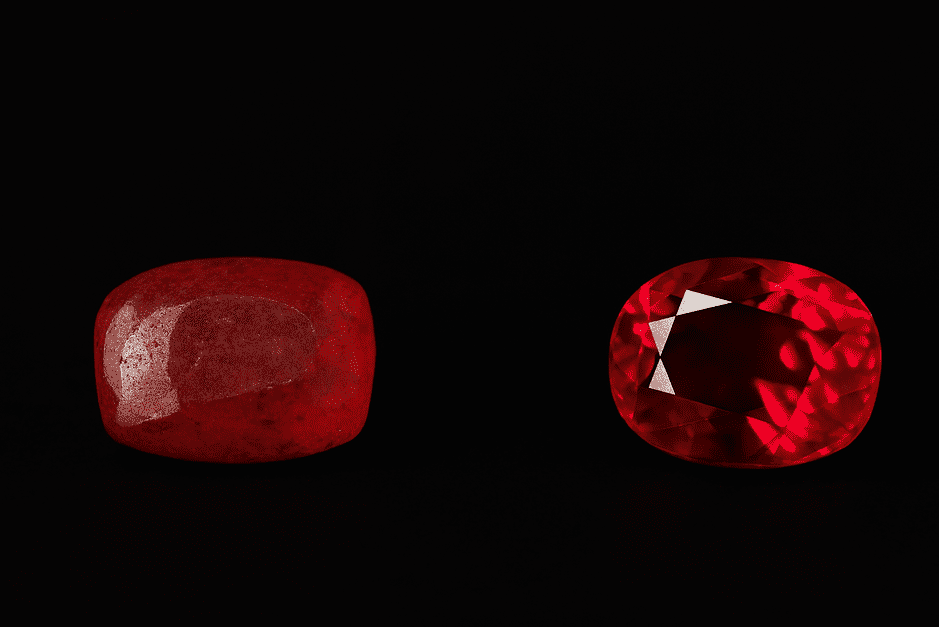
Yes, treatments create a similar effect, although the mechanism differs. For example, emeralds commonly contain surface-reaching fractures. Gemologists sometimes fill these fractures with oils or resins. Because the filler changes the optical contrast at that fracture, the flaw becomes far less visible and the stone looks clearer. Opticon is one such filling material, and GIA research confirms it reduces the visibility of fractures in gemstones. Even so, this treatment does not recreate the skeleton flower’s natural transformation—instead, it demonstrates the same underlying rule: changing what fills microscopic spaces changes how light scatters or passes through.
What Collectors Should Know About Hydrophane Opal?
The skeleton flower offers a genuinely useful lesson if you collect or evaluate gemstones. After all, a stone’s appearance does not depend on chemistry alone. Instead, its internal structure—pores, fractures, inclusions, and interfaces—all shape how light reaches your eye. Hydrophane opal makes this principle especially easy to grasp, since it visibly changes after absorbing water through its porous structure. Because of this, always factor in porosity and treatment history before judging an unusual gemstone.
However, do not treat water as a safe testing shortcut. GIA notes that hydrophane opal can crack during immersion, depending on its porosity and inclusions. So avoid soaking a valuable opal just to reproduce this effect. Likewise, remember that treated stones need proper care, since fracture fillers in emeralds and similar gems can react poorly to heat or chemicals. When you are unsure about a stone’s treatment history or durability, professional gemological advice remains your safest option.
Frequently Asked Questions
Which gemstone looks most like a skeleton flower?
Hydrophane opal is your closest match, since both it and the skeleton flower become more transparent once water fills the microscopic spaces in their structure.
Does clear quartz behave like a skeleton flower?
Not really. While clear quartz can resemble the glassy look of a wet skeleton flower, it does not reproduce the flower’s reversible, water-triggered transformation. Hydrophane opal remains the far closer functional match.
Can hydrophane opal get damaged by water?
Yes—some specimens crack during water absorption, especially if they are highly porous or carry inclusions. So never use full immersion casually as a gemstone test.
Is botanical gemology an official scientific field?
No. Treat “botanical gemology” as a helpful educational concept rather than a formal discipline. The real science behind it spans botany, mineralogy, gemology, and optical materials science.
Does every Diphylleia species turn transparent in the rain?
Only Diphylleia grayi has strong documentation for this effect, so you should not assume every species in the genus behaves the same way without specific evidence.
Can gemstone treatments recreate the skeleton flower effect?
Not exactly, but treatments like fracture filling illustrate a related principle, since filling microscopic fractures reduces light scattering and makes them less visible.
Disclaimer
This article serves general educational purposes only. Gemstone behaviour varies widely based on composition, porosity, inclusions, fractures, and treatment history. Therefore, never immerse, heat, or experiment with cleaning valuable gemstones without first consulting a qualified professional. The author has no financial affiliation with the brands or organizations mentioned.