
Introduction
As we continue our journey through India’s jewelry map, we move north from Maharashtra into the vibrant land of Gujarat. Gujarati Jewellery captivates the world with its blend of diverse materials, masterful craftsmanship, and profound symbolism. For centuries, these pieces have adorned communities across the state, reflecting everything from the bridal elegance of the cities to the rugged tribal heritage of Kutch.
Moreover, Gujarat is the business hub of India’s gem trade (Surat and Rajkot). Therefore, the locals understand the value of gold and gems better than almost anyone. As a certified gemologist, I have seen how these ornaments fuse tradition with investment. In this guide, we will explore the key techniques—like Kundan and Pachchikam—and help you appreciate why Gujarati jewellery remains a treasure in India’s adornment landscape.
Key Materials in Gujarati Jewellery
First, let’s delve into the foundational elements. Unlike the pure gold obsession of Kerala, Gujarat embraces a dual identity.
- Gold: Dominates the urban and bridal collections. It symbolizes Lakshmi (Wealth) and is often crafted in Rajkot, famous for its intricate filigree work.
- Silver: Thrives in tribal and rural designs. The nomadic tribes of Kutch wear heavy silver anklets (Todi) and necklaces, offering durability for their lifestyle.
However, a word of caution for tourists visiting the Rann of Kutch. Many markets sell “German Silver” (an alloy of Copper, Zinc, and Nickel), which contains zero actual silver. Always check for a hallmark or ask if it is “Sterling Silver.”
For more information on identifying real metals, refer to my guide on Jewelry Sales Secrets.
Masterful Techniques in Gujarati Jewellery
Next, consider the regal setting methods that define this region.
Kundan and Polki in Gujarati Jewellery
Artisans embed uncut gems (Glass or Diamonds) into gold bases using a specialized foil technique called Kundan. Consequently, this creates a shimmering, jewel-like glow. This technique elevates pieces to heirloom status, especially when paired with precious stone (Polki Diamonds).
Meenakari (Enameling)
Similarly, Meenakari adds vibrant flair. Craftsmen fuse mineral-based colors (Red, Green, Blue) onto the back or front of the metal. As a result, motifs like peacocks and florals burst with life. This is not just decoration; it protects the gold from wear and tear. You can see similar techniques in the Traditional Maharashtrian Jewellery of the neighboring state.
Pachchikam: The Unique Craft
Furthermore, we must mention Pachchikam. Originating in Kutch, this style uses Silver as the base metal to set uncut stones and glass. It looks deceptively like Platinum because of the white metal shine, but it has a rustic, earthy charm. It is fragile and beautiful—a true collector’s item.
Iconic Pieces in Gujarati Jewellery
Building on these materials, Gujarati Jewellery features standout pieces, each with a story.
The Kaliganthi and Galobandh
Take the Kaliganthi neckpiece, for instance. This heirloom stunner boasts multiple amulet-shaped pendants (tabiz). In addition, its weighty clusters sway gracefully, echoing ancestral blessings. Transitioning to the choker style, the Galobandh hugs the neck closely, often made of gold beads or velvet strips studded with pearls.
The Nath and Damani
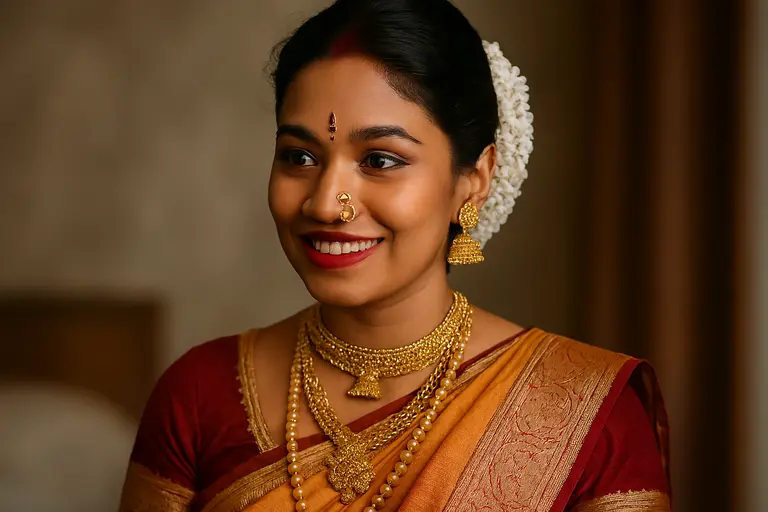
No Gujarati bridal look is complete without the Nath. Unlike the Maharashtra Nath, the Gujarati version often features a heavy chain connecting to the hair.
Finally, the Damani (Mathapatti) crowns the forehead. Its central maang tikka, with side chains tracing the hairline, dazzles in Gold and Kundan. Thus, it frames the bride’s face like a halo.
Bangles: Patla and Chuda
For the arms, Patla and Kada reign supreme.
- Patla: Broad, flat bangles often featuring intricate enamel work or ivory (now imitation ivory/plastic) inlays.
- Chuda: The traditional Red and White bangle set, signifying a new bride.
Cultural Legacy and Modern Relevance
Above all, these pieces stem from generational techniques. From the vibrant markets of Ahmedabad to global diasporas in the USA and UK, Gujarati Jewellery preserves identity. Today, designers are creating “Lightweight Kundan” for office wear, bridging the gap between the heavy bridal look and modern practicality.
For the investor, buying authentic Rajkot Gold or heavy Kutch Silver remains a sound strategy. Just ensure you buy from reputable jewelers who provide certification. If you are buying studded pieces, make sure you aren’t paying diamond prices for glass filling. Read my warning in Gemstone Buying Mistakes.
FAQ: Gujarati Jewellery
What makes Kundan different from Polki in Gujarati Jewellery?
Kundan refers to the technique of setting stones in gold foil (often using glass). Polki refers to the stone itself (uncut natural diamonds). Authentic Polki is much more expensive than glass Kundan.
Is silver Gujarati Jewellery only for tribes?
No. While it originated with tribes like the Rabari, oxidized silver jewellery is now a massive fashion trend for Navratri and daily wear in cities.
How do I care for Meenakari ornaments?
Avoid chemicals. Perfumes can dull the enamel. Clean gently with a soft cloth and store in fabric pouches to preserve the vibrant colors.
Can men wear Gujarati jewellery pieces?
Yes. Heavy silver Kada cuffs and simple gold chains are staples for Gujarati men, especially during weddings and festivals.
Where can I buy authentic Gujarati pieces online?
Look for certified sellers who specify the base metal (Gold/Silver/Brass). Sites like Tanishq offer guidance on verifying authenticity before you buy.
Author Bio
P.J. Joseph, also known as Saju Elizamma, Gemstone & Gold Consultant serving Kerala, Tamil Nadu, and Karnataka.