Summary
Most gemstone buyers overlook the metal setting. Weak prongs, poor polish, or excess glue can ruin a valuable gem. Before buying, inspect the craftsmanship, ask questions, and verify who did the setting. In Jaipur and similar markets, careful inspection protects your investment.
Many buyers only look at the gemstone. They forget to check the setting — and that’s where big problems hide.
A high-quality gem in a poorly made setting is never a good deal. It’s not only about appearance. It’s also about safety, durability, and long-term value.
Common Setting Mistakes
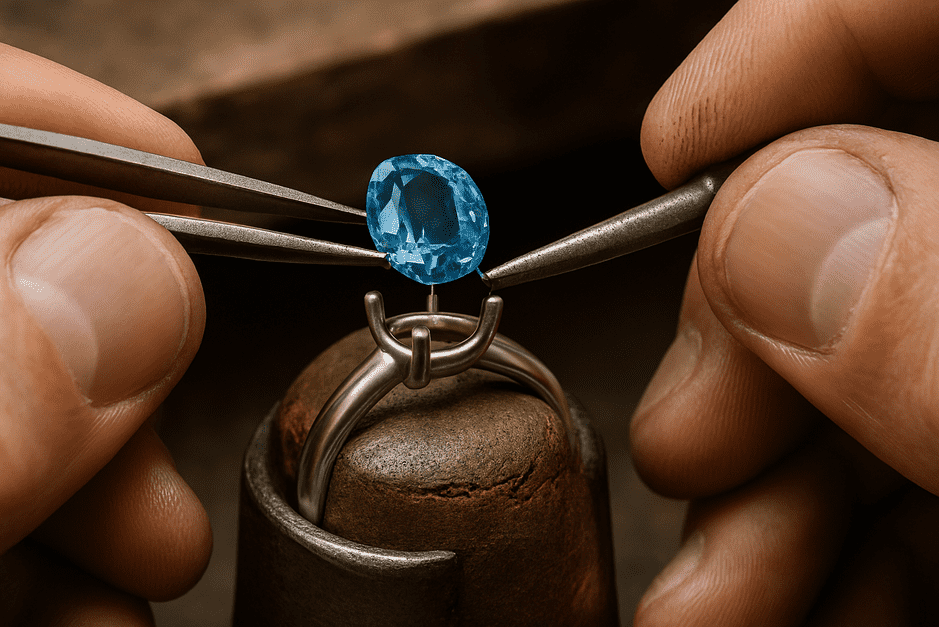
Weak prongs
Thin or uneven claws can’t hold the gem securely.
One small bump can loosen or even dislodge the stone.
Rough or unfinished edges
Sharp metal near your finger means careless finishing.
It feels uncomfortable and can cause scratches or breakage over time.
Crooked alignment
Every stone should sit straight and centered.
If it looks tilted, the craftsmanship is poor.
Overuse of glue
Glue should never replace a proper mechanical setting.
If you see any residue around the gem, it’s best to walk away.
Poor polish or solder marks
Visible joints, dull areas, or scratches reduce the overall quality and resale value.
Why Setting Quality Matters
Even the finest ruby or emerald loses meaning if the setting fails.
A gemstone’s beauty depends on its support.
Would you frame a rare painting in a broken frame?
Then why would you risk your gem in a weak mount?
A strong setting protects your investment and keeps the piece secure for years.
How to Inspect Craftsmanship
- Turn the jewellery around. Look at it from every angle.
- Use a loupe to examine prongs, polish, and the back of the setting.
- Run your fingers along the metal. If it feels sharp or uneven, that’s a warning sign.
- Ask who did the setting. A reliable jeweller will always share the details.
- Compare two similar pieces side by side. The difference in finish becomes obvious.
In Jaipur and Other Gem Markets
In markets like Jaipur’s Johari Bazaar, some sellers focus only on the gem.
They often ignore metalwork quality to save time or increase profit margins.
That’s why you should inspect both — the stone and the setting.
You can find detailed gemstone buying tips on Saju Elizamma. For additional learning, visit the Gemological Institute of America (GIA) to understand proper gemstone setting standards.
A perfect gem in a poor setting is a future repair job or a loss waiting to happen.
FAQ
1. Why does the gem setting matter?
Because the setting holds the gem in place and protects it from damage.
2. How can I spot poor craftsmanship?
Check for uneven prongs, glue marks, rough polish, and crooked alignment.
3. Is handmade jewellery better?
Yes, if done by a skilled craftsman. Hand finishing often means stronger and cleaner work.
4. Can settings be repaired or replaced?
Yes, but it adds cost and can sometimes risk the gemstone.
5. How can I avoid poor settings in Jaipur?
Shop from reputed jewellers, inspect the mount under a loupe, and don’t rush decisions.