
Introduction
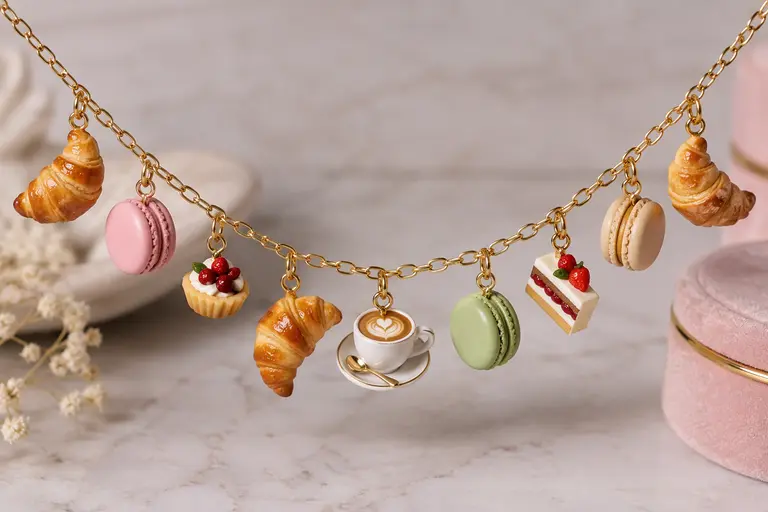
Food and jewellery seem like separate industries, yet both celebrate creativity, craftsmanship, and personal expression through food inspired jewellery. When the two worlds meet, they create products that carry a unique, memorable story. For example, cookbook author Dorie Greenspan recently teamed up with Delicacies Jewelry to launch the XOXO Collection. The collection turns a croissant, a madeleine, a macaron, a cupcake, and a cherry into wearable charms, and it adds a charm that spells her signature “XOXO.” According to JCK, these charms start at $23, and necklaces start at $95. Moreover, every purchase supports the No Kid Hungry campaign, donating $1 for every charm sold. Most importantly, this creative idea works for ordinary customers too. Everyday foods and affordable materials can inspire products for the 99%, not the 1%. This guide explains how you can build similar business partnerships. For more background, read our jewellery entrepreneurship articles.
When Food Becomes Wearable Art
Food already shapes fashion, photography, and interior design. Still, jewellery creates a more personal bond with the wearer. A miniature croissant, for instance, recalls a lovely trip to Paris. Similarly, a tiny cup of filter coffee celebrates a morning routine, and a banana-leaf meal honours a regional tradition. Consequently, the piece becomes a cherished memory rather than a simple decoration. Greenspan also shows how a creator can extend a professional identity into a new, profitable field. Furthermore, her partnership with No Kid Hungry blends commerce with social purpose. Therefore, small businesses can learn from this successful model without copying its scale.
Lessons for Creators and Small Businesses
Build a Story Around Everyday Experiences
Creators do not need costly materials or celebrity partners to succeed. Instead, they can start with familiar foods and personal memories. For example, a designer in Keralam can draw on appam, puttu, unniyappam, pazham pori, or a hot glass of chaya. However, a good designer does more than just shrink a dish. Rather, the designer studies its cultural meaning and translates it into an attractive, wearable form. As a result, one regional design can reach local residents, tourists, and the global diaspora alike.
Combine Skills Across Different Industries
Partnerships help small businesses reach new customers effectively. For instance, a baker can work with a jewellery designer, and a ceramic artist can team up with a local restaurant. In addition, a bakery can launch pastry-inspired pendants for a festive season while the jeweller hosts a tasting event. Before launch, however, partners should agree on design rights, pricing, marketing duties, and revenue sharing. Clear communication ensures that both parties thrive during the collaboration.
Design for Durability and Affordability
A fridge magnet does not automatically work as jewellery. Daily wear brings friction, perspiration, and moisture into contact with the item. Therefore, makers must choose secure fittings, suitable finishes, and reliable materials. Polymer clay, for example, captures fine detail, but the metal fittings and adhesives decide how long a piece lasts. At the same time, price matters for the mass market. Makers can offer earrings, pendants, bag charms, and bracelets at different price points. Accordingly, customers can join in the trend without buying expensive precious metals.
What Indian Creators Can Learn
India already offers inspiring success stories. Chennai artist Shilpa Mitha, who sells under the name Sueño Souvenir, began in 2011 with a pair of burger earrings that she made for herself. Since then, she has built a massive following for clay miniatures of authentic Indian dishes. Meanwhile, Small IDEA, founded in Ahmedabad by miniaturist Shirali Patel, sells food earrings, studs, charm necklaces, and bag charms. In addition, CN Arts Miniatures, founded in 2020 by Chennai-based mother and daughter Sudha and Neha Chandranarayanan, turns Indian dishes into fridge magnets and keychains. Still, buyers should always distinguish between fine jewellery, fashion jewellery, and lifestyle collectibles.
Keralam’s Opportunity in Food Inspired Creativity
Keralam also nurtures design-led makers who could easily adapt this trend. For instance, the Kochi studio MemoryTrain, led by designer Paul K John with Megha Abraham, creates Keralam-inspired objects such as elephants, hornbills, and KSRTC bus models. Although it does not focus on food jewellery, it proves that regional identity sells products. Keralam’s cuisine offers plenty of design ideas, from Malabar biryani and Kozhikode halwa to karimeen pollichathu and the Onam sadya. Likewise, a designer can craft a silver banana-leaf pendant or a gold-plated coconut-tree charm. Meanwhile, cafés and hotels can sell these pieces as souvenirs near their counters. Furthermore, tourists want souvenirs with genuine meaning, so locally designed accessories can replace generic plastic merchandise. Our Keralam tourism and food culture articles explore this theme further.
Lessons for Consumers and Collectors
Buyers should look beyond simple novelty. Instead, they should check materials, craftsmanship, comfort, and the maker’s professional reputation. For example, polymer-clay earrings need secure fittings and care instructions, while precious-metal pieces need clear purity details. Collectors should also study the artist’s identity, original designs, and documentation. However, limited production never guarantees future financial appreciation. Above all, buyers support independent creators when they choose authentic handmade work over cheap, mass-produced imitations.
From Novelty to Sustainable Business
The biggest opportunity lies in a lasting relationship between food and jewellery. For instance, a bakery can release a new charm with each signature pastry, and a restaurant can commission miniatures of its best-known dishes. However, creativity needs commercial discipline. Makers should calculate material, labour, packaging, and marketing costs before they set their retail prices. Additionally, small runs and made-to-order products reduce unsold stock significantly. Moreover, social media, exhibitions, and food festivals let makers test new designs cheaply. Finally, written agreements protect ownership of designs, photographs, and brand names. Ultimately, a small business does not need an entirely new product category; it only needs to connect two familiar industries in a fresh way.
Frequently Asked Questions
Can food inspired jewellery become profitable in India?
Yes, but profit depends on quality, pricing, production costs, and market demand. Start with affordable collections and test the market first.
Is food inspired jewellery suitable for everyday wear?
Yes, when designers choose suitable materials. However, customers should follow each maker’s care instructions, because materials wear differently.
What makes food inspired jewellery collectible?
Cultural meaning, original design, limited production, and documented authorship attract collectors. Nevertheless, sentimental value does not guarantee investment returns.
Can Keralam develop its own food inspired jewellery brands?
Certainly. Keralam’s culinary traditions offer countless designs, and local designers can partner with bakeries to build unique collections.
Why should food businesses collaborate with jewellery designers?
Such partnerships create extra revenue, introduce products to new audiences, and strengthen brand storytelling through wearable art.
Disclaimer
This article explores business opportunities and does not endorse any specific brand. Creators should verify intellectual property rights and manufacturing costs before investing. The author has no financial affiliation with the brands or organizations mentioned.