
Summary
Fluorite supports batteries, solar panels, and electronics. Mexico ranks second in global production and supplies major markets. Demand keeps rising due to clean energy. Even so, communities near mining regions report spills, emissions, and water issues. This article shows how Mexico became a major producer and why environmental debates continue.
Introduction
Fluorite Mining in Mexico supports the clean-energy shift as demand increases worldwide. You rarely see this topic in clean-energy stories, even though many technologies rely on it. Fluorite Mining in Mexico shapes much of the global supply used in electric vehicles, solar panels, and electronics. As demand grows, Mexico takes a central role. At the same time, communities near mining regions keep raising concerns about waste, air, and water.
This article shows how fluorite supports clean energy and explains how Mexico built its production strength while facing ongoing environmental pressure.
Fluorite’s Role in Clean Energy Supply Chains and Mexico’s Mining Output
Fluorite, also called fluorspar, feeds chemical processes that support modern energy systems. For example, you see these chemicals in lithium-ion batteries. You also see them in coatings used in solar manufacturing. Some researchers estimate that an electric-vehicle battery can require several times more fluorite than lithium.
In addition, fluorite-based coatings protect solar panels from heat and moisture. These coatings help circuits work more reliably and support long-term performance.
The European Union added fluorite to its list of critical raw materials. The US marked it as a priority mineral in 2022. If you want deeper mineral data, you can explore the US Geological Survey.
For quick comparison with other minerals, explore Ruby Gemstones 2025: Market, Sources & Ethical Buying
Mexico’s Production Strength and Exports in Fluorite Mining
Mexico produced 1.51 million tonnes of fluorite in 2024. This makes Fluorite Mining in Mexico central to global supply chains. This places the country second behind China. These figures come from the USGS Mineral Commodity Summary.
Almost half of this output moves to the US and the EU. As a result, these buyers depend on Mexico for steady supply, especially for battery and solar manufacturing.
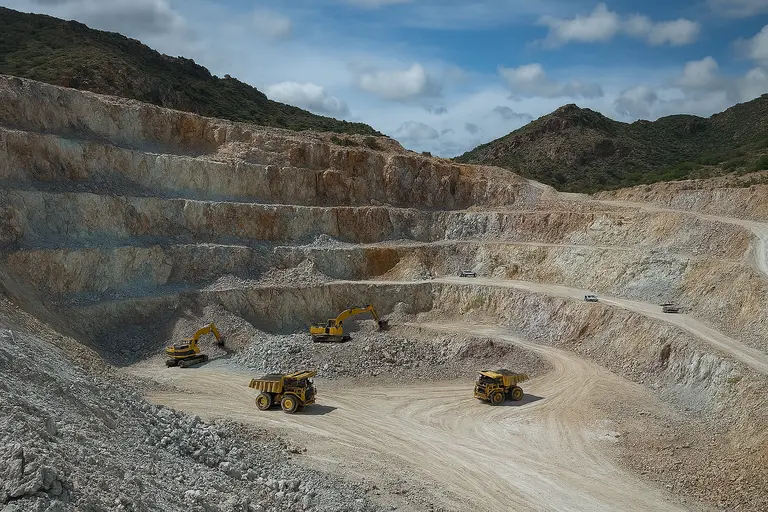
Three regions lead Mexico’s output: San Luis Potosí, Durango, and Coahuila. The Las Cuevas mine in San Luis Potosí remains the world’s largest fluorite mine. It is operated by Fluorita de México, a Koura subsidiary.
You can also read Orbia’s impact report here.
Mexico’s Mining Reform and Ongoing Debate on Fluorite Mining
Mexico approved a mining reform in 2023. The reform restricts mining in protected areas and sets rules for water and waste. Even after the reform, environmental groups say enforcement remains unclear.
For example, Engenera, a Mexican NGO, argues that authorities have not defined concrete steps for applying the new rules. Although opposition lawmakers filed an appeal to stop the reform, the appeal later failed. As a result, the sector continues to debate how the law should work.
Environmental Concerns Around Fluorite Mining in Mexico
Fluorite extraction depends on open-pit mining. Because of this, these pits reshape large areas and generate waste stored in tailings dams. The Mexican Water Institute has warned about the possibility of leaks.
The Las Cuevas complex holds seven tailings dams. Investigations by Earth Island and Proceso link these facilities to contamination in surrounding ecosystems.
These findings matter for several reasons. Waste spills can raise fluoride levels in soil and water. Long exposure can harm teeth and bones. In addition, heavy metals can move through water and affect crops. Mexico’s environmental agency has recorded at least sixty spills over the past twenty-five years. One of the most recent cases involved a spill of more than 19,000 cubic metres of waste in Sinaloa.
Air and Water Concerns Near Fluorite Mining Regions
Studies since 2006 show elevated levels of lead, arsenic, zinc, and calcium fluoride in the air near San Luis Potosí. Moreover, researchers have detected arsenic and fluoride in groundwater due to intensive well drilling.
Emissions add another layer. Orbia’s 2024 sustainability report records more than 16,500 tonnes of direct emissions from Koura’s operations. Indirect emissions from electricity use add more than 19,000 tonnes. Producing one tonne of fluorite concentrate can generate about 174 kilograms of carbon-dioxide equivalent.
Benchmark Minerals compares these values with other minerals and notes that copper production in Chile can release up to seven tonnes of carbon dioxide per tonne of metal.
Rising Demand and Market Pressure
Demand continues to rise as electric-vehicle sales increase. Solar installations keep expanding. Electronics manufacturing also uses fluorite-based chemicals across many components.
Benchmark Minerals projects that lithium-ion batteries alone may need more than 1.6 million tonnes of fluorite by 2030. Electrolytes for advanced batteries will drive much of this growth.
Mexico has not announced major expansion plans. Even so, rising global demand may attract new projects. Environmental groups insist on stronger monitoring and improved data collection because fluorite mining in Mexico continues to expand in high-demand regions. They also insist on accurate air-quality measurements and tighter oversight of tailings dams.
What This Means for You
If you follow clean energy, you see how fluorite mining in Mexico shapes supply chains for batteries and solar panels. If you watch Mexico’s mining sector, you see growing demand and continued environmental concerns. The next few years will show whether oversight improves or whether communities face more disputes around spills, emissions, and water.
FAQ on Fluorite Mining
Why does clean energy depend on fluorite?
It supports battery and solar production through fluorite-derived chemicals.
Where does most of Mexico’s fluorite go?
The US and the EU buy much of the country’s raw fluorite.
Why are environmental groups concerned?
They point to waste spills, fluoride exposure, heavy metals, and long-term water issues.
Is Mexico planning to increase fluorite mining?
There are no official expansion plans, though rising global demand may influence the sector.
Credits
This article draws on reporting originally published by Dialogue Earth.
Credit to journalist Emilio Godoy for first sharing Fluorite: Mexico is a key player in a lesser-known critical mineral.
This story is adapted from the Dialogue Earth, an independent, non-profit organization that produces environmental journalism and facilitates conversations on climate and sustainability, with additional SEO and contextual research by Saju Elizamma.