Introduction
Edible flowers and colored gemstones have fascinated humans for thousands of years. Both emerge from nature, carry deep symbolic meaning, and enhance beauty in their respective worlds—one on the dining table and the other on the body. Although they serve different purposes, these two natural elements share striking similarities in color, culture, and artistry.
In this article, we explore the connections between Flowers and Gemstones, covering ten blooms used in cooking and ten colored stones used in jewelry design. Additionally, we will address identification, usefulness, and what consumers should know before buying. As a Gemologist who also appreciates the culinary traditions of Kerala, I see a profound link here. Nature uses the same palette to create a feast for the eyes and a feast for the stomach. Let’s explore these parallel beauties.
Shared Aesthetics of Flowers and Gemstones
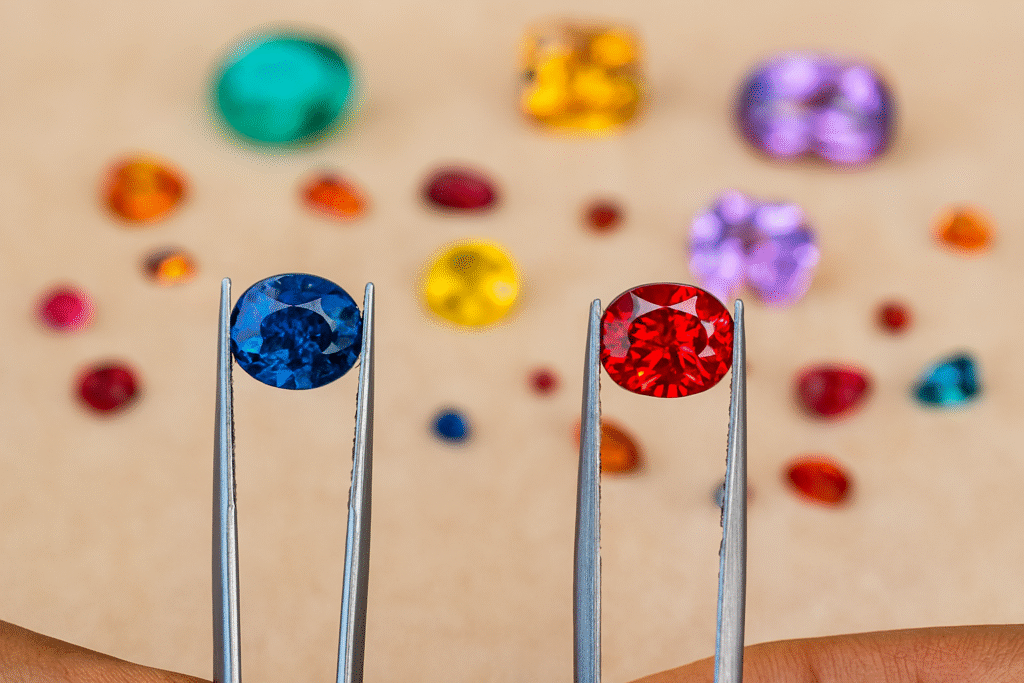
Both Flowers and Gemstones offer a rich, natural color palette that spans reds, blues, yellows, and purples.
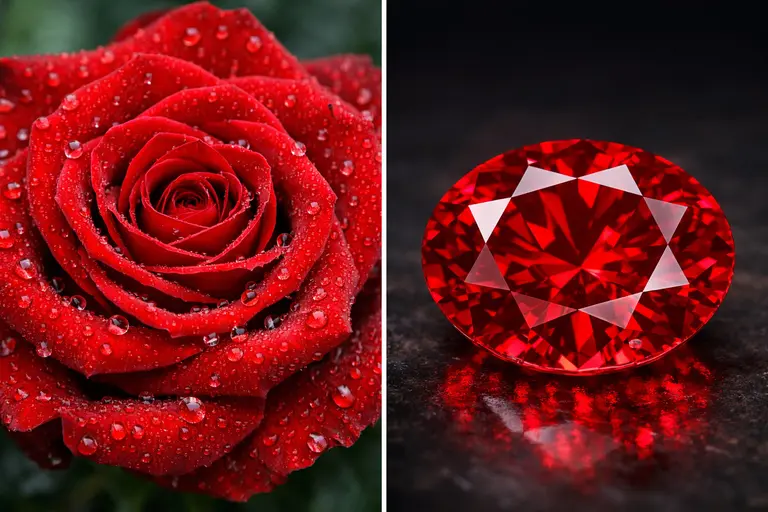
Chefs use colorful blooms like hibiscus to make dishes visually appealing. Meanwhile, jewelers select vivid stones like rubies to make gold pieces come alive. Furthermore, both carry a symbolic language. Roses and hibiscus convey love and passion. Similarly, rubies symbolize royalty, and turquoise represents friendship. These meanings run deep across many cultures, making both items powerful tools for emotional expression.
Additionally, jewelry designers frequently draw direct inspiration from floral shapes. In Kerala, the traditional Mullamottu Mala (Jasmine Bud Necklace) bridges the gap between these two worlds beautifully. It blends the temporary softness of flowers with the lasting brilliance of gold and stone. For more on floral symbolism, see Flower Meaning.
10 Edible Flowers compared to Gemstones
Cooks around the world incorporate edible flowers to add flavor and color to their dishes. Here are ten popular choices:
- Rose: Chefs use rose petals in jellies, Gulkand, teas, and desserts for their sweet, aromatic flavor.
- Lavender: Bakers add lavender to syrups and cakes for its calming, floral notes.
- Marigold: Cooks sprinkle marigold petals over rice dishes for a tangy, peppery flavor (and brilliant yellow color).
- Hibiscus: Food artisans use hibiscus in teas and chutneys for its fruity, tangy taste.
- Nasturtium: Chefs toss these bright, peppery blooms into salads for a spicy kick.
- Chamomile: Tea makers steep chamomile for its bittersweet, calming properties.
- Jasmine: Confectioners use jasmine to flavor desserts and fragrant teas.
- Dianthus: Pastry chefs use this clove-scented flower as a spicy garnish.
- Zucchini Flower: Cooks stuff or fry zucchini blossoms for their mild, sweet flavor.
- Banana Blossom (Vazhapoo): South Asian cooks, particularly in Kerala, incorporate banana blossoms into stir-fries (Thoran) and fritters.
10 Colored Stones: Flowers and Gemstones in Jewelry
Jewelers select colored gemstones for their brilliance and durability. Below are ten of the most celebrated options:
- Ruby: Jewelers prize this deep-red stone for its intensity and remarkable hardness (9 on the Mohs scale).
- Emerald: Designers favor this rich green gem for its lush color and historical prestige.
- Sapphire: Though known for blue, sapphires actually appear in nearly every color, making them highly versatile.
- Amethyst: This purple quartz attracts buyers for its deep, regal color.
- Citrine: Designers pair this warm lemon-to-orange quartz frequently with yellow gold settings.
- Aquamarine: Its sea-blue clarity makes it a popular choice for elegant pieces.
- Turquoise: This ancient opaque stone holds cultural significance across many civilizations.
- Tourmaline: Available in every color of the rainbow, it gives designers exceptional creative flexibility.
- Morganite: Its soft pastel pink hue makes it one of the most fashionable romantic stones today.
- Pearl: As an organic gemstone in white and pink varieties, pearl remains a timeless jewelry staple.
How Experts Identify Flowers and Gemstones
Specialists identify edible flowers by their shape, fragrance, and color. Often, they rely on field guides or expert botanical knowledge. In contrast, gemologists identify colored stones using scientific methods. They measure the Refractive Index, test hardness, and examine inclusions using the GIA (Gemological Institute of America) framework.
Both identification systems require knowledge and care. Why? Because misidentification carries real consequences in each field (poisoning in food, financial loss in gems). In terms of usefulness, edible flowers serve multiple functions beyond garnishing. Marigold petals produce natural dyes, and chamomile offers medicinal calm. Similarly, colored gemstones do more than decorate rings. They allow wearers to express personality and connect with astrological traditions. Read more about this in my Ayurvedic vs Gemstone Treatments guide.
The Link: Why We Adorn with Flowers and Gemstones
At their core, both Flowers and Gemstones serve the same human impulse: the desire to adorn life with beauty. Whether people eat beauty through edible flowers or wear it through gemstones, the motivation remains the same.
Moreover, both industries are moving toward more sustainable practices. Organic farming drives flower production. Meanwhile, responsible mining initiatives shape the gemstone trade. Interestingly, jewelry design explicitly unites the two worlds. As a result, wearing a Ruby Rose brooch literally transforms one natural element into a tribute to another.
Consumer Tips for Flowers and Gemstones
For edible flowers, consumers should always purchase from reputable, organic suppliers. Crucially, non-edible flowers treated with pesticides can cause serious health issues. Therefore, proper identification before consumption is essential.
For colored gemstones, buyers should familiarize themselves with the “4Cs” (Color, Cut, Clarity, Carat). Beyond these basics, consumers must stay alert to common industry treatments, such as glass-filling in rubies. Consequently, working with certified gemologists makes a significant difference. To avoid scams, read my Gemstone Buying Mistakes guide.
FAQ: Flowers and Gemstones
Are all colorful flowers safe to eat?
No. Many colorful flowers are toxic or carry pesticide residue. Consumers should only eat flowers specifically grown for culinary use and purchased from verified, organic sources.
Are all colorful flowers safe to eat?
No. Many colorful flowers are toxic or carry pesticide residue. Consumers should only eat flowers specifically grown for culinary use and purchased from verified, organic sources.
What is the most popular edible flower in cooking?
Rose and Lavender rank among the most widely used globally. They appear in everything from Indian sweets (Gulkand) to French pastries.
Which colored gemstone holds the highest value?
High-quality Rubies. Specifically, those from Myanmar (Burma) with a rich “Pigeon Blood” red color often command the highest prices per carat among colored gemstones.
How do flowers influence jewelry design?
Jewelers draw directly from floral shapes. For example, they recreate petals, leaves, and blooms using metal and gems, permanently capturing the beauty of nature (like the Lotus motif in temple jewelry).
What does sustainability mean in these two industries?
In floriculture, sustainability means growing flowers organically without harmful chemicals. In the gemstone trade, it means sourcing stones through ethical mining practices that protect workers and ecosystems.
Disclaimer
The information in this article is intended for general educational purposes only. Always consult a qualified culinary expert or horticulturist before consuming any flower, as many varieties are toxic or may carry pesticide residue. For gemstone purchases, seek guidance from a certified gemologist or accredited retailer. The author and publisher accept no liability for decisions made based on the content of this article.