Introduction
Tokyo’s Kuramae district teaches the global design world a simple lesson about the value of old buildings. A recent New York Times feature describes how this former warehouse quarter now shelters jewelry makers and artist studios instead of rice sacks and merchant ledgers. Because the neighborhood once stored shogunate rice supplies during the Edo period, its transformation carries real historical weight. As a result, this successful shift raises a vital question for the subcontinent: does the country possess its own creative warehouse districts?
The answer is a resounding yes, although no single place in India copies the Kuramae model exactly. Instead, several Indian locations each capture a unique piece of the same idea. Together, these sites show how forgotten industrial buildings can gain a fresh, profitable purpose while preserving local history. Therefore, understanding the rise of creative warehouse districts helps us see the future of Indian urban design and small-scale manufacturing. By turning dust into design, these districts empower the next generation of Indian artisans and entrepreneurs.
Global Benchmarks for Creative Warehouse Districts
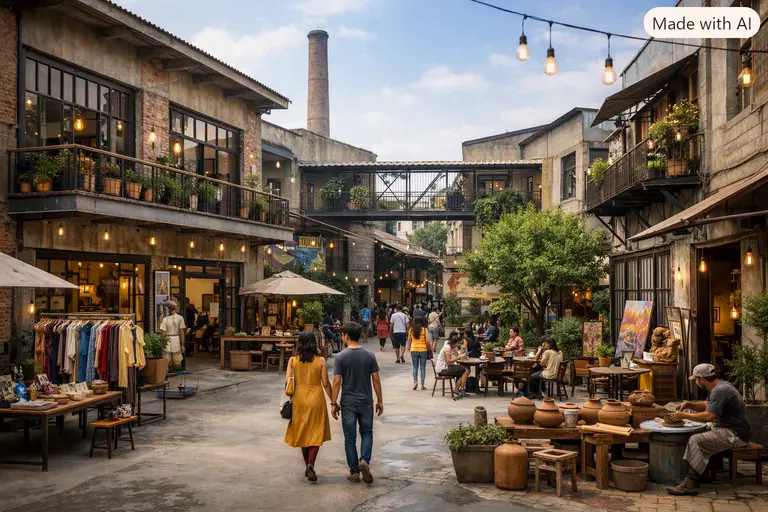
Indeed, Kuramae did not become a creative hub overnight. Eventually, young designers and independent shopkeepers moved into its old storehouses because the rent was affordable and the architecture was inspiring. Consequently, the area built a reputation for craft, specialty coffee, and quiet creativity. Today, visitors explore a neighborhood where history and contemporary design sit side by side in perfect harmony.
Furthermore, Kuramae proves that you do not need to demolish the past to build the future. By keeping the high ceilings and open floor plans of the old warehouses, designers created flexible spaces that accommodate both workshops and retail fronts. This balance is the hallmark of successful creative warehouse districts worldwide. For instance, the Japan Times has often highlighted how these zones revitalize local economies without erasing their cultural soul.
Locating India’s Creative Warehouse Districts
India already owns several burgeoning hubs that mirror this international trend. From the narrow lanes of Delhi to the historic waterfronts of Keralam, these spaces are redefining how we interact with industrial heritage.
Dhan Mill: A Top Creative Warehouse District
For instance, Chhatarpur’s Dhan Mill compound comes closest to the Kuramae spirit in North India. At first, builders raised the complex in 1978 as a primary warehousing centre for grain. Today, however, it houses more than 65 high-end boutiques covering fashion, design, and artisanal goods. Although Dhan Mill operates as a structured commercial destination, it still proves that old storage space can support a thriving creative economy. Consequently, it has become a “must-visit” for anyone interested in the intersection of industrial grit and modern luxury.
Fort Kochi’s Cultural Creative Warehouse District
Meanwhile, Fort Kochi and Mattancherry offer a more cultural version of the same story. Because these neighborhoods retain buildings tied to Keralam’s long spice trading history, they naturally lend themselves to art and heritage tourism. For example, the Kochi-Muziris Biennale illustrates this well. Its most recent edition filled 29 diverse venues across Fort Kochi and Mattancherry, turning old godowns (warehouses) into world-class art galleries. In addition, you can explore Saju Elizamma’s wider coverage of Keralam’s heritage tourism for more on this cultural thread.
Mumbai’s Multi-use Creative Warehouse Districts
Unlike the sprawling Dhan Mill, Mumbai’s Sewri neighborhood offers a tighter, more focused example. Specifically, Splendour Living converted a 14,000-square-foot warehouse into Maraal, a single creative campus. This building houses a workshop, a showroom, and an experimental kitchen under one roof. Therefore, Maraal shows how one large structure can house an entire creative ecosystem. This model is particularly useful in crowded cities where space is at a premium and creative warehouse districts must grow vertically.
Industry Roles in Creative Warehouse Districts
The beauty of creative warehouse districts lies in their inclusivity. While they often start with artists, they eventually accommodate a wide range of professional sectors.
First, gems and jewelry can fit into this movement, though the sector must adapt its security protocols carefully. For example, a goldsmith can work openly in a shared studio to show their craft to visitors. However, a trader handling high-value stones needs secure, climate-controlled storage. Consequently, a jewelry-focused hub could pair open design studios with appointment-only showrooms. This allows visitors to see the creative process without compromising the safety of the inventory. To learn more about the technical side of the trade, see our guide to gemstone identification.
Second, technology and software teams find these spaces ideal for innovation. Paris’s STATION F, built inside a former freight station, proves that even hardware-heavy ventures can thrive in a converted warehouse. Software teams need little beyond desks and reliable internet, making them the perfect “anchor tenants” for new hubs. Similarly, food and hospitality brands can join once they install proper ventilation and meet safety rules. Because these industries rarely operate in isolation, a ceramicist in the district can easily supply a chef, while a coffee roaster collaborates with a furniture maker nearby.
Community Impact of Creative Warehouse Districts
Ultimately, these creative warehouse districts help ordinary people, not just wealthy collectors or institutional investors. Small business owners gain massive visibility without having to rent an expensive high-street shop in a shopping mall. Furthermore, shoppers get to watch real craftsmanship in action instead of viewing a finished product behind a glass barrier.
In addition, property owners give aging buildings a productive second life, which increases the value of the entire neighborhood. Neighbors gain new reasons for people to visit, which supports local transport and cafes. Because success depends on rent, infrastructure, and community working together, no single formula guarantees results. Still, India already owns the essential ingredients. What the country needs now is the imagination to combine these historic structures with modern commercial needs.
FAQ: A Guide to Creative Warehouse Districts
What is the most famous example of a warehouse hub in India?
Specifically, Delhi’s Dhan Mill is currently the most recognized commercial example. It transformed from a grain storage site into a hub for over 65 luxury and artisanal brands.
Can small-scale artisans afford to work in these districts?
Yes, many creative warehouse districts offer “co-working” or shared studio models. By sharing the costs of electricity and security, individual artisans can access premium locations that would otherwise be too expensive.
Are these districts safe for jewelry businesses?
Indeed, they can be. Many hubs implement centralized security and CCTV. However, jewelry businesses within these districts often use reinforced safes and private viewing rooms to manage high-value items securely.
Does the government support these projects?
In many cases, yes. Programs like the “Smart Cities Mission” and various heritage conservation initiatives encourage the adaptive reuse of industrial buildings to promote local tourism and employment.
How do I find these hubs when traveling in India?
Most creative warehouse districts are located in historic trading ports or near old railway sidings. You can often find them by looking for art festivals or design weeks in cities like Mumbai, Delhi, and Kochi.
Disclaimer
This article shares general information only. Every adaptive-reuse project involves different ownership structures, heritage rules, and local municipal regulations. Therefore, readers should confirm current details with the relevant property owners or local authorities before making any commercial or investment decisions. The author has no financial affiliation with the brands or organizations mentioned.