
Summary
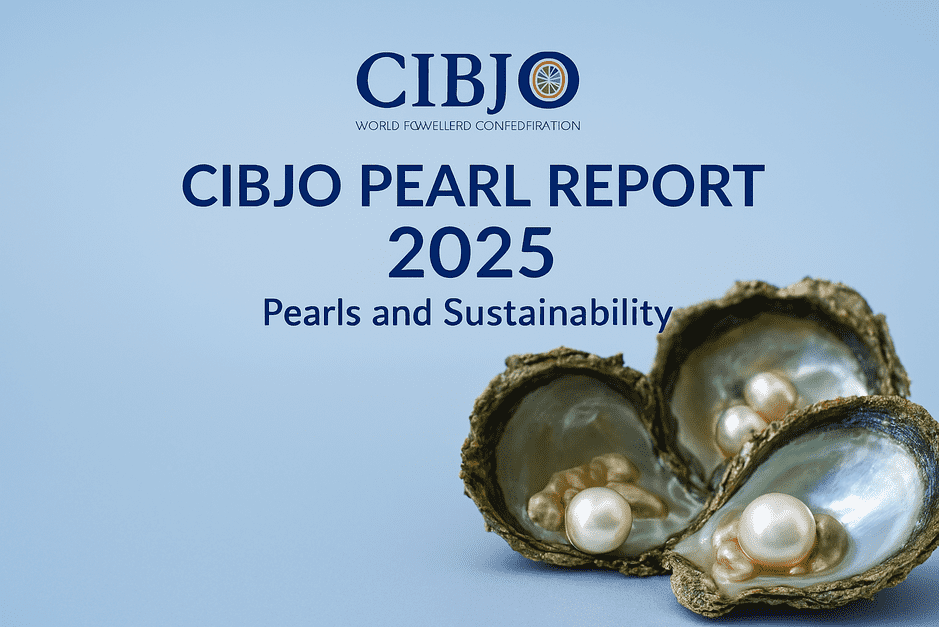
The CIBJO Congress 2025 Pearl Report explains how scientific research supports transparency and sustainability in pearl farming.
It highlights contributions from the CIBJO Pearl Commission, GIA, and DANAT, and previews the updated Pearl Guide, a 267-page educational reference for pearl-producing species.
The CIBJO Congress 2025 Pearl Report demonstrates how science is reshaping the global pearl industry.
Prepared by the CIBJO Pearl Commission under Kenneth Scarratt, the report was released ahead of the Congress in Paris on October 27, 2025.
The report emphasizes that pearls are becoming the first “nature-positive” gem, supporting marine ecosystems and promoting responsible luxury.
Pearl Farming and Ocean Sustainability
Furthermore, Fallourd’s essay, “Paving the way from pearl impact to value,” highlights measurable environmental benefits of pearl farming.
Studies from Japan and Australia show that pearl oyster farms have low carbon emissions compared to other aquaculture systems.
In addition, oysters naturally filter seawater, consuming excess nutrients that can cause algal blooms and oxygen depletion.
As a result, well-managed pearl farms improve local marine ecosystems while supporting coastal livelihoods.
Explore related insights on Sustainable Pearl Farming.
The Updated 2025 CIBJO Pearl Guide
The CIBJO Congress 2025 Pearl Report previews the expanded CIBJO Pearl Guide — now 267 pages.
It includes:
- 43 saltwater nacreous and non-nacreous species
- 27 freshwater bivalves producing natural and cultured pearls
- Identification charts and sustainability profiles
Also, the guide helps professionals and collectors trace pearls and verify sustainable sourcing practices.
For global industry standards, visit the Responsible Jewellery Council and the GIA website.
Why the CIBJO 2025 Pearl Report Matters
The CIBJO Congress 2025 Pearl Report proves that science can guide the pearl industry toward responsible luxury.
Additionally, it demonstrates how transparency, traceability, and sustainable practices improve consumer trust.
Therefore, pearls now symbolize both beauty and environmental stewardship.
You can also read Emerald Gemstone Expectations for insights on authenticity and consumer confidence.
FAQ
Q1. What is the CIBJO Congress 2025 Pearl Report?
It examines how science supports transparency and sustainability in pearl farming and trade.
Q2. Who contributed to the report?
The report was prepared by the CIBJO Pearl Commission, led by Kenneth Scarratt, with input from GIA, DANAT, and international experts.
Q3. How is pearl farming environmentally positive?
Oysters filter seawater naturally, reducing harmful nutrients and supporting marine ecosystems.
Q4. What’s new in the 2025 CIBJO Pearl Guide?
The guide now spans 267 pages, covering 43 saltwater and 27 freshwater pearl-producing species with detailed illustrations.
Q5. Where can I learn more about sustainable pearl practices?
Visit Sustainable Pearl Farming and the CIBJO official site.