Indian Heritage

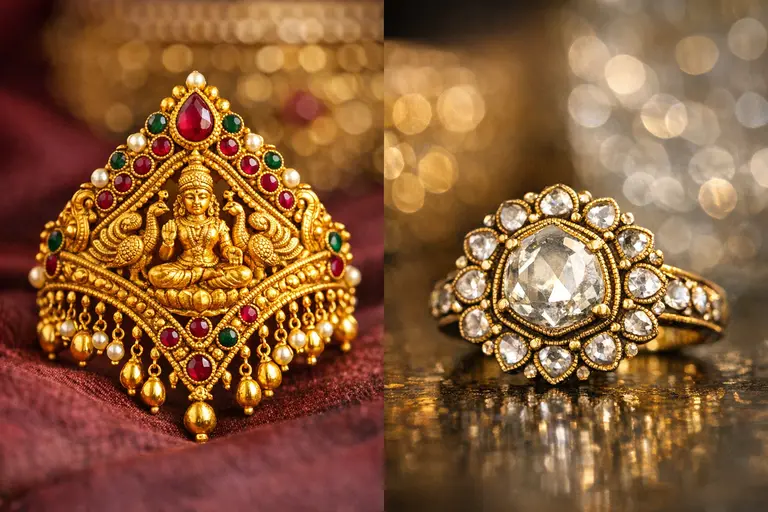
A traditional South Indian Vanki gold ring next to a North Indian Polki diamond ring illustrating Indian Wedding Rings.

Indian Wedding Rings: History, Styles, and Buying Tips

Introduction Indian Wedding Rings carry centuries of meaning in every loop of gold. Whether you are planning your own wedding or shopping for a loved one, understanding the cultural, regional, and practical dimensions of these rings helps you make a confident choice. In the West, the wedding band is a simple, standardized tradition. However, in India, the […]

Indian Wedding Rings: History, Styles, and Buying Tips Read More »

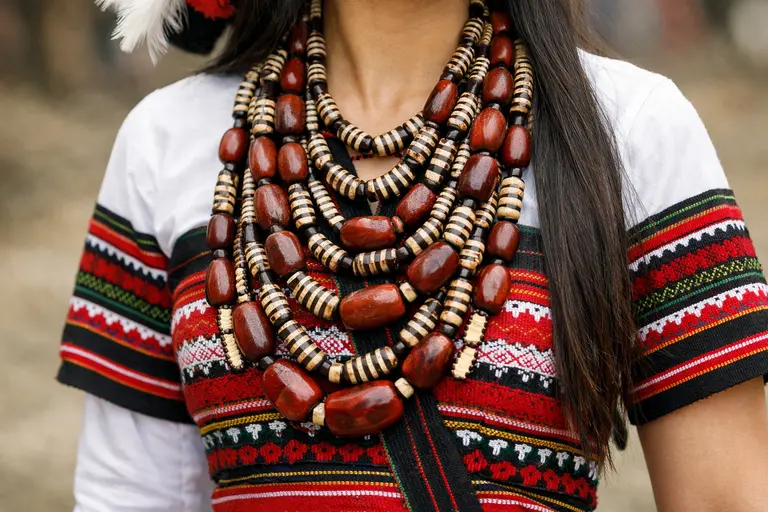
A Mizo woman wearing a traditional Puanchei and a multi-strand Mizoram Jewellery necklace.

Mizoram Jewellery: Traditions, Origins, and Buyer Tips

Introduction In the rolling, mist-covered hills of Northeast India, ornamentation tells a story that goes far beyond decoration. It is rooted in a rich tribal heritage. Mizoram Jewellery carries deep cultural meaning, marking social rank, tribal identity, and ceremonial life. Unlike the heavy gold of Temple Jewelry South India, the Mizo people historically found their wealth in rare beads,

Mizoram Jewellery: Traditions, Origins, and Buyer Tips Read More »

A traditional Bhutia woman wearing pure gold Sikkim Jewellery including the Yencho earrings.

Sikkim Jewellery: The Golden Heritage of the Himalayas

Introduction When we think of heavy, pure gold jewelry in India, our minds usually drift to the Temple Jewelry South India of Kerala and Tamil Nadu. However, high in the Himalayas, another rich tradition of pure gold exists. Undeniably, Sikkim Jewellery carries centuries of cultural memory. Specifically, Skilled artisans from the Bhutia, Nepali, and Lepcha communities craft

Sikkim Jewellery: The Golden Heritage of the Himalayas Read More »

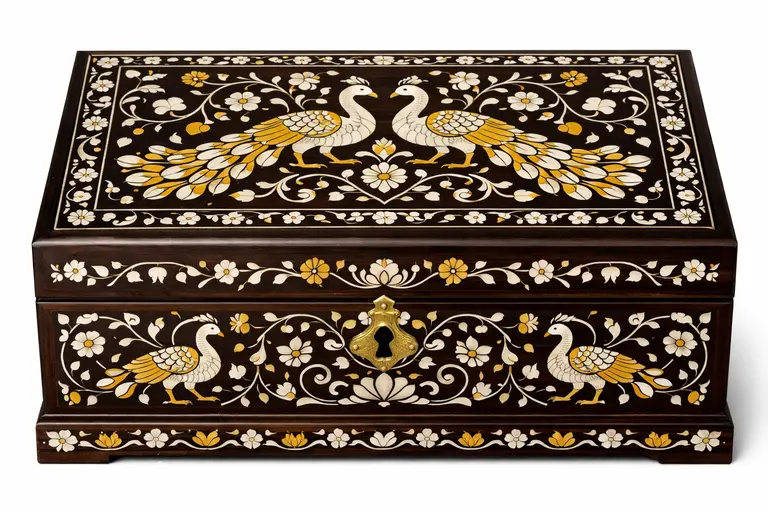
A finely detailed Mysore Rosewood Inlay jewelry box featuring a peacock motif.

Mysore Rosewood Inlay: 400-Year GI-Tagged Art Guide

Introduction Few art forms in the world carry the weight of four centuries of cultural memory. Mysore Rosewood Inlay, a Geographical Indication (GI)-tagged craft from Karnataka, India, does exactly that. Specifically, artisans embed contrasting materials—like white acrylic, mother-of-pearl, and sandalwood—into the dark, richly grained surface of rosewood to produce breathtaking patterns. Furthermore, this technique adorns

Mysore Rosewood Inlay: 400-Year GI-Tagged Art Guide Read More »

A handwritten birthday card next to a gold bangle box illustrating Indian Jewelry Customers Birthday Card strategy.

Indian Jewelry Customers Birthday Card Strategy

Introduction Most jewelers send birthday greetings to loyal customers. But here is the real question: do those customers actually care? For Indian Jewelry Customers, a Birthday Card can be a powerful tool or a piece of trash. The answer depends entirely on how you send it. A generic, mass-printed card delivered days late does very little for brand loyalty.

Indian Jewelry Customers Birthday Card Strategy Read More »

A Honey Yellow Chrysoberyl Cat's Eye next to a Grey Sillimanite Cat's Eye.

Chrysoberyl and Sillimanite Cat’s Eye: An Expert Guide

Introduction When it comes to gemstones that captivate with a single sweeping band of light, few rival the drama of the “Cat’s Eye” effect. Known formally as Chatoyancy, this optical phenomenon gives select cabochon-cut stones the appearance of a living feline iris. However, in the gem market, two stones dominate this category, often confusing buyers.

Chrysoberyl and Sillimanite Cat’s Eye: An Expert Guide Read More »

Bowls of natural turmeric yellow and hibiscus red Holi powder next to marigold flowers illustrating Holi Colors Meaning.

Holi Colors Meaning: Origins and Cultural Significance

Introduction Understanding the Holi Colors Meaning is essential as streets across India—and the world—burst into a spectacular riot of color every spring. This is Holi, the ancient Hindu festival that celebrates the triumph of good over evil. From the sacred red of Goddess Durga to the divine blue of Lord Krishna, the colors are not chosen at random.

Holi Colors Meaning: Origins and Cultural Significance Read More »

A bamboo dustbin in Mawlynnong Cleanest Village with a clean stone path.

Mawlynnong Cleanest Village: Lessons from Asia

Introduction In the misty East Khasi Hills of Meghalaya, there is a place that defies the stereotype of rural India. Mawlynnong Cleanest Village—popularly known as “God’s Own Garden”—has earned a distinction that continues to inspire communities across Asia. Cleanliness is often treated as a matter of big budgets and municipal trucks. However, this small community of

Mawlynnong Cleanest Village: Lessons from Asia Read More »

A slice of Watermelon Tourmaline next to a polished Ruby in Zoisite cabochon illustrating Watermelon Tourmaline vs Ruby in Zoisite.

Watermelon Tourmaline vs Ruby in Zoisite Guide

Introduction If you have ever browsed a gemstone market or jewelry boutique, you may have noticed two strikingly beautiful stones that share a vivid combination of Pink, Red, and Green. Watermelon Tourmaline vs Ruby in Zoisite often confuses buyers. At first glance, these gems appear almost like cousins, united by their bold color palettes and organic,

Watermelon Tourmaline vs Ruby in Zoisite Guide Read More »

A fiery orange Sphalerite gemstone next to a blooming Marigold flower illustrating Sphalerite vs Autumn Flowers.

Sphalerite vs Autumn Flowers: Nature’s Fiery Palette

Introduction If you have ever admired the blazing oranges and golden yellows of a late-season garden, you already have a sense of what makes Sphalerite one of the most visually captivating gemstones in the world. Often called “Zinc Blende,” gem-quality Sphalerite shares a striking autumnal palette with two of the season’s most beloved flowers: the Chrysanthemum and the Marigold (Chendu Malli). Sphalerite

Sphalerite vs Autumn Flowers: Nature’s Fiery Palette Read More »