Introduction
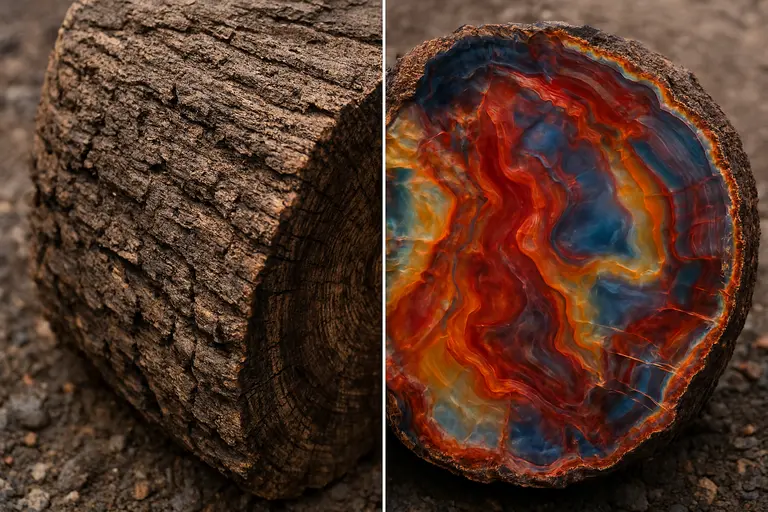
Imagine holding a piece of wood that is 200 million years old, yet it feels as heavy and cold as a rock. Petrified Wood captivates gem enthusiasts and collectors worldwide with its stunning transformation from ancient trees into colorful, rock-hard fossils. Formed through a process called Silicification—where minerals slowly replace organic material—remarkably, this natural wonder boasts vivid hues and perfectly preserved wood structures.
If you are sourcing high-quality specimens for jewelry, lapidary work, or luxury decor, understanding their origins matters greatly. As a Gemologist, I see Petrified Wood as the ultimate “Time Capsule.” It freezes a forest in stone. In this guide, we explore the best Petrified Wood sources like Arizona’s Rainbow Wood, identification tips, and its practical uses. Whether you are a jeweler in India or a global collector, these insights will help you select premium pieces.
Top Locations for the Best Petrified Wood
First, the finest material emerges from specific global hotspots. In fact, each offers unique qualities shaped by ancient environments.
Arizona, USA: The Rainbow Wood
Arizona leads as the premier source. Specifically, the Petrified Forest National Park area yields Triassic-era logs (over 200 million years old). Known as “Rainbow Wood,” these specimens display brilliant reds, yellows, and blues caused by mineral oxidation. Collectors prize these for their vibrant patterns and high silica content, which allows for a mirror-like polish.
Indonesia: The Patterned Palms
Meanwhile, Indonesia produces exceptionally preserved specimens, often from ancient Palm Wood. Unlike the vivid Arizona wood, Indonesian wood is often darker—blacks, browns, and whites. However, it reveals intricate, agatized cellular structures (like leopard spots) under close inspection. Therefore, it is ideal for detailed jewelry and large decor slabs.
India: The Hidden Dindori Fossils
For my Indian readers, did you know we have our own treasure? The Ghughua Fossil Park in Dindori, Madhya Pradesh, hosts plant fossils dating back 65 million years. While commercial mining is restricted to protect heritage, Indian petrified wood (often found in Gujarat and MP) is known for its earthy, rustic appeal. You can read about Indian geology in my Panna Diamond Mining guide.
Stunning Color Patterns: Mineral Magic
What makes the best Petrified Wood so visually striking? Colors arise from trace minerals infiltrating the wood during fossilization.
- Red and Yellow: Caused by Iron Oxides (Hematite). This creates the “Sunset” look of Arizona wood.
- Green and Blue: Stem from Copper, Chromium, or Cobalt. These are rare and highly valued.
- Black: Comes from Carbon or Manganese.
Moreover, the mineralization process preserves the original wood’s bark, annual rings, and grain. For example, a specimen might show the exact curve of a tree ring, now turned to Agate or Jasper. This blends organic beauty with mineral durability. When shopping, prioritize natural vibrancy over uniformity, as it signals genuine quality. Compare this to the colors in Ocean Jasper.
Reliable Identification Techniques
Authentic petrified wood stands out through simple, reliable tests.
The Weight Test
First, check its density. True specimens feel unusually heavy for their size. Because the wood has been replaced by Quartz (Silicon Dioxide), a palm-sized piece might weigh as much as a dense stone twice its volume.
The Hardness Test
Next, perform a scratch test. With a Mohs scale rating of 6.5–7, petrified wood scratches glass effortlessly but resists knife marks. Visually, seek retained wood features like bark texture or splintery patterns. Under 10x magnification, cellular structures become evident, confirming its fossil nature.
The Sound Test
Additionally, tap the piece lightly. It emits a high-pitched “ding” like glass or porcelain, not a dull “thud” like wood or plastic. These traits distinguish it from imitation resin or dyed plaster.
Common Treatments and Versatile Uses
While nature provides the raw beauty, treatments enhance the best Petrified Wood for commercial appeal. Most pieces undergo cutting, polishing, or lapidary work to reveal colors. For fractured specimens, stabilization with clear Epoxy ensures durability without altering authenticity.
Consequently, this material shines in diverse applications.
- Jewelry: Jewelers craft cabochons for pendants. Because it is durable (Hardness 7), it is excellent for daily wear.
- Furniture: Luxury makers turn massive logs into coffee tables that sell for thousands of dollars.
- Tiles: Slabs are cut for high-end wall cladding.
In India, where gemstone jewelry thrives, petrified wood pairs well with silver or oxidized metal for a “Bohemian” look. This aligns with the trends I discussed in Hupari India Silver Capital.
Consumer Tips: Buying Smart
Smart buying ensures value. Start by inspecting for detailed wood grain. Fakes often lack the microscopic cellular structure. Extremely bright or uniform colors (like neon pink) may indicate dye. However, natural Arizona vibrancy can be shocking, so compare against trusted sources like Gemstones.com or FossilEra.
Undoubtedly, price reflects quality. Vivid, crack-free pieces with intact bark command premiums–often 10-50 per pound. Ethical sourcing is vital. Ensure the wood was collected from private land, not stolen from National Parks. Finally, store in dry conditions. Although it is stone, it can be brittle if dropped.
Conclusion: Wood that Lasts Forever
In summary, the best Petrified Wood is a miracle of preservation. It reminds us that even something as biodegradable as a tree can become eternal if the conditions are right. Ultimately, owning a piece is like owning a sculpture made by time itself.
FAQ: Best Petrified Wood
What is the Best Petrified Wood for jewelry?
Arizona Rainbow Wood is generally considered the best for jewelry due to its high silica content (Agate) and brilliant multicolored patterns that take a high polish
How old is most Petrified Wood?
Typically, it ranges from 200 to 225 million years old (Triassic period). Some younger deposits (like in Indonesia) might be from the Miocene era (20 million years).
Can Petrified Wood be dyed?
Yes. Unfortunately, low-quality gray wood is sometimes dyed red or green to mimic Arizona wood. Check for dye concentrations in cracks to spot fakes.
Where to buy Petrified Wood in India?
You can import it from specialized dealers or check local gem markets in Jaipur. However, be aware that the export of Indian fossil wood from protected parks is strictly prohibited.
Is it safe for furniture?
Absolutely. Its hardness (7) resists scratches and stains better than marble. A polished petrified wood table is virtually indestructible under normal use.