Introduction to Bamboo Leaf Green Tea
Bamboo Leaf Green Tea, known in Chinese as Zhu Ye Qing, originates from the misty, high-altitude slopes of Mount Emei in Sichuan, China. Specifically, Buddhist monks have grown and meticulously processed tea on this sacred mountain for centuries. Today, while most consumers purchase machine-made versions in commercial stores, a rare and exquisite handmade style still survives. In this guide, you will discover the fascinating history behind the name, the techniques traditional crafters use, and how you can brew the perfect cup at home. You should also read our guide on gemstone buying mistakes to understand how quality standards and authenticity matter in every luxury acquisition, whether it is a rare mineral or a premium tea.
Legend of the Bamboo Leaf Green Tea Name
Back in the early 1960s, a dedicated monk at the Wannian Temple on Mount Emei created a delicate green tea bud that quickly gained local admirers. Then, on April 20, 1964, Marshal and Foreign Minister Chen Yi visited the temple during a diplomatic trip through Sichuan. He tasted the tea, enjoyed its refreshing profile, and asked for its name. The monks explained that it was a local specialty without an official title. Consequently, Chen Yi named it “Zhu Ye Qing,” which translates to “Bamboo Leaf Green Tea.” He chose this name because the slim, pointed buds looked exactly like tiny bamboo leaves, and the flavor reminded him of fresh bamboo shoots. Since that historic day, the name has endured, and the tea has grown into one of Sichuan’s most celebrated regional treasures.
The Handmade Craft of Bamboo Leaf Green Tea
For generations, local farmers and monks produced Bamboo Leaf Green Tea entirely by hand. They picked early spring buds and pan-fired them in a hot wok, using steady, rhythmic hand movements to fix, shape, and dry the leaves in one continuous step. This traditional process created a rich, nutty aroma with a gentle chestnut scent. Furthermore, the method produced a deep, mellow flavor that many modern tea lovers still treasure.
However, as industrial tea factories expanded in the late 20th century, machines gradually took over the labor. As a result, most modern Bamboo Leaf Green Tea looks brighter green, flatter, and more uniform than the original style. Furthermore, machine processing often removes some of the complexity and character that the old, handmade method preserved. Today, fully handmade, “one-pan” Zhu Ye Qing makes up only a tiny percentage of total production. In fact, some tea hunters describe authentic handmade batches as almost impossible to find in regular urban shops. Nevertheless, a small number of dedicated masters keep this forgotten craft alive in quiet corners of Sichuan. You can learn more about traditional Chinese tea crafts through resources like the World Tea Academy.
How Artisans Process Bamboo Leaf Green Tea
Among the few artisans who preserve the traditional style, timing is everything. They and their teams pick fine buds before the Qingming Festival in early April. During this window, the leaves are at their most tender and contain the highest concentration of amino acids.
First, the artisans wither the buds briefly to reduce surface moisture. Next, they pan-fry the leaves in a single hot wok, constantly moving them by hand to prevent any burning. This one-step firing fixes the enzymes, shapes the leaf into its needle-like form, and dries it simultaneously. Consequently, the process demands intense focus and physical endurance. If the pan runs too hot, the delicate buds scorch. Conversely, if the temperature drops too low, the tea tastes flat and dull. Therefore, only years of experience produce the clean, sweet cup with the classic roasted, nutty aroma that defines premium Bamboo Leaf Green Tea. To understand the minerals in the soil of Mount Emei that contribute to this flavor, you can check Yoshi En.
Quality Markers of Bamboo Leaf Green Tea
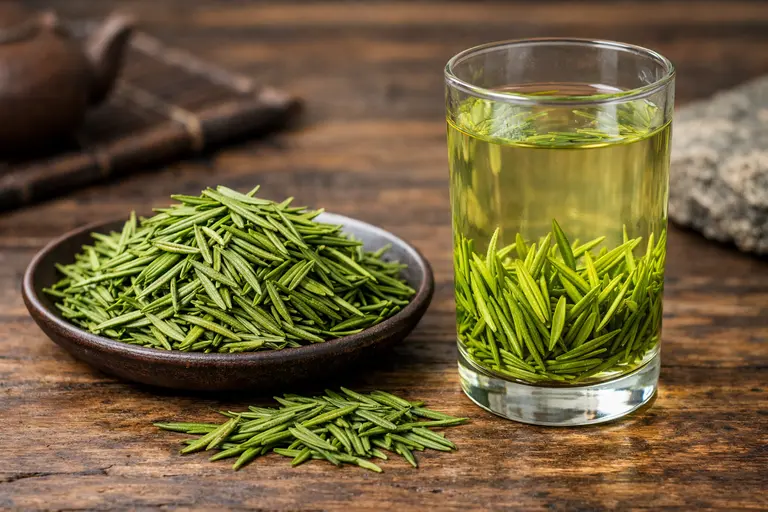
Once you know the visual cues, spotting the difference between styles becomes much easier. Traditional handmade Bamboo Leaf Green Tea shows a slightly yellowish-green or “toasted” color rather than a neon green. Additionally, the leaves resemble sharp bamboo tips—usually one bud with one or two short leaves—and they are not perfectly uniform.
Machine-made tea, on the other hand, looks brighter green and extremely flat. Moreover, in terms of aroma, handmade tea carries warm, roasted, and chestnut notes. In contrast, machine tea smells grassier and more vegetal. In the cup, traditional tea tastes deeper and more mellow with a lingering sweetness. When you shop, you should look for sellers who clearly list the picking date and altitude. Also, always check for close-up leaf photos to judge the processing quality before you buy. Platforms like Alibaba list a wide range of suppliers, allowing you to compare price points and certifications.
Brewing and Drinking Bamboo Leaf Green Tea
Brewing Bamboo Leaf Green Tea properly is both simple and visually rewarding. First, you should choose a tall, clear glass. This allows you to watch the “tea dance,” where the buds stand vertically and move up and down in the water. Next, heat your water to around 85–90°C. You must avoid boiling water, as it burns the delicate leaves and creates bitterness.
Then, add 3 to 5 grams of tea for every 150 ml of water. After one to two minutes, you can start sipping and add more hot water as needed. Chinese tea etiquette also adds meaning to the ritual. For example, when someone refills your cup, you should tap two fingers on the table as a quiet thank-you. This gesture is known as the “finger kowtow.” Furthermore, always serve guests or elders first to show respect. Pause to inhale the chestnut aroma before each sip, and avoid rushing through the experience.
FAQ: Common Questions on Bamboo Leaf Green Tea
What makes Bamboo Leaf Green Tea different from other green teas?
Its unique bud shape, the vertical-standing leaves during brewing, and the specific chestnut flavor profile from Mount Emei set it apart from varieties like Longjing or Biluochun.
Is it healthy to drink every day?
Yes. Bamboo Leaf Green Tea contains high levels of antioxidants and L-theanine, which promotes relaxation and focus. However, you should monitor your caffeine intake if you are sensitive.
How should I store my tea?
You must keep the leaves in an airtight, opaque container. Store it in a cool, dry place away from strong odors, or keep it in the refrigerator to maintain freshness for up to six months.
Why is pre-Qingming tea more expensive?
Leaves harvested before the Qingming Festival (April 4th or 5th) are rarer and contain more nutrients. Because the weather is cooler, the tea grows more slowly, resulting in a sweeter and more concentrated flavor.
Can I re-steep the leaves?
Absolutely. High-quality Bamboo Leaf Green Tea can typically handle three to four infusions. Each steep will reveal different layers of the tea’s flavor profile.
Disclaimer
This article provides general educational information about Zhu Ye Qing tea and related traditions. It does not replace professional advice on health, investment, or product authentication. Always verify current prices, seller reputation, and your personal health needs before purchasing tea or making changes to your diet.