Introduction
In the rich tapestry of Indian traditions, we often hear the word “Treatment.” However, this word has two vastly different meanings depending on whether you are talking to a Doctor (Vaidya) or a Jeweler (Johari). Ayurvedic vs Gemstone Treatments represent two distinct paths to transformation—one nurturing the human spirit, the other polishing earthly treasures.
Ayurveda, an ancient holistic system, seeks to harmonize body, mind, and soul for lasting wellness. Meanwhile, Gemstone Treatments focus on enhancing the visual appeal of colored stones to boost their market appeal, often by masking flaws. As a seasoned Gemologist in Kerala who also practices a healthy lifestyle, I see a fascinating contrast here. One treatment adds value; the other often subtracts it. In this article, we will explore these contrasts, drawing from time-tested Vedic practices and modern gemological insights.
Fundamental Purposes: Harmony vs. Aesthetics
At their core, Ayurvedic vs Gemstone Treatments pursue entirely different goals.
Ayurveda: Restoring Balance
Ayurvedic treatments prioritize biological and spiritual harmony. Rooted in India’s Vedic texts, they aim to restore balance among the body’s three Doshas—Vata (Air), Pitta (Fire), and Kapha (Earth). For instance, when stress disrupts Vata, practitioners intervene with oil massages or herbal diets. Furthermore, this approach doesn’t just mask symptoms; it targets root causes. Therefore, the goal is to return the body to its “Natural State” of health. Read more about natural living in my Healthy Living and Diet guide.
Gemology: Altering Appearance
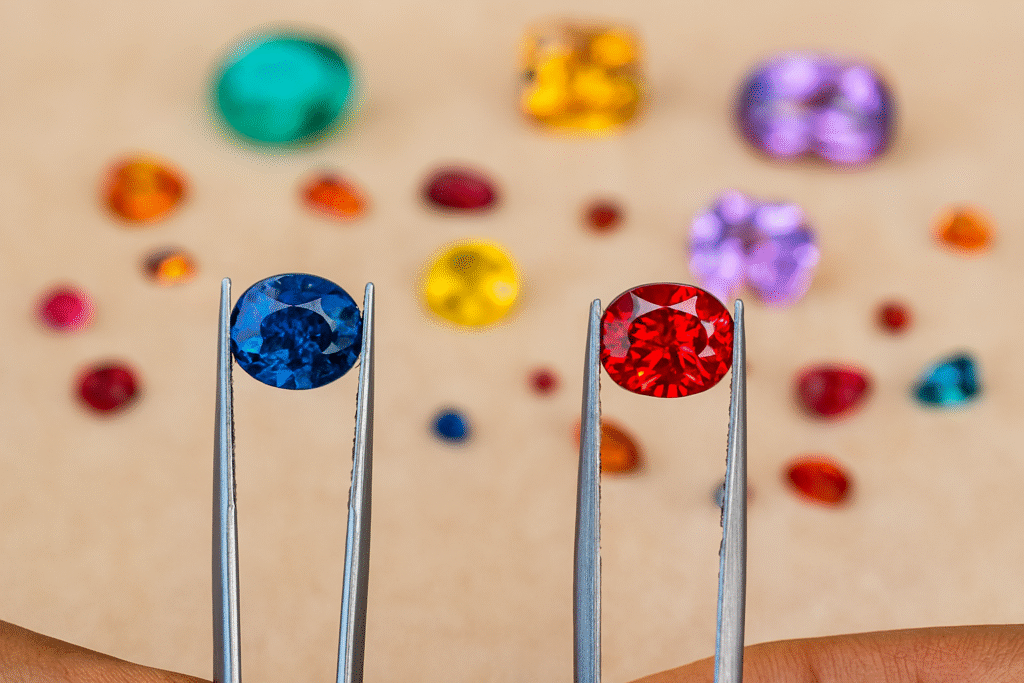
In contrast, gemstone treatments center on physical aesthetics and commercial value. Jewelers enhance lower-grade stones, such as Muzo vs Bahia Emeralds, to make them visually stunning. For example, heating a brownish Ruby can burn away the blue tints, transforming a dull specimen into a bright red bestseller. According to the GIA, these enhancements directly influence pricing. However, unlike Ayurveda, which seeks the “Natural State,” gem treatments seek to change the natural state. Thus, while Ayurveda heals from within, gem treatments beautify for the eye—and the wallet.
Methods in Ayurvedic vs Gemstone Treatments
Transitioning to how these treatments are applied reveals even starker differences.
The Gentle Touch of Ayurveda
Ayurveda employs biological processes.
- Panchakarma: A profound detoxification protocol that flushes toxins through sweating and herbal enemas.
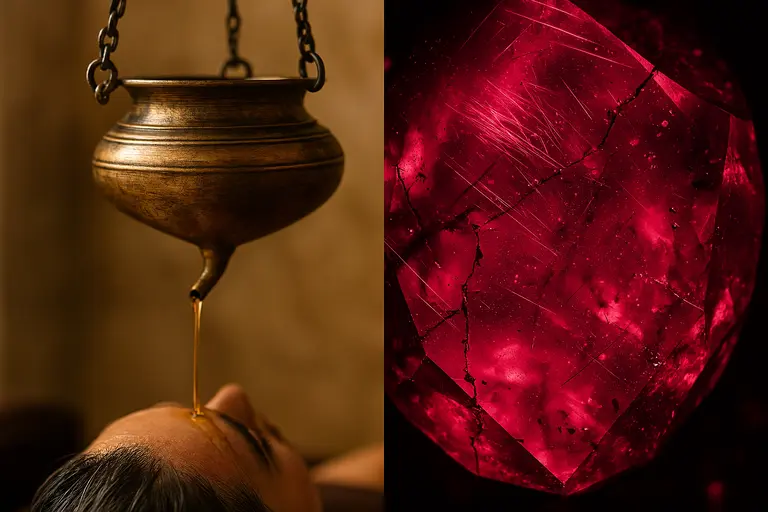
- Abhyanga: Therapeutic oil massages with sesame or coconut blends. As a result, patients emerge rejuvenated, with sustained energy flowing through their Prana (Life Force).
The Industrial Force of Gemology
On the other hand, gemstone and diamond treatments use chemical and mechanical violence.
- Heating: Laboratories fire gemstones in furnaces up to 1,800°C to dissolve inclusions.
- Irradiation: Bombarding gems (like Blue Topaz) with neutrons or gamma rays.
- Fracture Filling: Sealing cracks in Emeralds with oil or resin to mask flaws.
- Laser Drilling: Burning out carbon spots in diamonds.
My own guide on Gemstone Buying Mistakes details how these methods boost clarity grades but can compromise the stone’s integrity. Therefore, gem treatment is artificial; Ayurvedic treatment is natural.
Value Paradox: Ayurvedic vs Gemstone Treatments
Here is the most critical distinction for my readers. How does “Treatment” affect value?
- In Ayurveda: Treatment Increases Value. A body that has undergone Panchakarma is stronger, healthier, and more valuable to the individual.
- In Gemology: Treatment Decreases Value. An untreated “No Heat” Ruby is worth 300% more than a “Heated” Ruby. An oiled Emerald is worth less than an unoiled one.
Consequently, in the gem trade, “Treatment” is often a dirty word that must be disclosed. In health, it is a blessing. This connects to the concept of authenticity I discuss in Natural Diamonds Over Lab-Grown.
Overlap in Ayurvedic vs Gemstone Treatments
Interestingly, these realms converge in Ayurveda’s Ratna Chikitsa (Gem Therapy). Here, the two worlds meet, but with a twist.
Wearing Gems for Health
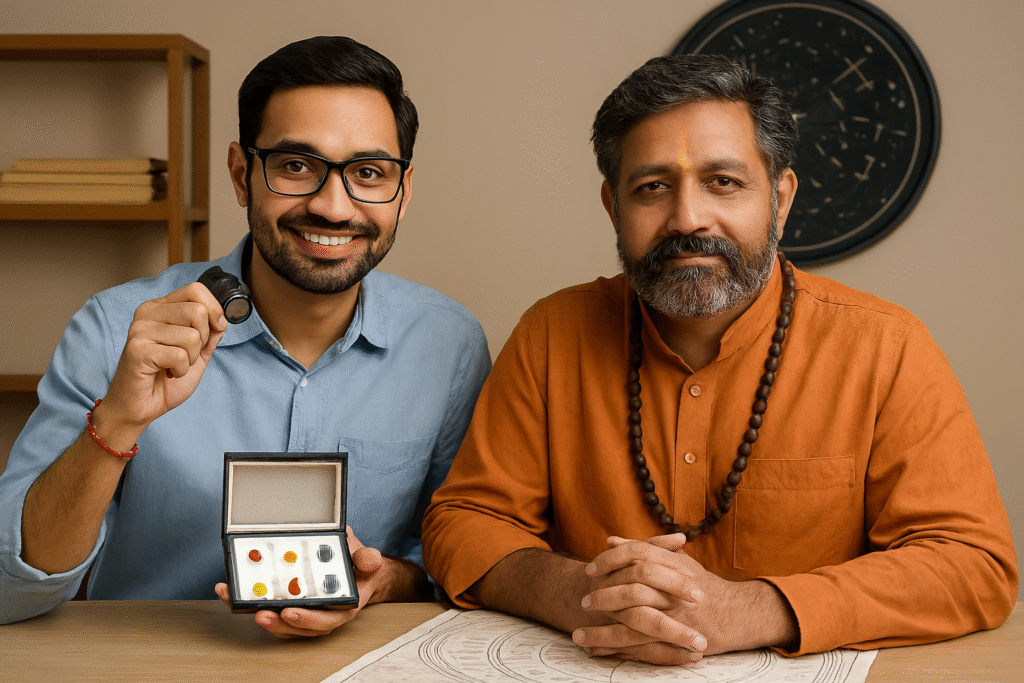
In this tradition, untreated gems like Blue Sapphires (for Saturn) or Kashmiri Saffron and Padparadscha (for the Sun) channel energies to balance Doshas. Crucially, Ayurvedic doctors insist on Jyotish Quality gems—meaning they must be Untreated. A heat-treated or glass-filled stone is considered “dead” and useless for therapy.
Eating Gems (Bhasma)
Additionally, gems undergo Shodhana (Purification) to convert them into Bhasma—calcined ash. For instance, Diamond Ash (Heera Bhasma) is used to boost immunity. Unlike commercial gem treatments, which hide flaws, Shodhana burns the stone to release its chemical essence (Calcium, Iron, Carbon) for the body to absorb. Read more about the spiritual side in my Gemstone Therapy: Science vs Belief article.
Conclusion on Ayurvedic vs Gemstone Treatments
In summary, the comparison of Ayurvedic vs Gemstone Treatments teaches us about intent. One seeks to heal the living; the other seeks to perfect the non-living. Ultimately, the best treatment for a human is a good diet and massage. The best treatment for a gem is… none at all. Natural is always better.
FAQ: Ayurvedic vs Gemstone Treatments
What is the main difference between Ayurvedic and Gemstone Treatments?
Ayurvedic treatments are holistic therapies designed to heal the human body and restore natural balance. Gemstone treatments are industrial processes (like heating or oiling) designed to artificially improve the appearance of a stone.
Are all gemstone treatments permanent?
No. While heating is generally stable, fracture filling (oiling) in Emeralds can dry out, and coatings on Topaz can scratch off. Therefore, buyers must check gemstone reports.
Can I use treated gems for Ayurveda?
Ideally, no. Traditional Ratna Chikitsa requires Untreated (Natural) stones. A stone that has been filled with lead-glass or irradiated is believed to have a disrupted energy field, rendering it ineffective for healing.
What is “Shodhana” in Ayurveda?
It is a purification process where gems or metals are heated and quenched in herbal juices to detoxify them before they are made into medicines (Bhasma).
How do I identify treated diamonds?
Look for “Laser Drill Holes” or “Flash Effects” under magnification. However, the best way is to demand a certificate from GIA or IGI, which will explicitly state any treatments.