PJ Joseph

Welcome! I’m P.J. Joseph—a trained gemologist with over 40 years of experience in the fascinating world of gemstones. My journey blends scientific precision with storytelling, as I’ve spent decades educating others through writing. Whether you're a curious beginner or a seasoned collector, I’m here to share insights that empower ethical, informed choices in jewelry and gemology. I hold a professional diploma (DgemG) in gemology from the Deutsche Gemmologische Gesellschaft e.V., Idar-Oberstein, Germany, and the Gemological Institute of India, Mumbai, India.

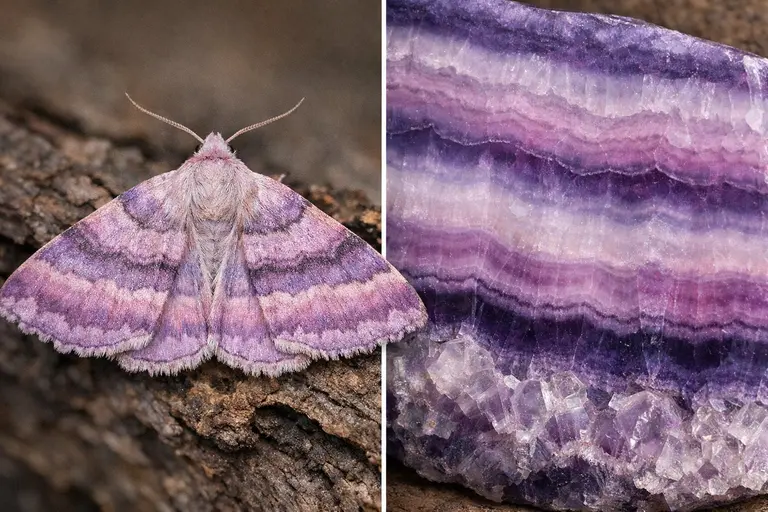
A vivid Pease Blossom Moth resting next to a banded slab of Purple Fluorite illustrating Pease Blossom Moth and Purple Fluorite.

Pease Blossom Moth and Purple Fluorite: A Color Guide

Introduction Nature often repeats its own designs across entirely different kingdoms. Few examples illustrate this better than the Pease Blossom Moth and Purple Fluorite. At first glance, the delicate wings of the moth (Periphanes delphinii) and a sliced piece of deep violet fluorite look strikingly similar. Both display a sophisticated blend of royal violet, magenta-pink, lavender, and

Pease Blossom Moth and Purple Fluorite: A Color Guide Read More »
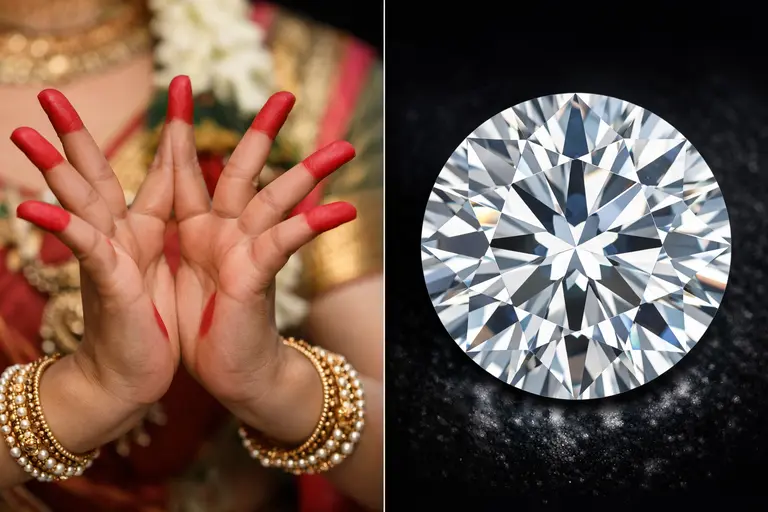
A Bharatanatyam dancer performing the Alapadma mudra next to a faceted Round Brilliant Diamond illustrating Sacred Geometry in Bharatanatyam and Gem Cutting.

Sacred Geometry in Bharatanatyam and Gem Cutting

Introduction The concept of Sacred Geometry in Bharatanatyam and Gem Cutting proves that geometry shapes both movement and matter. In the classical Indian dance form of Bharatanatyam, geometry flows through the human body. Similarly, in the lapidary arts, geometry controls how light behaves inside a precious stone. At first glance, these disciplines seem entirely unrelated. One is

Sacred Geometry in Bharatanatyam and Gem Cutting Read More »

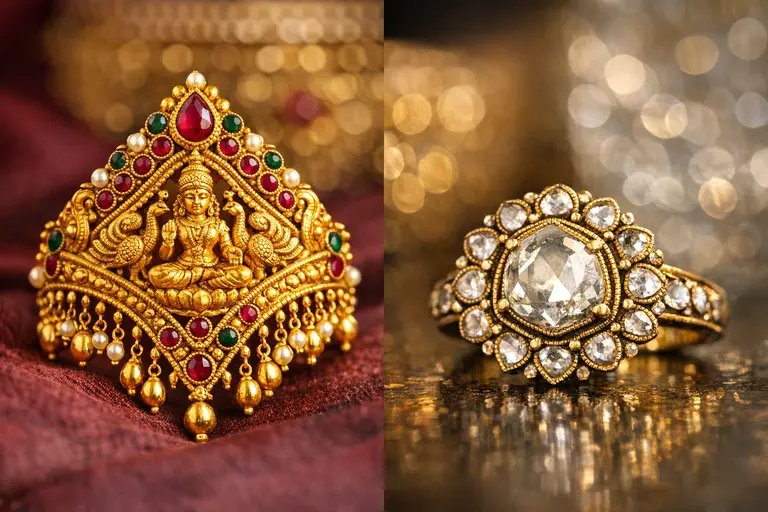
A traditional South Indian Vanki gold ring next to a North Indian Polki diamond ring illustrating Indian Wedding Rings.

Indian Wedding Rings: History, Styles, and Buying Tips

Introduction Indian Wedding Rings carry centuries of meaning in every loop of gold. Whether you are planning your own wedding or shopping for a loved one, understanding the cultural, regional, and practical dimensions of these rings helps you make a confident choice. In the West, the wedding band is a simple, standardized tradition. However, in India, the

Indian Wedding Rings: History, Styles, and Buying Tips Read More »

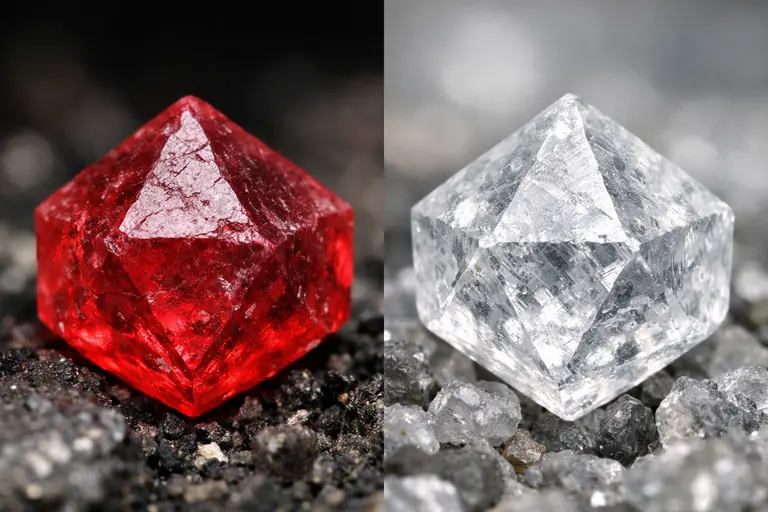
A rough Octahedral Spinel crystal next to a rough Octahedral Diamond showing identical shapes

Octahedral Spinel and Diamond: Rough Crystal Guide

Introduction When gemologists and jewelry designers handle rough stones straight from the earth, they often face a striking puzzle. Octahedral Spinel and Diamond look remarkably alike. Both crystals grow in the cubic system, forming the same “double-pyramid” shape. Furthermore, both appear in a dazzling range of colors. This visual similarity has caused centuries of confusion. Most famously,

Octahedral Spinel and Diamond: Rough Crystal Guide Read More »

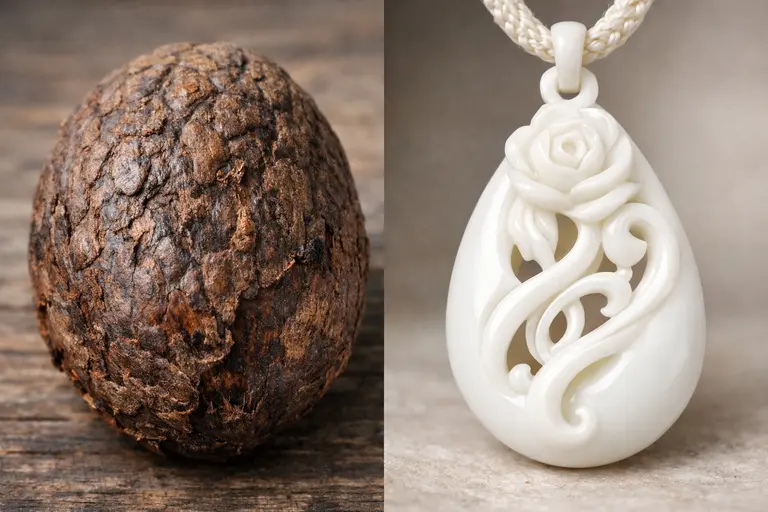
A carved white Vegetable Ivory pendant next to a raw brown Tagua Nut.

Vegetable Ivory: Origin, Identification, and Buying Tips

Introduction In the world of luxury materials, few things carry as much dark history as elephant ivory. Fortunately, nature provides a beautiful, ethical, and sustainable alternative: Vegetable Ivory. Also known as the Tagua nut or Corozo, artisans and consumers worldwide are increasingly choosing it for jewelry, buttons, and decorative objects. Because it comes from the hard white endosperm of seeds from

Vegetable Ivory: Origin, Identification, and Buying Tips Read More »

A customized Porsche Design Chronograph watch resting on the steering wheel of a Porsche 911 illustrating the Porsche Design Business Model.

Porsche Design Business Model: A Sports Car on the Wrist

Introduction The Porsche Design Business Model is a masterclass in turning a legendary car brand into a legitimate Swiss watchmaker. In the luxury world, ‘Brand Licensing’ is common. Ferrari puts its name on Puma shoes; Bentley puts its name on luggage. However, Porsche Design does not simply put its name on a watch and call it done. Instead, the

Porsche Design Business Model: A Sports Car on the Wrist Read More »

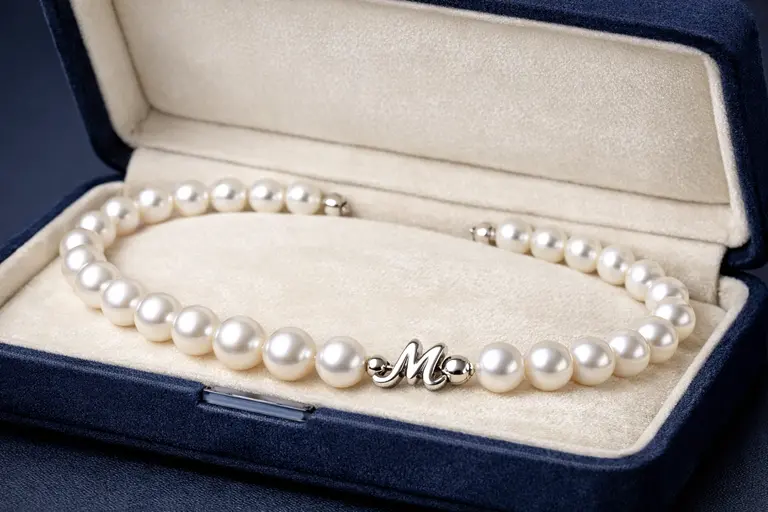
A classic strand of Akoya Mikimoto Pearls in their signature blue box.

Mikimoto Pearls: Origin, Quality, and Buying Guide

Introduction In the history of gemology, few people have fundamentally changed the world. Undoubtedly, Kokichi Mikimoto was one of them. Mikimoto Pearls stand as one of the most respected names in luxury jewelry. Founded in 1893 in Toba, Japan, the brand pioneered the art of culturing pearls and forever changed the global jewelry industry. Today, Mikimoto continues

Mikimoto Pearls: Origin, Quality, and Buying Guide Read More »

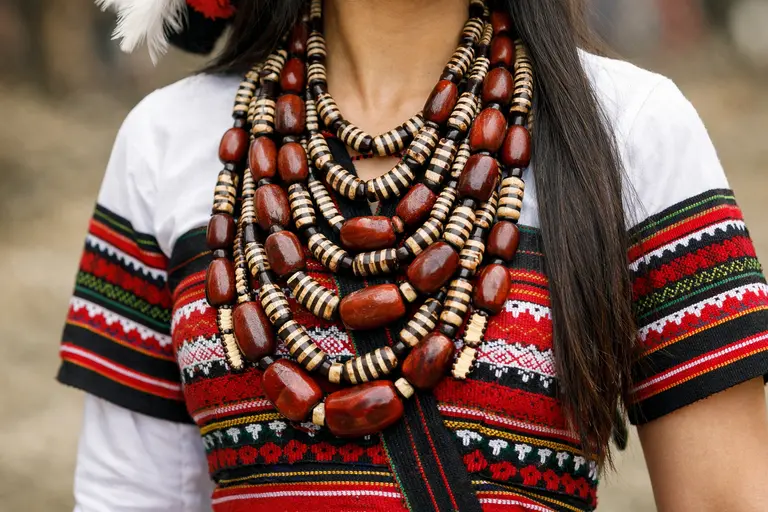
A Mizo woman wearing a traditional Puanchei and a multi-strand Mizoram Jewellery necklace.

Mizoram Jewellery: Traditions, Origins, and Buyer Tips

Introduction In the rolling, mist-covered hills of Northeast India, ornamentation tells a story that goes far beyond decoration. It is rooted in a rich tribal heritage. Mizoram Jewellery carries deep cultural meaning, marking social rank, tribal identity, and ceremonial life. Unlike the heavy gold of Temple Jewelry South India, the Mizo people historically found their wealth in rare beads,

Mizoram Jewellery: Traditions, Origins, and Buyer Tips Read More »

A Girard-Perregaux Laureato watch and a Three Gold Bridges movement illustrating the Girard-Perregaux Business Model.

Girard-Perregaux Business Model: The Independent’s Edge

Introduction The Girard-Perregaux Business Model proves that in 2026, independence is the ultimate luxury. Unlike many historic brands that are swallowed by fashion conglomerates, GP went the other way. After the Sowind Group completed its management buyout from Kering (owners of Gucci) in 2022, the brand built a sharply focused strategy. The Girard-Perregaux Business Model places heritage craftsmanship,

Girard-Perregaux Business Model: The Independent’s Edge Read More »

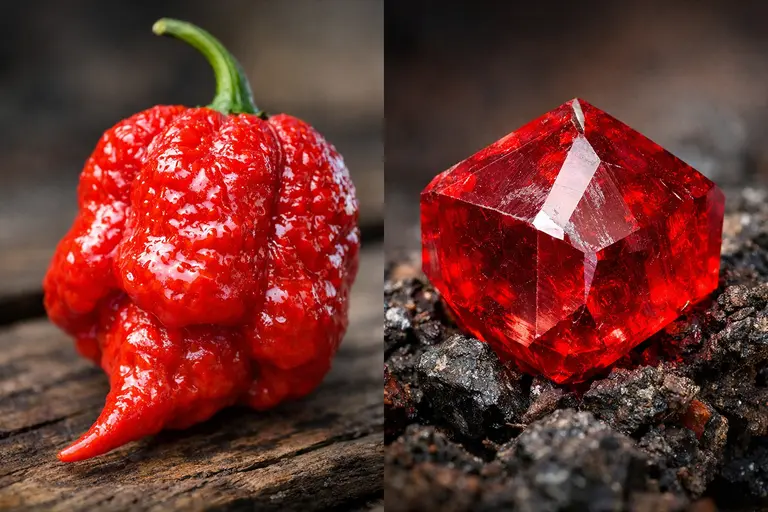
A bright red Carolina Reaper pepper next to a rough octahedral Red Spinel crystal illustrating Spinel and Carolina Reaper.

Spinel and Carolina Reaper: Nature’s Dangerous Reds

Introduction What do a rare gemstone mined deep in the earth and the world’s hottest chili pepper have in common? At first glance, absolutely nothing. Look more closely, however, and you will find that both the Rough Red Spinel and Carolina Reaper share one of the most vivid, saturated, and electrifying reds found anywhere in the natural

Spinel and Carolina Reaper: Nature’s Dangerous Reds Read More »